


|
Getting your Trinity Audio player ready...
|
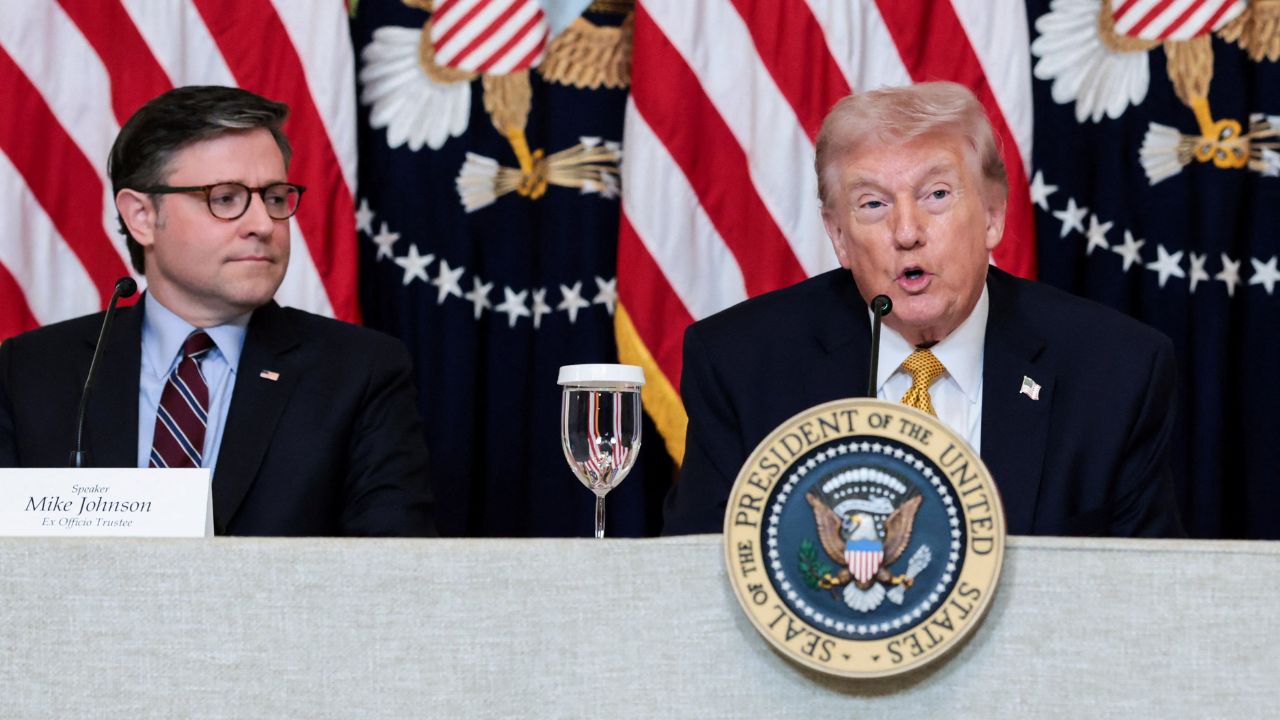
U.S. House of Representatives Speaker Mike Johnson on Tuesday met President Donald Trump to discuss his pick of loyalist Bill Pulte as acting U.S. intelligence chief, which ignited congressional pushback that threatens the renewal of an expiring foreign surveillance law.
Trump’s appointment of the mortgage regulator has sparked a showdown in the Senate, where Democrats blocked renewal of Section 702 of the Foreign Intelligence Surveillance Act (FISA) out of concern over Pulte’s lack of national security experience and fears that he may abuse the position to pursue Trump’s perceived enemies.
Section 702 expires on Friday. It allows U.S. spy agencies to collect without warrants and to store in a vast database the emails, texts and cellphone data of foreign nationals, including officials and extremists, believed to be outside the U.S.

Seven Republicans joined Democrats in stalling renewal of Section 702 last week. Some want further protections for Americans whose information is inadvertently collected while others have broader concerns about warrantless surveillance.
House Majority Leader Steve Scalise, the chamber’s No. 2 Republican, told reporters that Johnson was meeting with Trump to discuss next steps.
“One of the reasons that the speaker’s not here right now is he’s over at the White House working with the president to finalize this agreement on FISA,” he said.
Politico, quoting three people with knowledge of the matter, reported that Trump indicated in the meeting that he was not inclined to name a permanent director of national intelligence to succeed Pulte. Such an assurance could have assuaged some lawmakers’ concerns and helped to secure the renewal of Section 702.
Reuters could not immediately confirm the Politico report.
U.S. spy chiefs have long defended Section 702, saying it provides an irreplaceable intelligence tool. Its extension must be passed by the Senate and House before Trump can sign it into law.
Stressing that Pulte’s appointment was temporary, Senate Republican Leader John Thune accused Democrats in a floor speech of “holding this vital intelligence program hostage.”
Pulte was named last week by Trump to replace Tulsi Gabbard, who resigned effective June 30.
His lack of national security experience outraged some Republicans, as well as Democrats.
Democrats also worry that Pulte, who has used his position as head of the U.S. Federal Housing Finance Agency to attack Trump’s political targets, could use the spying powers for political purposes.
Senate Republicans have a 53-47 seat majority and need support from at least seven Democrats to meet the 60-vote threshold for passing the legislation.
Senator John Barrasso, the chamber’s No. 2 Republican, told reporters that Republicans have urged the White House to name a full-time nominee who can be confirmed by the Senate.
He also said some Republicans wonder if it is still necessary for the U.S. to have a director of national intelligence, a post created a quarter-century ago in the aftermath of the September 11, 2001, attacks on New York and Washington.
“There are a number of us that think that this is a position that doesn’t need to be there,” Barrasso said. “As long as it is there, we want somebody that can be confirmed because of their knowledge in the area.”
(Reporting by David Morgan and Katharine Jackson in Washington; Additional reporting by Jonathan Landay; Editing by Andy Sullivan, Matthew Lewis and Edmund Klamann)