
|
Getting your Trinity Audio player ready...
|
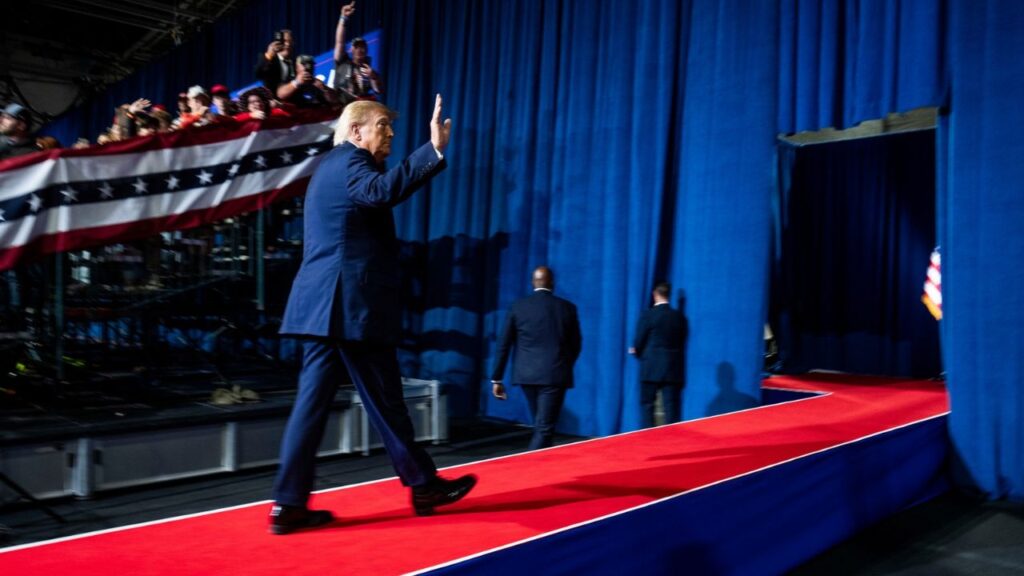
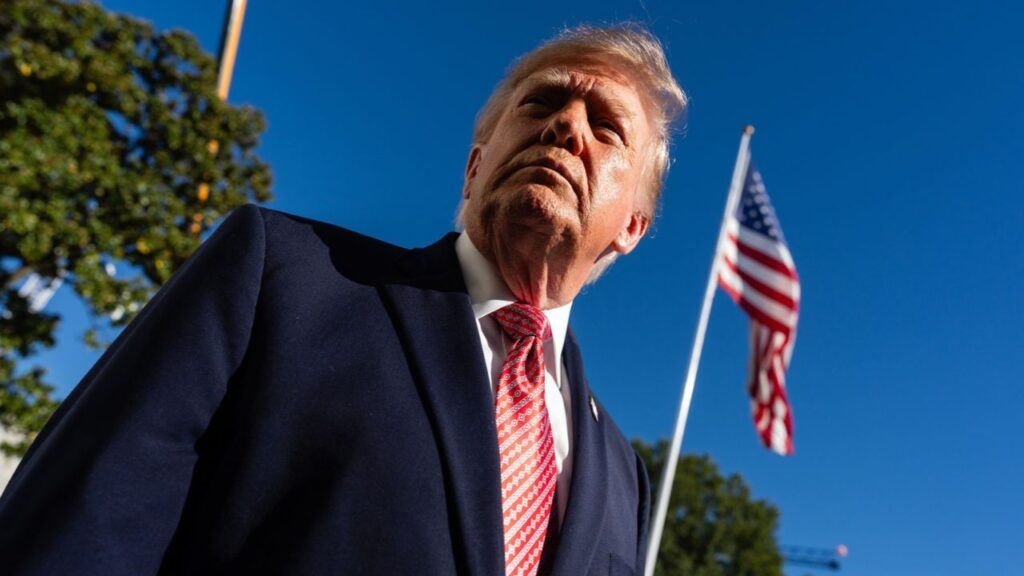
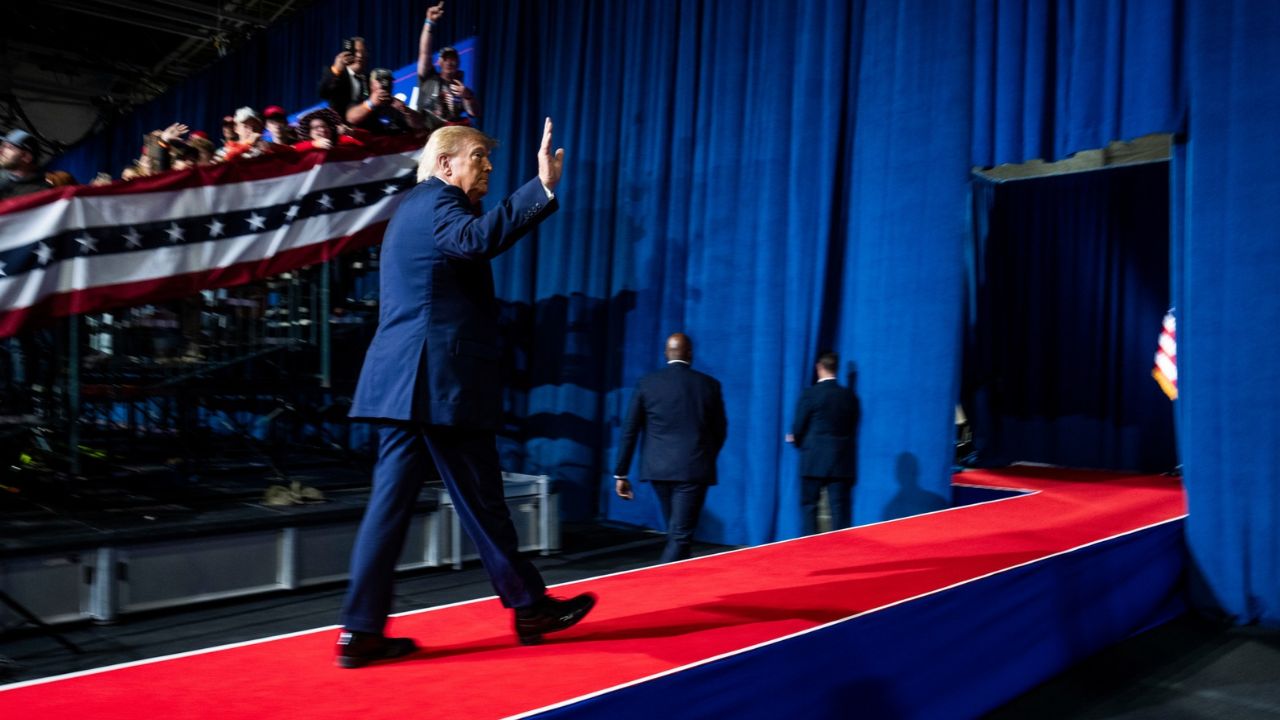
WASHINGTON — On the final Tuesday before the midterm election, President Donald Trump found himself in Corpus Christi, Texas, musing aloud about the political forces that had propelled his return to office two years earlier.
“I got elected because of high prices,” he told rallygoers in a state that has become the site of an unexpectedly close Senate race. Then the president turned his ire toward Democrats: “I didn’t have the high prices. They had the high prices.”
For Trump, that previous source of political strength now threatens to topple Republicans in 2026. The fate of the party’s control of Congress may well hinge on the depth of voters’ fury with the rising cost of living — and the president’s unmet promises to do something about it.

The concern among Republicans has been evident as Trump crisscrosses the country in an eleventh-hour campaign sprint. He has tried to present the economy as strong, growing and rife with new investment, while downplaying the fact that inflation has clearly worsened under his party’s stewardship.
Offering a final snapshot on the state of the economy before Election Day, a set of government reports on Thursday confirmed some of Trump’s claims and undercut others. The data showed that the economy was indeed expanding at a faster clip, with a key measure of its total output increasing at a 3.4% annual rate this summer. But prices also accelerated, rising more rapidly in September compared with a year earlier, and continuing to outpace wage gains.
As a result, Trump’s message contrasted with the experience of voters, who see the harsh realities of a high-cost economy every day — when they fill up their gas tanks, shop for groceries, pay their health insurance premiums, receive their credit card bills and confront the difficulties of homeownership.
Having weathered almost two years of high tariffs, geopolitical discord and other economic shocks, voters seem inclined to exact another round of political vengeance at the ballot box, or so the latest polls suggest. Depending on the extent of that rebuke, it could strip Republicans of their congressional majority and curtail Trump’s economic ambitions for the rest of his presidency.
Tomas J. Philipson, an economist at the University of Chicago who advised Trump during his first term, attributed some of the price increases to what he described as laudable goals, including the attempt to disarm Iran. He added that the economy showed plenty of signs of strength despite the sour national mood.
But, he added, “people don’t keep track of aggregate statistics.”
“They go to the grocery store every week, and they go to the gas station maybe every other week, and they are upset about that,” Philipson said. “People are still upset at those price increases.”
More than any other economic issue, it was soaring costs under President Joe Biden that helped sweep Republicans into power in 2024. On the day of his inauguration, Trump committed to “marshal” the whole of government to “rapidly bring down costs.”
By that point, inflation as measured by the consumer price index had fallen to about 3%, and many experts believed it would continue to decline from the heights of the pandemic. Instead, prices began to increase as Trump’s agenda catalyzed a series of costly economic shocks.
In a bid to boost domestic manufacturing, the president imposed withering tariffs on imports. Frequently challenged in court and recalibrated, the ever-changing duties raised revenue yet made foreign goods more expensive for U.S. purchasers.
Hoping to spur more investment, the president also sought to unwind a bevy of regulations, and he clinched a package of tax cuts that offered substantial savings for businesses. But the law also worsened the federal debt, which topped $40 trillion under Republicans’ watch. That helped to make government borrowing — and, with it, consumer borrowing — more expensive.
That same law set in motion cuts to federal food and health benefits for low-income families. While it helped to lower tax bills for some Americans, the effect may have been less noticeable, as the war with Iran sent energy prices higher. The conflict, now in its ninth month, has ricocheted across the global economy, raising the costs of airfares, farming, heating, shipping and transportation.
As a result, many staples of American life — gasoline, groceries, health insurance, mortgages and more — have become more expensive this year. Overall, the price increases have also outpaced workers’ hourly wages, according to the government, compounding the financial toll.
To be sure, the economy on the whole has its bright spots. Hiring has been sluggish but stable, markets are riding high and consumers are continuing to spend. That spending, a major driver of overall growth, rose at a 3.8% annual clip in the third quarter, according to the data released Thursday.
That suggests Americans still have some amount of confidence that their financial footing is sound. Yet voters have also signaled — in political polls and in economists’ surveys — that their mood remains grim with the election just days away.
The data “points to an economy that is running pretty strong,” said Satyam Panday, the chief U.S. economist for S&P Global Ratings. “The only sore spot in the economy is inflation, and I think despite the strong consumption and growth, you’ve got this pessimism.”
In the waning moments of the 2026 race, Trump and his aides have responded to the backlash with a mixture of optimism and dismissal. They have promised anew that they can bring down costs quickly, while denying at times that there is a problem at all.
In a sign of Republicans’ vulnerability, the president has ramped up his appearances in the final stretch of the election, even appearing in states like South Carolina and Texas, which were once seen as safer political terrain for Republicans. Having previously described the economy as a “public relations” problem, the president mounted a heightened effort to recast its strength.
“You know, we got inflation down,” he claimed at a rally in Michigan on Sunday, while greatly understating the nation’s inflation rate.
Two days later, in Lubbock, Texas, Trump insisted that gas prices had fallen, even though they were more than $1 per gallon higher than they were on the day he took office, according to AAA. By Thursday, he was in Rock Hill, South Carolina, hailing what he described as better-than-expected growth numbers and an economy that was “booming.”
Among the crowd, as he spoke, a smattering of signs nevertheless read: “LOWER PRICES.”
—
This article originally appeared in The New York Times.
By Tony Romm/Doug Mills
c. 2026 The New York Times Company