
|
Getting your Trinity Audio player ready...
|
U.S. spy agencies had gathered striking intelligence.
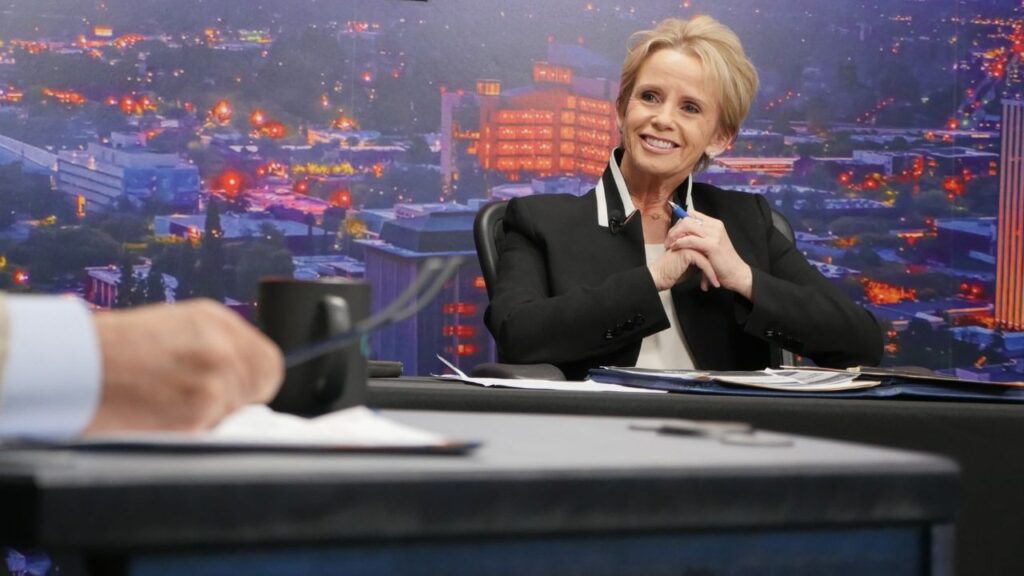
A top executive at a Singapore-based data center company was under scrutiny for possibly steering advanced Nvidia artificial intelligence chips to China. And now U.S. officials had concluded that she was a Chinese intelligence asset, funneling information to Beijing.
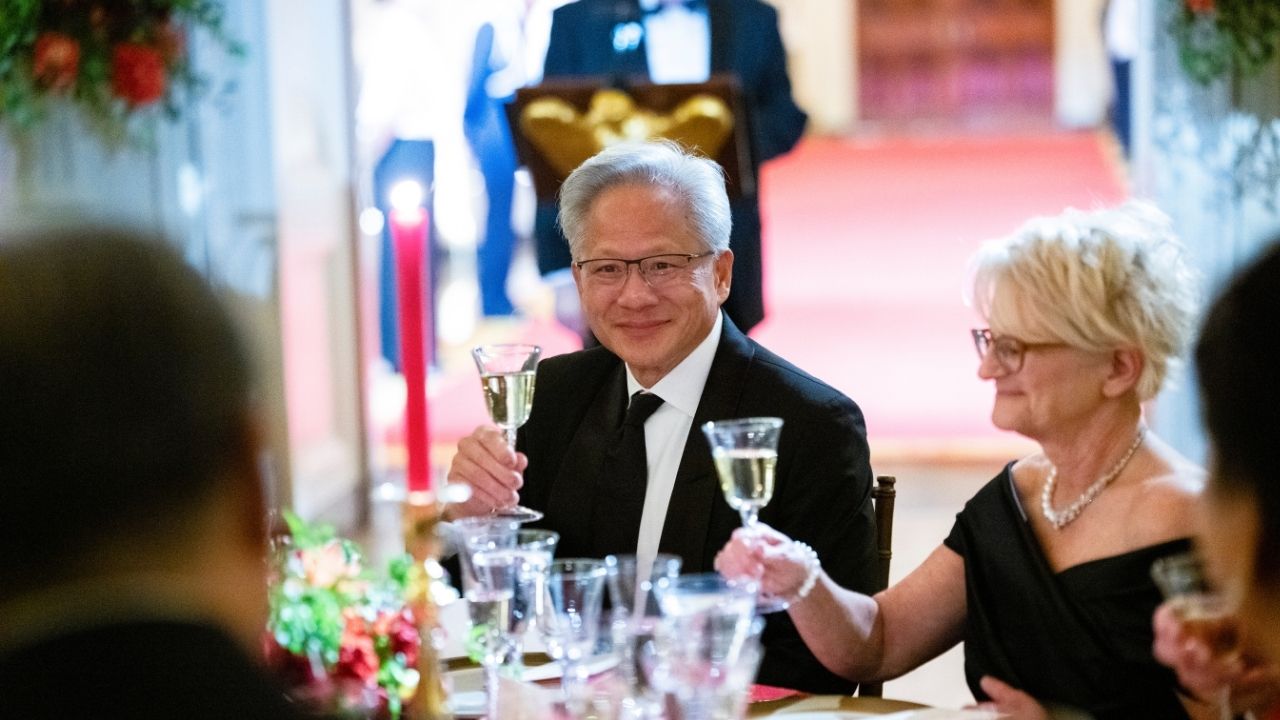
But what came next was even more alarming. Surveillance of the executive, Alice Huang or Huang Le, a Chinese citizen, revealed that she had developed a close relationship with Jensen Huang, Nvidia’s CEO.

For years, Washington has worked to deny China the technology needed to match or surpass the United States in the intense global competition for superiority in AI. The discovery that Beijing was getting reports from someone with direct access to Jensen Huang, one of the most powerful figures in the AI revolution as well as an influential ally of President Donald Trump, set off alarms at the White House.
Roughly a year ago, Trump was briefed about the intelligence findings, which have not been previously reported, and chose not to do anything with the information. Trump has been wary of disrupting Nvidia’s chip sales, which are helping to drive the economy and the stock market, and of further complicating the trading relationship with China.
This account is based on interviews with people briefed on the surveillance, who spoke on the condition of anonymity because the findings are drawn from classified intelligence, as well as other officials and industry executives and analysts.
U.S. officials already suspected that Alice Huang was helping China evade constraints on its ability to gain access to advanced AI chips.
But the revelation that she was feeding information directly to Beijing raised more troubling possibilities, including that Jensen Huang had insights into Trump’s thinking on an issue of vital importance to both nations, one likely to come up when the president visits China next month. And it left questions about whether she could be gleaning information about Nvidia, which as much as any company accounts for the lead the United States has maintained in developing cutting-edge AI models.
Jensen Huang has not received a defensive briefing, warnings sometimes given to Americans who are being targeted by foreign intelligence services, people briefed on the surveillance said.
The surveillance of Alice Huang continues, they said, and companies that have been affiliated with her continued this year to purchase Nvidia chips.
Nvidia said the company that employed her, Megaspeed, was like any other regional customer and that it had previously investigated and debunked claims the Singaporean company was smuggling chips to China. John Rizzo, a spokesperson for Nvidia, said: “Jensen’s interactions with Ms. Huang are not unusual or unexpected. Meetings with customers are part of a CEO’s job; Jensen talks with thousands of customer executives every year.”
Nvidia is “confident that if the U.S. government believes that any person is a threat to American industry, it would let us know,” Rizzo said. Customers like Megaspeed, he added, “receive ordinary business information — not sensitive Nvidia trade secrets — and zero information relevant to national security.”
The White House, the CIA and the National Security Agency all declined to comment. In a statement to The New York Times, Megaspeed said its “current leadership” takes the matter “extremely seriously and is committed to getting to the facts behind these allegations.” It added that “outside counsel has been retained to conduct a thorough internal investigation and has notified the U.S. government that we are fully committed to cooperating.”
Alice Huang did not respond to requests for comment. It is not clear how closely she is still connected to Megaspeed. A person familiar with Megaspeed’s operations said she had become less active in the company in the wake of the U.S. investigations.
Asked about the American conclusion that Alice Huang has been collecting intelligence on behalf of Beijing, Liu Chang, the spokesperson for the Chinese Embassy in Washington, said the United States was pursuing a campaign of “groundless smears and slanders” against China.
When Trump was initially briefed on the intelligence last year, U.S. officials did not believe the Nvidia executive knew that Alice Huang was gathering information for the Chinese. It is unclear whether intelligence officials have since updated their assessment, but some senior officials inside the Trump administration doubt that Jensen Huang could have remained unaware of what they had concluded was her intelligence-gathering role for China.
Questions about whether Megaspeed was providing AI chips to China became public through articles published last year by the Times and Bloomberg News.
Jensen Huang has successfully lobbied the administration during Trump’s second term to loosen regulations on AI companies and roll back tighter restrictions on the sales of Nvidia’s chips to China. He also negotiated a deal with Trump that allowed the U.S. government to take a 25% stake of certain Nvidia chips that the government allows to be sold to China.
The close relationship between the president and Jensen Huang has impeded efforts to clamp down on Nvidia’s chip sales abroad, current and former U.S. officials said. They described some investigations and proposed trade sanctions involving China or Nvidia as having ground to a halt within the Commerce Department, the agency in charge of regulating chip exports.
Nvidia has said that it complies with the law and that there is no evidence of its chips being smuggled to China. Rizzo said China’s government has “blocked U.S. AI chips, protecting its own industry.”
Many questions about the situation remain unanswered, at least publicly.
It is unclear whether concerns about protecting the surveillance played a role in the decision not to inform Jensen Huang. Telling him could have alerted Alice Huang that she was being watched, which is a common reason intelligence officials hesitate to give defensive briefings.
It could not be determined which intelligence agency or agencies have been involved in monitoring Alice Huang, or what prompted them to start. It is also not clear under what circumstances she began gathering information for Beijing, what information she passed along or its value to China.
The previous reporting about Alice Huang by the Times described her meteoric and somewhat mysterious rise. A Chinese businessperson and investor, she eventually became a top official with Megaspeed, which the Commerce Department, toward the end of the Biden administration, began to suspect was helping China evade U.S. prohibitions and gain access to the computing power of Nvidia chips.
The U.S. government has been investigating Megaspeed since late 2024, when a Commerce Department official visited its data center in Malaysia and found the site to be suspicious. The Nvidia equipment was still packed in boxes, suggesting it was being shipped in or out rather than installed there.
Singapore has conducted its own investigation into Megaspeed. In 2025, Singaporean authorities brought Alice Huang in for questioning, but subsequently released her.
The Commerce Department investigation into Megaspeed was handed over this year to the Justice Department, administration officials said.
Megaspeed is among the firms in Southeast Asia that buy chips to build data centers and then rent their computing power to companies in China.
Megaspeed is essentially a middle man. It has bought Nvidia chips from the American arm of Inspur, a Chinese server maker. The U.S. has blacklisted Inspur’s parent company for funneling technology to the Chinese military, though the U.S. firm remains free of sanctions.
Megaspeed has then provided that computing power to Alibaba and other Chinese companies. U.S. officials believe the firm is one piece of a sprawling international effort by Chinese companies to access the chips needed to build and run AI. Investigators suspect that some Nvidia chips acquired by Megaspeed are also finding their way illegally into China.
Megaspeed’s sister company in Malaysia bought at least $4.8 billion worth of advanced AI equipment containing Nvidia chips and technology between June 2024 and February 2026, according to trade records obtained from ImportGenius, a trade platform. It was an exceptional amount of money for a small, obscure company.
Nvidia and Megaspeed have continued to do business this year. The limited data available for most of this year shows that Megaspeed and its affiliates kept buying Nvidia products, often through intermediaries.
To prevent chips from being smuggled to China, Nvidia evaluates buyers before approving a chip purchase and sometimes checks later whether the buyer still has the chips. The company continues to list Megaspeed on its website as a cloud partner. Megaspeed advertised the relationship as recently as this month. In a job ad, Megaspeed’s Indonesian branch called itself “a premier business partner of Nvidia.”
Megaspeed has continued serving its primary client, Alibaba, according to that person and other tech industry analysts.
—
This article originally appeared in The New York Times.
By Jonathan Swan, Maggie Haberman, Ana Swanson, Paul Mozur, Tripp Mickle and Julian E. Barnes/Doug Mills
c. 2026 The New York Times Company