
|
Getting your Trinity Audio player ready...
|
Alaska’s governor on Wednesday night said he was ordering an investigation into whether Mary Peltola’s campaign for Senate should face criminal charges or civil penalties over its role in recruiting candidates to draw votes from the state’s Republican incumbent.
The announcement by Gov. Mike Dunleavy, a Republican, followed a New York Times report detailing the Peltola campaign’s involvement in recruiting a retiree named Dan J. Sullivan to enter the race against Sen. Dan S. Sullivan.
“Deliberately tricking voters into casting their ballots for someone else strikes at the integrity of our elections,” he said in a post on the social platform X. “Anyone or any organization found to have broken the law must be held accountable.”

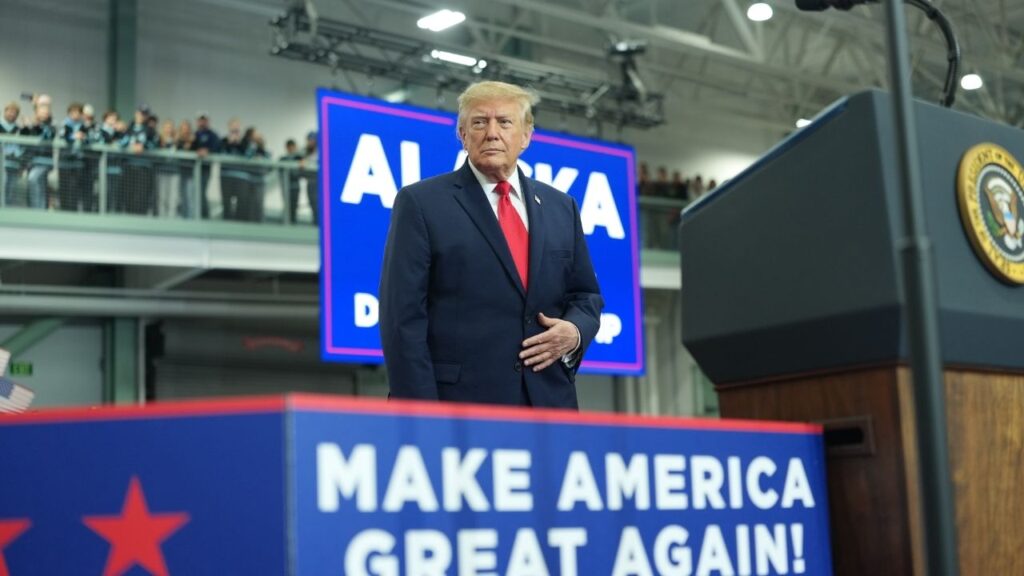
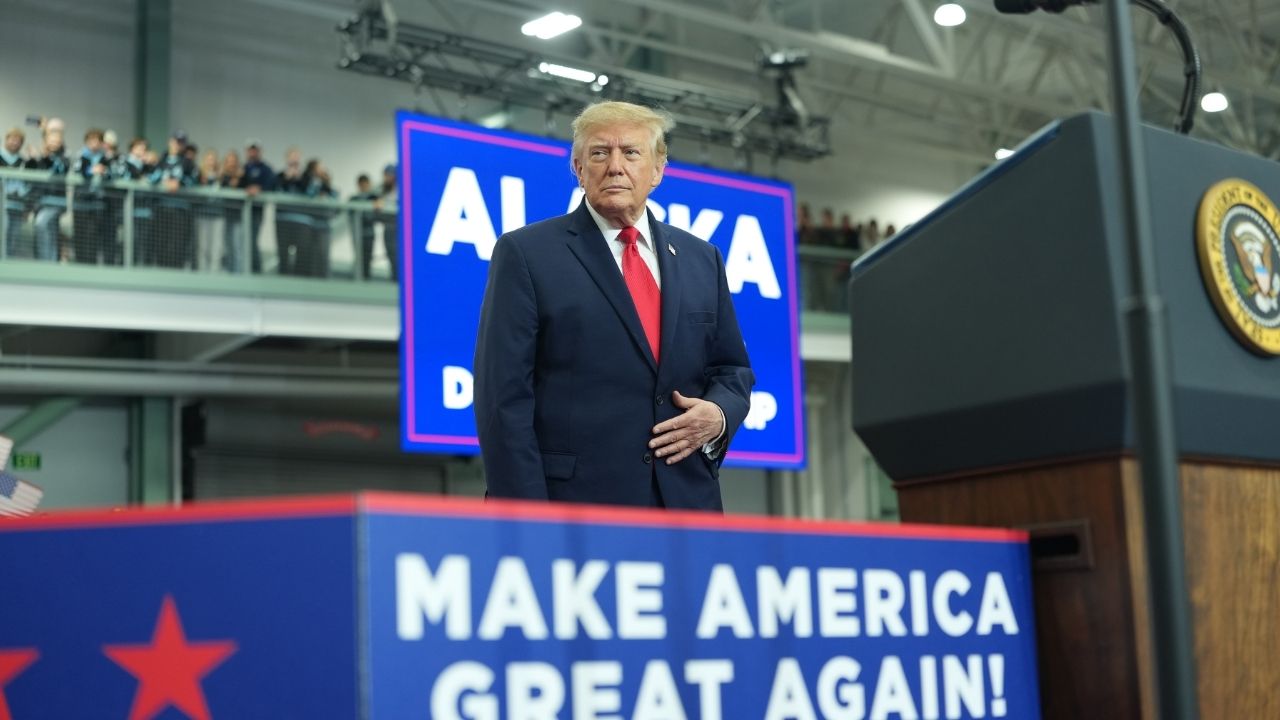
Earlier in the day, President Donald Trump demanded that Peltola, a Democrat, be removed from the ballot and prosecuted without explaining what crime, if any, was committed.
“They said they didn’t do it, and they did do it, and they got caught,” Trump told reporters on his way to a rally in Ohio, describing the Democratic effort as “voter fraud at the highest level.”
The secret plan involved senior advisers to both the Peltola campaign and the top campaign committee supporting Senate Democrats. The retiree, who is from a small Alaskan fishing village, was recruited because he shared the Republican incumbent’s first and last name.
Both Sullivans will appear on the ballot Tuesday alongside Peltola and a fourth candidate, Gerald Heikes. Trump called for Daniel J. Sullivan’s removal from the ballot.
Trump wasn’t the only Republican to object to the plan. But proving that a crime was committed is likely to be difficult. State leaders had tried earlier this year to remove Daniel J. Sullivan from the ballot, but the Alaska Supreme Court ruled that nothing in state law nor in the U.S. Constitution allowed it to rule on the motives of a candidate.
And the Peltola campaign is hardly the first political committee on either side of the aisle to engage in ballot-stacking.
Many Democrats defended the plan by pointing out how commonplace such actions are. Republicans have employed them in a variety of states, including Alaska.
Peltola herself appeared to brush off the news at a rally Wednesday, saying it was “just another distraction.”
A spokesperson for Sen. Sullivan said in a statement that Peltola and her campaign “have spent months gaslighting Alaskans, denying a scheme they were running all along.”
Before the Times published its article, the Trump administration had already filed a lawsuit calling for the Alaska Senate race not to be certified if Sen. Sullivan lost. That suit did not, however, allege specific illegal activity. And in a Fox News interview Wednesday, Attorney General Todd Blanche seemed to concede that laws may not have been broken. “It should be!” he exclaimed when asked if the Democratic plot was illegal.
The lawsuit, filed by the Justice Department last week at Trump’s direction, is unusual because it preemptively demands an investigation only if the incumbent senator loses. It accuses Daniel J. Sulivan, who has said he voted for Democrats in the last three presidential races and for Peltola in her 2022 and 2024 congressional campaigns, of trying to “dupe Alaska’s voters into believing that he is Sen. Sullivan.”
Chief Judge Sharon Gleason of U.S. District Court in Alaska agreed to a motion by the Alaska elections division to move quickly, giving the Justice Department until Thursday afternoon to respond to a motion to dismiss the case.
She also noted in her rulings that the administration waited to sue until “after Alaskans had already begun casting their ballots for the November 2026 election — and nearly four months after the Alaska Supreme Court directed the Division of Elections to include Daniel J. Sullivan on the ballot.”
The Peltola campaign and the Democratic Senatorial Campaign Committee have asked to join the case, noting that the state election office tried to block Daniel J. Sullivan from the ballot before state courts overruled them.
The Trump administration initially opposed that request, but on Wednesday afternoon it lifted its objection, “given a change in circumstances.” The administration cited the Times article detailing what federal lawyers called a “sprawling conspiracy to recruit and prop up a sham candidate for the purpose of deceiving Alaskan voters.”
Scott Kendall, a lawyer in Anchorage, Alaska, who has worked for Sen. Lisa Murkowski, a Republican, and former Gov. Bill Walker, an independent, said the Democratic effort to influence the ballot might amount to a “dirty trick,” but one with a long history in American politics.
“Go back to JFK. There’s a long history of this kind of chicanery,” he said, noting that in John F. Kennedy’s first campaign for Congress, his father’s political operation was accused of paying a man to run against a better-known candidate with the same name, splitting the vote in a crowded Democratic primary.
Kendall, the architect of Alaska’s ranked choice voting system, said the system could mitigate potential confusion because Republican voters who rank both Sullivans on their ballot are likely to see their vote go eventually to the incumbent senator.
—
This article originally appeared in The New York Times.
By Kellen Browning and Anna Griffin/Doug Mills
c. 2026 The New York Times Company