

|
Getting your Trinity Audio player ready...
|
While disasters ravage communities, insurers leave the state, and homeowners increasingly find their claims denied, there is one down-ballot state position that controls the thermostat to heat up or cool down California’s insurance market.
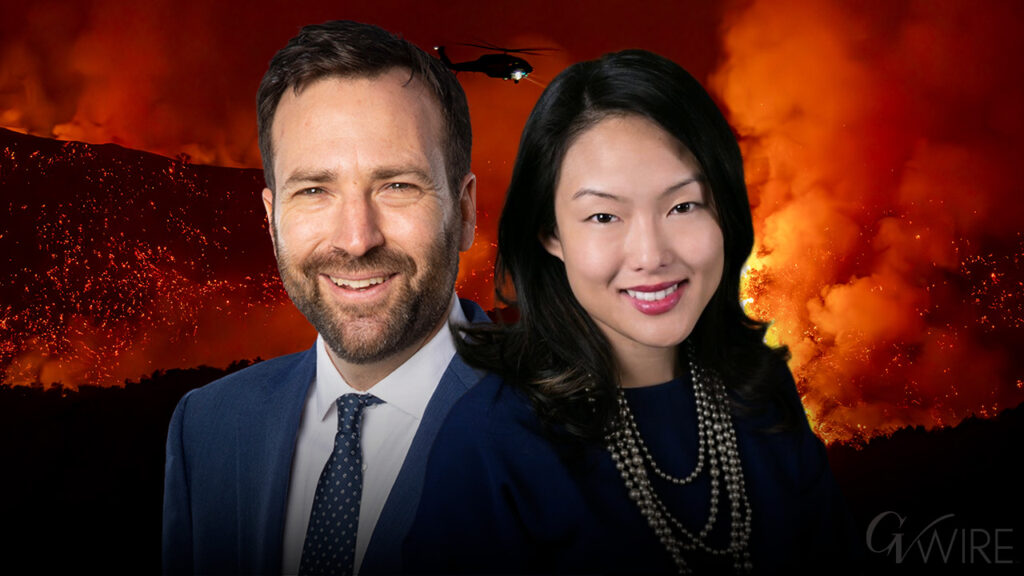
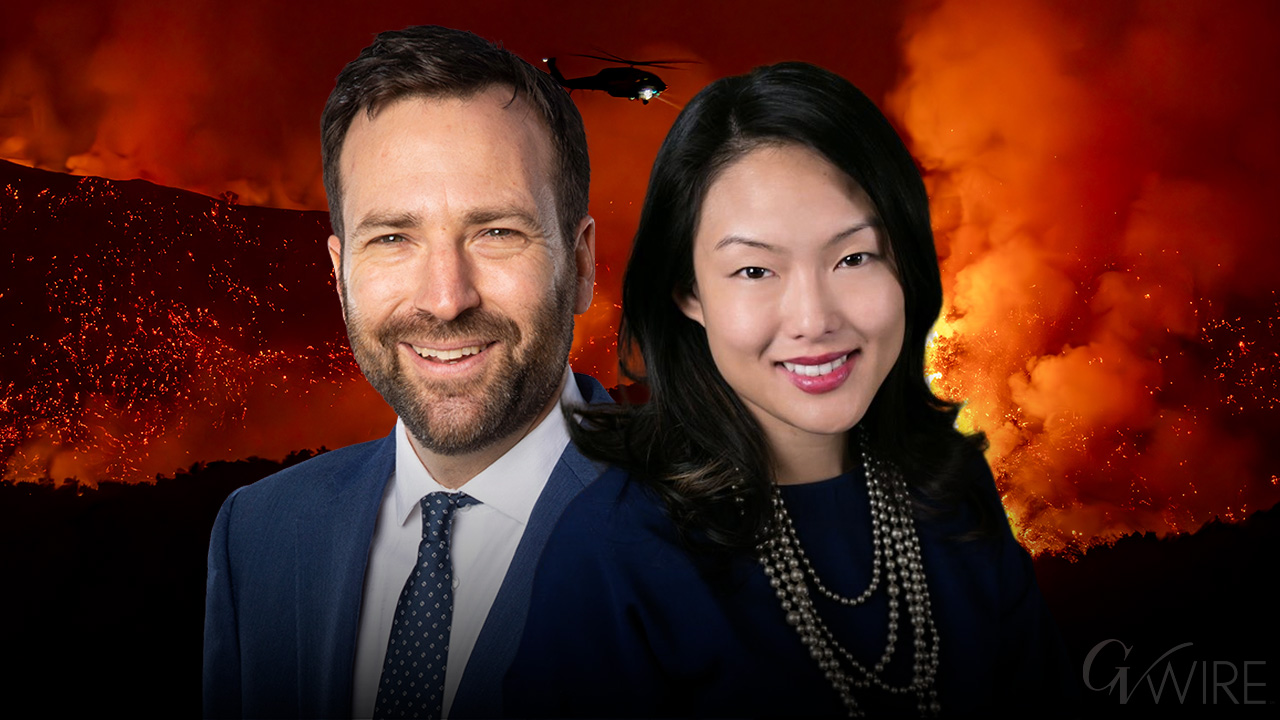
This year, two Democrats face one another with much-different plans that they say can bring stability to drivers, homeowners, and business owners struggling to find or pay for premiums.
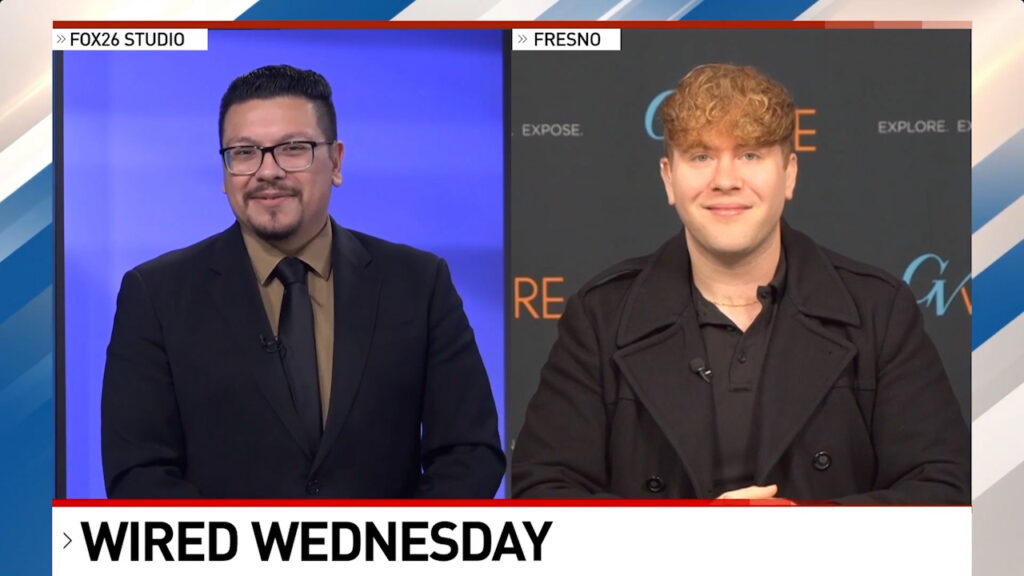
At one end, former San Francisco County Supervisor Jane Kim told GV Wire Tuesday it takes “creative” solutions involving more government intervention to bring to heel insurance companies making billions in profits while denying coverage and fleeing the state.

Her marquee plan includes moving the responsibility of administering disaster and catastrophe insurance to the state. She also wants to force higher payout ratios and enforce penalties for delayed or underpaid claims.
“We have to make insurance affordable, available, and fair, or we are shutting everyday people out of our economy, and that is what we are seeing happening today,” Kim said. “Premiums are going up, they’re canceling our coverage, and even if we have insurance, they fight our claims every step of the way, and this office is the only backstop between us, everyday consumers, and this trillion-dollar industry.”
No Silver Bullet for Solving Insurance Crisis: Allen
At the other end is State Senator Ben Allen, D-El Segundo. He says fixing California’s insurance market requires a balancing act including the realities of increased rates, and that anyone claiming to have a silver bullet is “selling you a bill of goods.”
He told GV Wire the work starts at the commissioner’s office, speeding up rate reviews and allowing more insurance options from out of state. As a state senator, he authored bills promoting risk reduction and protecting insurance consumers’ rights. This year, he cosponsored a bill that would also impose penalties for delayed or underpaid claims. That bill never made it to the governor’s desk, but he said he would renew the push as insurance commissioner.
He said he has “deep concerns” about Kim’s plans, and that solutions need to improve the free market.
“My ideas are, well, they may be a little different from hers,” Allen said. “They’re grounded in trying to trying to improve a free-market system, whereas Jane seeks to throw the entire system out the window and replace it with a government-run system.”
Related Story: Who Wants to Be CA Insurance Commissioner? A Guide to the Candidates
Government-Run Disaster Insurance
At the heart of California’s insurance crisis is its disasters. Wildfires have become more frequent and have intruded into urban areas causing billions of dollars in damage. At the same time, insurers say California’s laws — beginning with Proposition 103 — made rate needed rate increases slow, if they happened at all.
That’s caused insurers such as Allstate and State Farm to stop writing new policies.
Kim says insurance companies continue to make billions of dollars while denying claims and new applications.
Her plan centers on the state taking over disaster insurance.
Of the roughly $18 billion Californians spend on homeowner’s insurance, Kim estimates between $3 billion and $6 billion goes to wildfire insurance. California would take that money and create a nonprofit to invest and administer those funds.
“We would act like an insurance company, meaning we would invest that money in the market just like the insurance industry does,” Kim said.
“Excess capital” would go first to low-income, highest risk communities to help harden homes against wildfires, reducing risk.
“The only way to make insurance affordable and available long-run is to drive down risk,” Kim said. “Currently, the private market prices your risk, but they don’t do anything to address it. So that is the key between the status quo and our proposal.”
State-Run Disaster Insurance Has Critics
That plan, however, has its critics, and a major driver for Allen’s bipartisan support, he says. He says the plan will increase premiums by $215 when there’s a major disaster and $2,000 per household. Startup costs could be in the billions and it could take 10 to 15 years to implement, he said.
Not only that, but it puts the liability of coverage onto the state’s balance sheets.
“A major disaster would almost certainly bankrupt the state,” Allen said. “There’s a reason why no other jurisdiction in the world does this.”
Kim has used examples of Spain, France, and New Zealand to defend her plan, but those comparisons have been disputed. She told GV Wire that the $3 billion to $6 billion would cover losses for most years. In extraordinary years such as 2025 when flames ravaged Pacific Palisades and Altadena, the state would invest in reinsurance just as most insurers do.
“Here’s the truth, no insurance company can pay out in Altadena and Palisades,” Kim said. “We would do what insurance companies do. We would buy reinsurance. We estimate about $2 to $3 billion a year, which comes out to about $150 to $250 per homeowner, and we would have to borrow against our assets exactly as the insurance industry does today.”
Patrick Wolff, who ran against Kim and Allen in the primaries, criticized Kim’s plan in the San Francisco Standard, saying that those countries’ models don’t compare to what Kim is proposing.
None of those countries put wildfire risk on their books, Wolff writes. And with fewer than 6 million people, New Zealand’s population profile doesn’t compare to California’s. Third place contender Stacy Korsgarden also criticized Kim’s plan, endorsing Allen.
Kim Responds to Skeptics of Her Plan
When asked about oversight into investments, Kim said:
“Our money is going to these billion-dollar corporations and there is very little oversight in how they invest that money,” Kim said. “What we’re seeing is that private equity and billionaires are all coming into the insurance space because they see how much money they make.”
In response to critiques from Allen, Kim said every country has unique needs. She said the state needs new ideas to fix its crisis.
“The current status quo is working, and our opponent continues to defend the status quo, but Californian’s known that their premiums are too high, their coverage is getting canceled, and their claims get caught every step of the way,” Kim said. “We haven’t heard a single proposal from our opponent. What ideas do you have?”
Fixing the Industry Goes Beyond Insurance Commissioner
Allen says problems can be mitigated by opening up California’s insurance marketplace. He promises to speed up rate reviews and the processes that evaluate new insurance products.
“We make it incredibly hard for new products to enter in, which is just crazy because it’s limiting choices for people,” Allen said.
He says work to fix California’s insurance problem must also include legislation for localized plans that reduce risk. As a legislator, he authored 2024’s Proposition 4, which allocated money to wildlands to make them less susceptible to fire risks. He also authored SB 495 which required insurers to automatically pay 60% of personal property coverage limits without requiring an itemized list of inventory.
“We should be doing everything we can to reduce risks so as to both make our state safer, but also to make our state more affordable on the insurance side,” Allen said.
Kim Says Insurance Companies Should Reduce Shareholder Payouts
Kim said insurers spend too much money on vanity investments and payouts to shareholders. She wants to increase the minimum that insurers currently pay out for claims, going from 48 cents of every dollar to 65 cents of every dollar for home insurance and 75 cents for auto insurance.
“They can still make some money, but they can’t make excessive profits,” Kim said.
Kim said it can lower premiums by forcing companies that don’t have enough claims to meet that minimum to lower prices to consumers.
“If they can’t spend at least 65% back in claims, then they have to lower, because otherwise the profits are excessive,” Kim said.
Both Promise to Hold Insurers Accountable
Both candidates push penalties for insurance companies that delay or underpay payouts. Both also acknowledge that rates may have to increase.
“My job is to make sure that insurance is affordable, available, and fair to fight for our state,” Kim said.
Allen said he doesn’t want unjustifiable rate increases.
“I don’t I don’t want to be just green-lighting massive rate increases without real work unless I really feel as though there’s a real commitment and progress being made to address the underlying problems that gotten us here in the first place,” Allen said.