
|
Getting your Trinity Audio player ready...
|
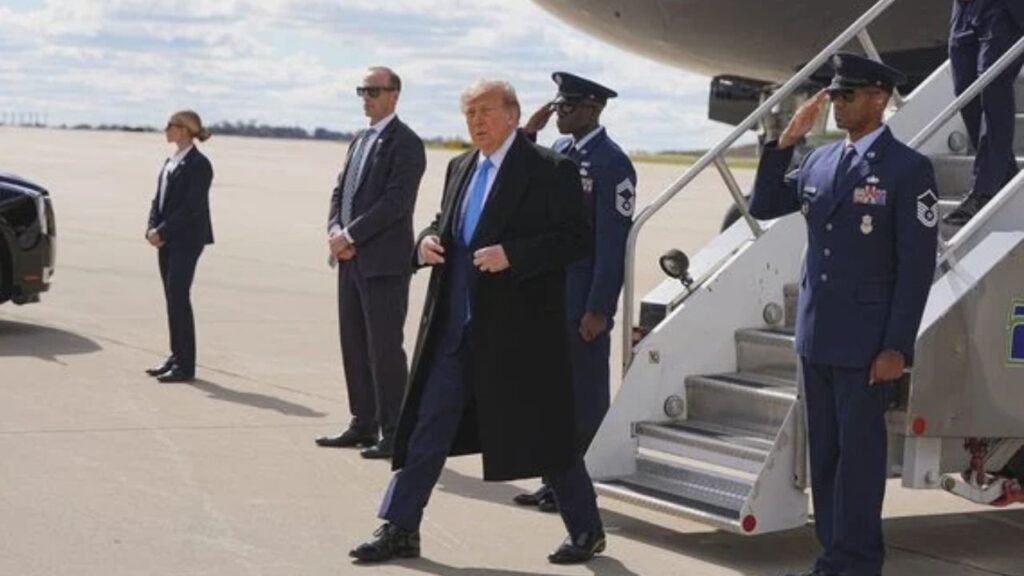
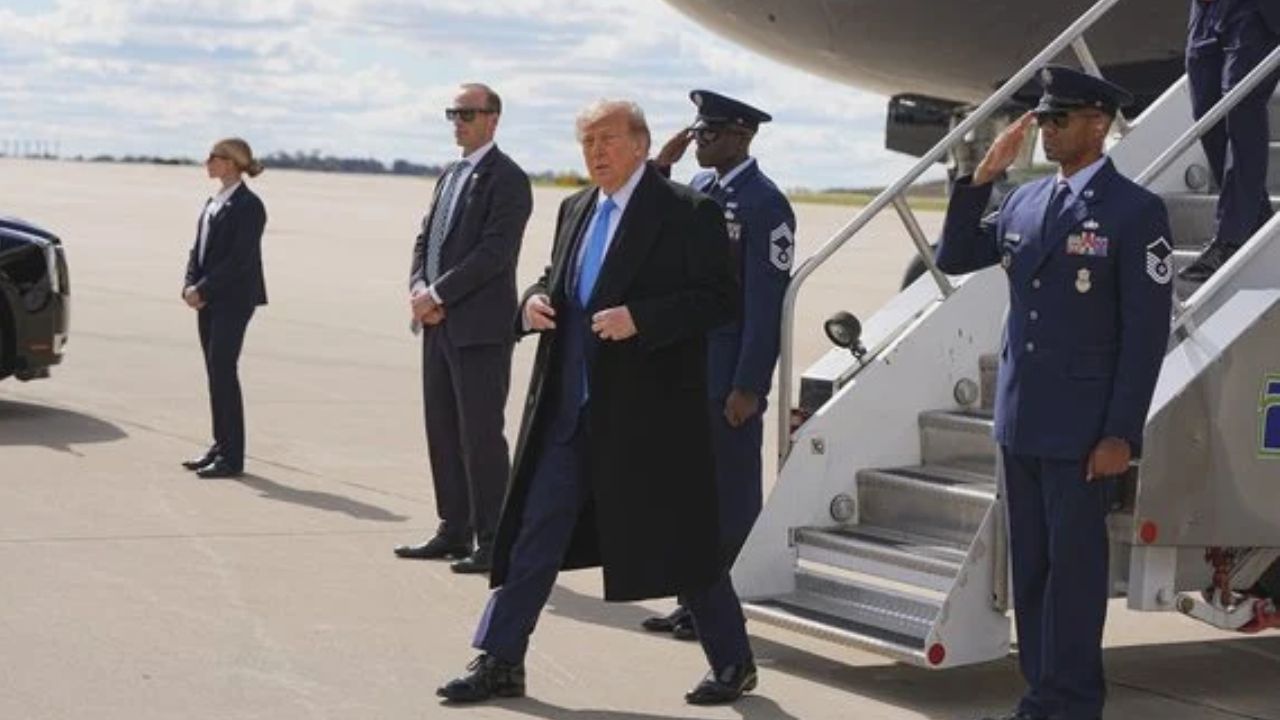
President Donald Trump, defending his decision to ease tariffs and other sanctions against Russia, said on Sunday that he was making “great progress” in a peace deal with the Kremlin and suggested for the first time that the process included “hostage negotiations.”
He did not specify whose release he was seeking. But the only American now categorized by the State Department as “wrongfully detained” in Russia is Stephen Hubbard, a Michigan teacher who was seized from his home in Ukraine just months after Russia invaded that country in February 2022 and was charged with being a mercenary. He was sentenced to more than six years in a penal colony, on charges that the United States has said are fabricated.
“My decision on Russia is a very simple one,” Trump wrote on social media, an apparent reference to his move late Friday to neutralize the sanctions resolution that he had signed only a few weeks earlier. “I am in the process of negotiating Peace in the war between Russia and Ukraine, and don’t want to do anything that will drive, foolishly, Russia away from the bargaining table.”

Until Sunday, Trump had said little about the remarkable, rapid-fire steps he has taken over the past 10 days to side with the Russians in a conflict that has now gone on longer than World War I. Those steps amount to the reversal of nearly five years of sanctions following Russian President Vladimir Putin’s decision to invade Ukraine.
In that time period, Trump has announced that the United States will buy diesel fuel from Russia — though the announced purchases are far too small to have a significant effect on prices, despite Trump’s claims — and that he will waive imposing tariffs on Russia under a newly signed law named for its chief proponent, Sen.Lindsey Graham, R-S.C., who died in July.
Both decisions have been criticized by U.S. lawmakers, including fellow Republicans. Sen. Darline Graham, who was appointed to her brother’s seat and is now running for a full term, gently disagreed on Saturday with Trump’s decision on the sanctions law, saying that she “would choose to put the pressure on Russia to end the war and get gas prices down.”
The breach with Ukraine has been sudden and perhaps irreparable.
Trump has declared publicly that Ukraine needs a new leader, the first time he has called for replacing President Volodymyr Zelenskyy, with whom Trump has had a contentious relationship. And he and other administration officials have declined to explain whether they deliberately cut off intelligence warnings to Ukraine about incoming missile and drone attacks, or throttled the speed of data to the country from Starlink, Elon Musk’s critical satellite network, or its military cousin, called Starshield.
Taken together, those steps amount to a major reversal in U.S. strategy, after more than four years in which, to varying degrees, the United States has sided with Ukraine as the victim of Russian aggression.
And while Trump has episodically tacked toward Putin, for whom he has often expressed admiration, the United States has largely let intelligence assistance flow and continued to sell arms to Ukraine through the Europeans, who are paying for the deliveries.
But Trump and his two leading negotiators — Steve Witkoff, his special envoy, and Jared Kushner, his son-in-law, who holds unofficial status as the president’s personal negotiator — have been trying a new approach. They have scrapped the administration’s previous insistence that business deals with Russia would come only after a peace accord was struck. Now they have announced the diesel deal, and they are trying to put together a purchase of Lukoil, one of Russia’s biggest energy companies, as an early confidence-building measure to assure Putin that they are about to uncork a series of lucrative projects.
Trump on Sunday accused Zelenskyy of targeting diesel refineries in Russia “knowing that these attacks are seriously hurting the world diesel markets, including those in the United States.”
It is the opposite of the position he has taken in defending the blockade on Iranian oil shipments, in which he has said Americans are paying a necessary price to ensure that Iran never gets a nuclear weapon. (Russia already has the world’s largest nuclear arsenal, and at various points in the Ukraine war, Putin has hinted that it may be used.)
In his social media post, Trump praised Russia for “sending, at a low price, millions of barrels of diesel to the World,” and he accused Zelenskyy of ingratitude. “Zelenskyy doesn’t care, and frankly, with all the money that Europe is famously giving him, and that Crooked Joe Biden gave him in the past, he doesn’t want to end this war, and probably never did.”
Zelenskyy, for his part, has lamented Trump’s decisions as “weak” — a word he knows will inflame the president — and accused the president of pressuring Ukraine to relent to Russia.
—
This article originally appeared in The New York Times.
By David E. Sanger/Haiyun Jiang
c. 2026 The New York Times Company