

|
Getting your Trinity Audio player ready...
|
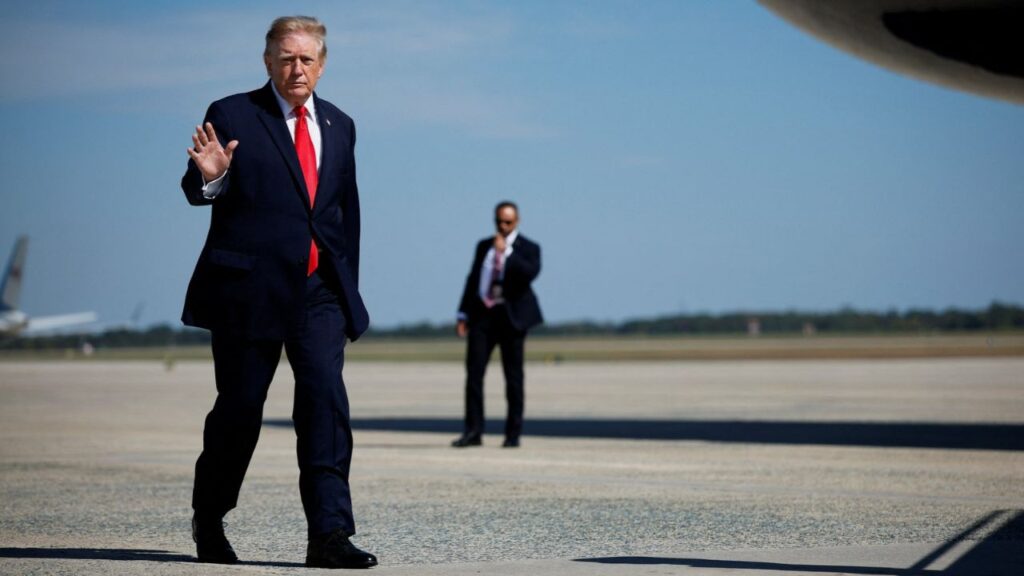
TAIPEI, Taiwan — For China’s leader, Xi Jinping, one important goal of his meeting with President Donald Trump this week may be persuading him to keep delaying $14 billion in proposed U.S. arms sales to Taiwan.
China has long claimed the self-governed island of Taiwan as its territory, and Taipei has relied on U.S. military power to counter military threats from Beijing. When they last met, Xi warned Trump that mishandling tensions over Taiwan could be “extremely dangerous” for the United States and China, a reminder of the risk of crisis between two nuclear-armed powers.
“There’s only one issue that could cause relations between both sides to break down completely or erupt in conflict, and that is Taiwan,” said Xin Qiang, the director of the Center for Taiwan Studies at Fudan University in Shanghai.

“Demanding a continued delay in any arms sales may be the most critical issue,” he said.
Trump has described the arms sale plan as a source of leverage with China. After his May summit with Xi in Beijing, Trump said he had discussed the deal with the Chinese leader. “It’s a very good negotiating chip for us, frankly,” he said then.
Trump has since held off approving the package of missiles, anti-drone weaponry and air-defense systems. His administration has also muted public references to Taiwan: Officials, including Defense Secretary Pete Hegseth, have conspicuously avoided mentioning Taiwan in speeches.
For Beijing, Trump’s willingness to delay arms sales is already a gain. In Washington, Xi could hint at potential costs if Trump approves the sale, including more restrictions on Chinese rare earth exports. Xi could also signal that he might skip the Group of 20 summit in Miami in December, which Trump will preside over.
Trump, for his part, may want China to increase pressure on Iran to reopen the Strait of Hormuz, the critical waterway for global oil and gas supplies that Iran has effectively blocked since the war began in February.
“I think in Beijing we saw the opening move in what will be a sophisticated play to get the Trump administration to reduce support for Taiwan,” said David Sacks, a fellow at the Council on Foreign Relations who studies U.S. relations with Taiwan and China. “Xi will use his meetings with Trump in Washington to continue to implement this strategy.”
Taiwan Wonders Where It Stands With Trump
Delayed arms sales are a political headache for Taiwan’s president, Lai Ching-te. He has promoted increased military spending and purchases of American weapons, in part to meet the Trump administration’s own demands that partners invest more in their defense. Trump’s stalling could make it harder for Lai to defend his agenda.
Longer delays could drag on the island’s military goals, partly by pushing Taiwan further back in the line for orders of scarce military hardware, some experts said.
“Ultimately, it’s a game of the Chinese trying to prolong this process as long as possible, with the idea being that if China can make gains faster than Taiwan can acquire capabilities, then the balance continues to tilt in Beijing’s favor,” said Ryan Hass, a former director for China at the National Security Council and a senior fellow at the Brookings Institution.
Some experts said they expected Trump to keep holding off approval of any arms sales for Taiwan until at least late this year. Others said the green light for some weapons could come sooner. Republicans and Democrats in Congress are likely to raise pressure on the administration to approve the proposed arms sales after the summit, Sacks said.
The arms issue has highlighted Taiwan’s struggles to keep Trump onside. Taiwan does not have formal diplomatic relations with the United States, and Trump’s highly personalized, freewheeling style makes it more difficult for Taiwan to understand and shape U.S. decision-making, experts say.
“With an administration that is so top-down, I think that is hindering the Taiwanese ability to get a really good sense of what’s going on and the ability to help shape and influence that,” said Laura Rosenberger, a former Biden administration official who oversaw U.S. policies on China and Taiwan.
In his first term, Trump signed off on about $18 billion of arms sales to Taiwan, and hawkish members of his government focused on Beijing as a long-term threat. But in his second term, Trump has emphasized pragmatic ties with China, largely retreating from a trade war after Beijing strangled exports of rare earths that are crucial for smartphones and advanced technology.
Taiwan has sought to maintain influence by cultivating Trump’s inner circle, hiring lobbyists and arranging visits to the island for prominent supporters of the president.
But some Taiwanese officials who have traveled to the United States have also been told by Trump administration officials to curtail their visits to research groups in Washington, Hass said.
“All of this just betrays a clear preference by President Trump to ensure Taiwan does not become an obstacle to his ambitions as it relates to China,” he said.
Military and Trade Ties Are Steady
Still, Taiwan’s security relationship with the United States remains robust. Officials and experts say working ties between government departments have remained steady, even deepened.
During Taiwan’s annual Han Kuang military exercises last month, American advisers were more visible than in past years. At a recent briefing with reporters, Taiwan’s defense minister, Wellington Koo, spoke coyly of growing numbers of “American English teachers,” a euphemism for the U.S. military advisers whose presence rankles Beijing.
“Our friends in the U.S. government understand how important continued arms sales are for Taiwan’s defense,” Chen Ming-chi, a deputy minister in Taiwan’s foreign ministry who handles relations with the United States, said in an interview.
Taiwan’s importance as an American trading partner has also grown sharply; this year it surpassed China as the third biggest source of U.S. imports, behind Mexico and Canada, according to U.S. figures. The bulk of those imports are semiconductors and other high-tech equipment sustaining the artificial intelligence boom in the United States. Taiwanese officials hope this growth will ultimately help entrench American support.
“We are probably the most cooperative partner in the whole world when it comes to tariffs and investment in the United States,” Chen said.
—
This article originally appeared in The New York Times.
By Chris Buckley and Amy Chang Chien/Kenny Holston
c. 2026 The New York Times Company