
|
Getting your Trinity Audio player ready...
|
She was 19 and beautiful. I was barely 20. We were both lost in a land shattered by a maelstrom of terror, confusion, and hubris.

By Jim Doyle
I was not unlike tens of thousands of barely out of our teens young men who found ourselves posted to Vietnam in the 1960s and ’70s, heads filled with patriotic propaganda, bodies taut, coiled like springs waiting to release the pent-up energy after months of intense training.
She was like many young Vietnamese women who for one reason or another, typically focused on survival, chose to work in dance halls that catered to American servicemen.

At Fort Lewis in Basic Combat and Advanced Individual Training we had been prepared to believe in our invincibility, despite all indications to the contrary.
Overhead the C-141’s flying in and out of McChord Air Force Base near Tacoma, Washington, were filled with flag-covered coffins inbound, and fresh troops and supplies on the outbound. It went on uninterrupted 24 hours a day, seven days a week.
Months of grueling physical and mental training lead us to believe we were so tough we ate nails in the morning and farted tacks at bedtime. We were compelled by Drill Sergeants to be the toughest, most well-trained, and equipped soldiers on the battlefield.
Nothing in that training prepared me for her.
Fate, Life, and Death
All that macho crap aside, loneliness and physical need was never far from the surface. Sure, there were our buddies, our “Brothers by other Mothers.”
Bobby from Sacramento who went to Disneyland on R&R, and Jon from Cleveland, Sgt. Billman from Pennsylvania and Frittman and Danielson, from Southern California. Doc Judd from Tennessee, and 17-year-old Doc Aper from Illinois. Largicci from Florida and Tommy from Brooklyn. A few among many.
As a result of the Replacement System there was a constant tide ebbing and flowing in and out of the unit. Friggin’ New Guys — “FNGs” — stood shoulder to shoulder with guys who were due to go home in three weeks and everyone in between in a 12-month tour.
And then there were those who left early, through no fault of their own.
I remember a Memorial Service for a fellow soldier who had been blown up. Lieutenant Col. Lange, the Battalion Commander, would encourage us, “…to learn from his mistakes.” His only mistake was being Draft age.
Col. Lange was killed in December 1969 when the helicopter he was riding in crashed into a mountain during cloudy conditions. We should all learn from his mistakes.
You tried to learn from those who came before you, and you tried to look after those who came after you. It was just how it was.
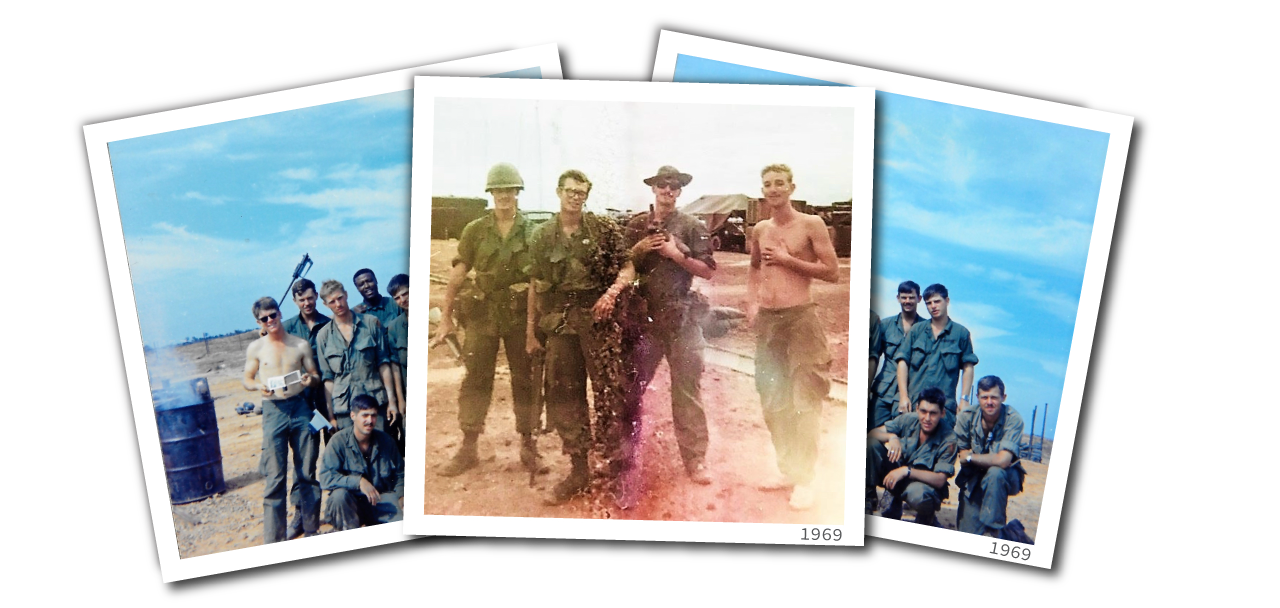
Some of us were closer than others for a variety of reasons. Geography, education, race, personal habits. Some crossed over the lines and were comfortable among many. Others were strict in their associations. Everyone had a reason. None of it mattered when the shit hit the fan and the lead was flying.
It really was a matter of life and death. There is a song lyric from the era that crystallizes the relationships we built in the simplest of terms, “We were so close, we bled inside each other’s wounds…”. We spent all our time together. We were a closed society. We were as close to each other as humanly possible. But something was still missing.
Mom & Dad could write all the supportive letters possible, the soon-to-be ex-girlfriend could send all the tempting Polaroids she could afford, and dear old Aunt Archie could deluge the platoon with stale banana bread and boxes of crumbled chocolate chip cookies, but something was still missing. A void that couldn’t be filled by food or praise.
‘Improvise, Overcome, Adapt’
It was physical. The only thing that would fill the void was the companionship of a young woman.
When we arrived in country, we were exhausted from the nearly 24-hour flight and shaking with fear in the oppressive heat and humidity of a Southeast Asian night. We were processed, fed, processed again, and dispatched to barracks.
We weren’t particularly prepared for the in-country orientation where we were showered with apocryphal tales of female Viet Cong agents who would lure you into a sexual encounter, only to kill you, or worse, take you prisoner. The whole point was to scare you into keeping your zipper up.
What was a young man to do? In the words of Gunny Highway, “Improvise. Overcome. Adapt.”
Ten thousand miles from home, in an alien land and culture, warned about venereal diseases that would exile you to an island populated by fellow soldiers who didn’t heed the warning. Doomed to live out miserable lives on an unnamed island in an unnamed sea, never to return home again. Erased.
During a presentation of my story to a group of high school students many years ago, I was asked by a young female student, “Did you, like, date when you were in Vietnam?” Those were her exact words.
Vowing never to lie to students about my personal experience in Vietnam and after, lest they become as distrustful and cynical of adult leadership as my generation had become decades earlier, I told her the truth. “Well, it was more like a business transaction than a regular date.” I was never asked to return to that high school.
The Dance Hall
The place was a rickety two-story structure in Gia Dinh, on the highway between Di An and Saigon and was part of what turned out to be a network of Black-Market side businesses owned by a Vietnamese Army Captain and run by his wife, known only as “Mama-san.”
Mama-san and Dai uy (“captain” in Vietnamese) were as corrupt as they come, suspected to be involved in a wide range of sideline endeavors, reselling stolen military equipment and stolen military intelligence. I concluded the Dai uy and his wife were working both sides of the fence.
The Military Police never bothered him, except at Christmas, when they made an obligatory raid on his operation, taking any American into custody. It helped the MP’s paperwork look good at the end of the year if it included busting X number of soldiers at an off-limits dance hall.
The place was always filled with GIs of various military specialties and occupations. Cooks mingled with infantrymen and truck drivers. Company clerks hung out with helicopter mechanics and the PFC who drove a battalion Chaplain in the 9th Division.
American rock ‘n’ roll was thumping at a respectful level, and dozens of conversations between American soldiers and Vietnamese women cut through the heavy air. The unmistakable sound of pop-top beer cans being opened created its own rhythm, complimenting the music. A smart-ass infantry lieutenant made a point of brashly proclaiming what a great guy he was because occasionally he treated his troops with a trip to the dance hall.
Perfume
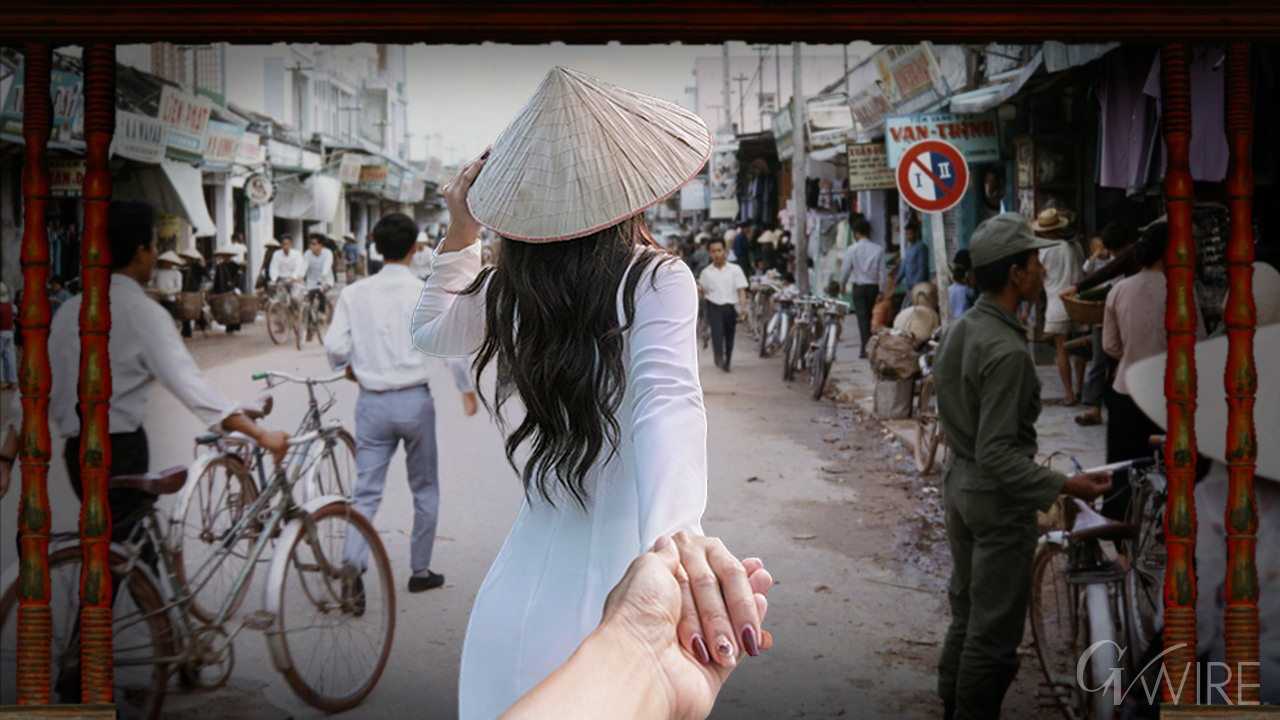
Her name was Huong, which means “perfume” in Vietnamese. Long, straight black hair fell halfway down her back, ending just above a tiny waist. I was only weeks into my 20th year and sporting my first-ever mustache, a thin, wispy gathering of whiskers that might have been mistaken for trained nose hairs. We sat across the room from each other, like two goofy kids at a high school dance, each waiting for the other to make the first move.
She was wearing the traditional Vietnamese Ao Dai, a long, form-fitting tunic over silk pants, highlighting the figure of a woman, in an elegant and respectful way. The garment gives women the appearance they are floating on a thin cushion of air when they walk. I was wearing dirty jungle fatigues and a bush hat, carrying an M-16. I hadn’t bathed in a week. How debonair.
After a few minutes she floated over and asked if I wanted to dance. I tried to act cool, and of course failed miserably. “Sure. What do we do now?” “Pay Mama-san,” she said as she took my hand and lead me to a rickety old stairway, where we paused, and I exchanged Military Payment Certificates, or funny money, with the Grande dame of the dance hall. We climbed together to the second floor, sagging under the weight of half-a-dozen American GI’s and their Vietnamese dance partners, keeping time to the rock ‘n’ roll seeping through the floorboards.
After a time, it seems we fell in love. Love in a war zone, how ironic. What the Hell were either of us thinking? We spent as much time together as we could, which meant a few hours every few weeks. We both knew it was a fool’s errand we were on, but managed to delude ourselves, and each other until the very end. We never talked about a future together, both knowing it was ridiculous since there was no future for either of us in this time and place.
Just a few days after Christmas 1969, a half-hearted slap to the face and a tearful, “Go away, I don’t want you,” slammed the book closed on the relationship. I was shocked, broken, and — if I’m honest — unsurprised. We never saw each other again. What did I expect? What was I thinking?
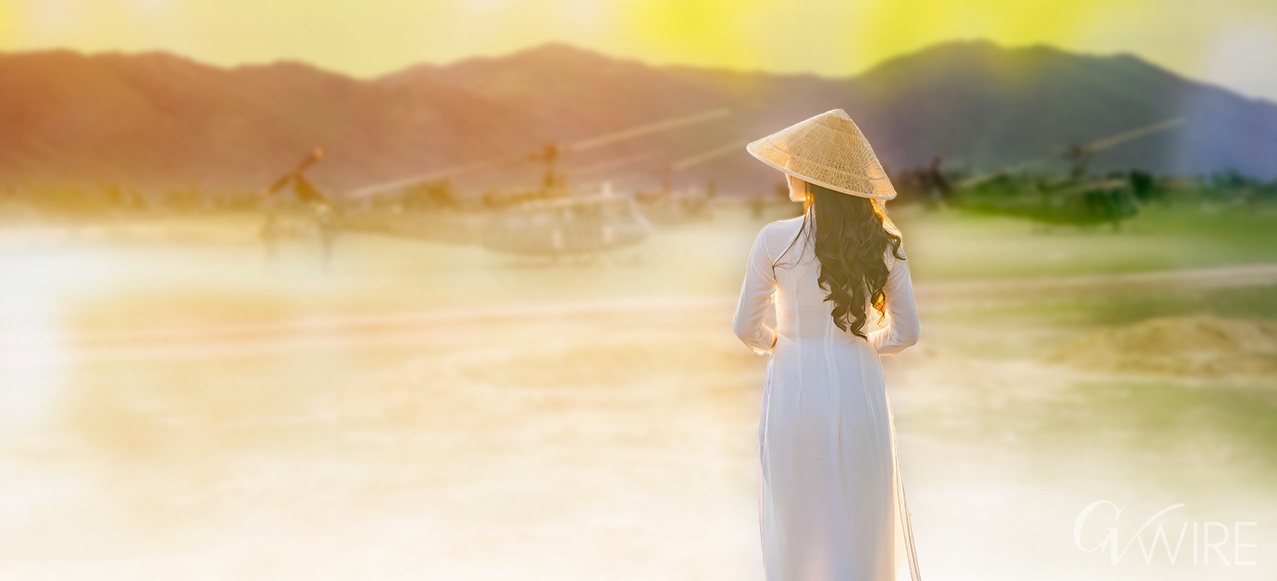
I returned home a few days later. Although nearly 60 years have passed, I have never been able to rid my memory of her.
I hope she had a good life.
About the Author
Jim Doyle of Fresno is a freelance writer and a veterans advocate.