



|
Getting your Trinity Audio player ready...
|
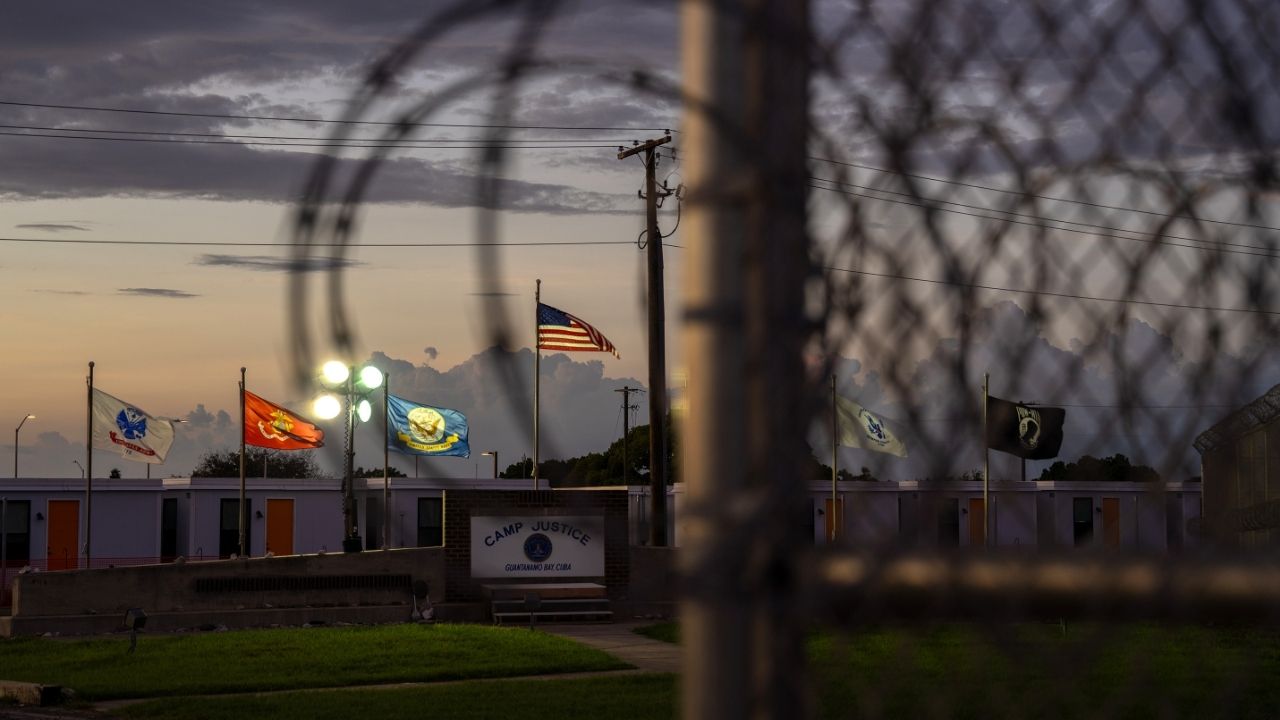
Military prosecutors have decided not to appeal to try to reinstate a key confession by Khalid Sheikh Mohammed, the accused mastermind of the 9/11 attacks.
It was an apparent end to a yearslong effort by the government to defend statements obtained from him under brutal conditions in overseas CIA prisons, and a bid to keep the trial for him and three others on track for the summer of 2028 at Guantánamo Bay, Cuba.
Prosecutors notified Sept. 11 victims and their family members of the decision Friday, a week before the 25th anniversary of the attacks, which killed nearly 3,000 people in New York, Pennsylvania and the Pentagon. Many of the families have been deeply disappointed that it has taken so long to get the death-penalty trial started.

The U.S. government had long argued that the statements Mohammed made to FBI agents at Guantánamo in 2007 were untainted by his isolation and harsh treatment in secret overseas CIA prisons from 2003 to 2006. While held in the so-called black sites, he was subjected to 183 rounds of waterboarding.
But a military judge ruled last month that what Mohammed told the agents was involuntary, in part because he was not allowed to consult a lawyer and was not explicitly told that those particular interrogations could be used to prosecute him.
Danielle Reddan, the prosecution team’s liaison to victims in the Guantánamo cases, wrote the families in a short letter that “an appeal could jeopardize the hard-earned June 5, 2028, trial date.” Reddan, who is also a former New York City prosecutor, added that appealing the judge’s ruling could result in Mohammed being tried separately from the other defendants in the case.
For more than a decade, prosecutors have sought to put on trial five men jointly in the conspiracy, as alleged plotters, trainers, recruiters and financiers, to spare the victims the pain of separate trials. But in 2023, a judge found Ramzi Binalshibh, an accused deputy in the hijacking plot, mentally incompetent and removed him from the case. Another judge is now handling his proceedings.
That leaves the three other defendants in different pretrial postures.
Two of the defendants, Walid bin Attash and Mustafa al-Hawsawi, are awaiting a ruling by the trial judge, Lt. Col. Michael Schrama, on whether their 2007 confessions at Guantánamo were voluntary and can be used against them.
Prosecutors have appealed to try to reinstate the 2007 confessions of the fourth defendant, Ammar al-Baluchi, who is Mohammed’s nephew. A judge suppressed Baluchi’s statement because of his prior torture by the CIA and the circumstances of his confinement at Guantánamo.
Prosecutors had described those so-called clean team confessions as their best evidence in the death-penalty case. They sought a “Law & Order” moment with Frank Pellegrino, a retired FBI agent who tracked Mohammed for years, describing for a military jury how he and Mohammed spent four days in January 2007 discussing the 9/11 plot.
But the prosecutors have other proposed evidence for the trial, including transcripts from secretly recorded discussions between prisoners in a recreation yard at Guantánamo; documents detailing money transfers; and, possibly, information from an interview Mohammed and Binalshibh gave to an Al Jazeera reporter before they were captured in Pakistan in 2002.
Mohammed’s will not be the first trial to proceed without the clean team confessions.
An Army judge previously threw out the FBI interrogations of a Saudi man at Guantánamo, Abd al-Rahim al-Nashiri, who is accused of plotting al-Qaida’s bombing of the USS Cole off Yemen. Prosecutors dropped an appeal, and selection of a military jury in the death-penalty trial of Nashiri is scheduled to start in October.
Legal experts noted that the decision not to appeal Schrama’s decision does not prevent prosecutors from going back to him directly and seeking reconsideration of his decision to suppress Mohammed’s confessions. They would have to find a serious legal error in the 45-page ruling, which has yet to be released, or invoke a change in the law.
—
This article originally appeared in The New York Times.
By Carol Rosenberg/Marisa Schwartz
c. 2026 The New York Times Company







![[hubspot type=form portal=8576119 id=f5235c74-daca-46b2-b841-0fec24b5a509]](https://gvwire.com/wp-content/uploads/2026/09/GVH_LaborDaySavings_300x250_static.jpg)
