

|
Getting your Trinity Audio player ready...
|
On Thursday, the Fresno City Council will consider a 10-year moratorium on data center development as one councilmember says public distrust of the administration has gotten in the way of healthy policymaking.
That opposition, however, comes as one real estate broker told GV Wire that rapidly improving technology and existing market restrictions have limited data center development in California.
With discussions about the city’s highly contentious Southeast Development Area plan returning to council on Thursday, Councilmember Nick Richardson, author of the plan, said putting forward a blanket ban could help calm the fears of the public who have been circulating rumors about data centers going to Fresno.

Dyer Opposes Data Center Development
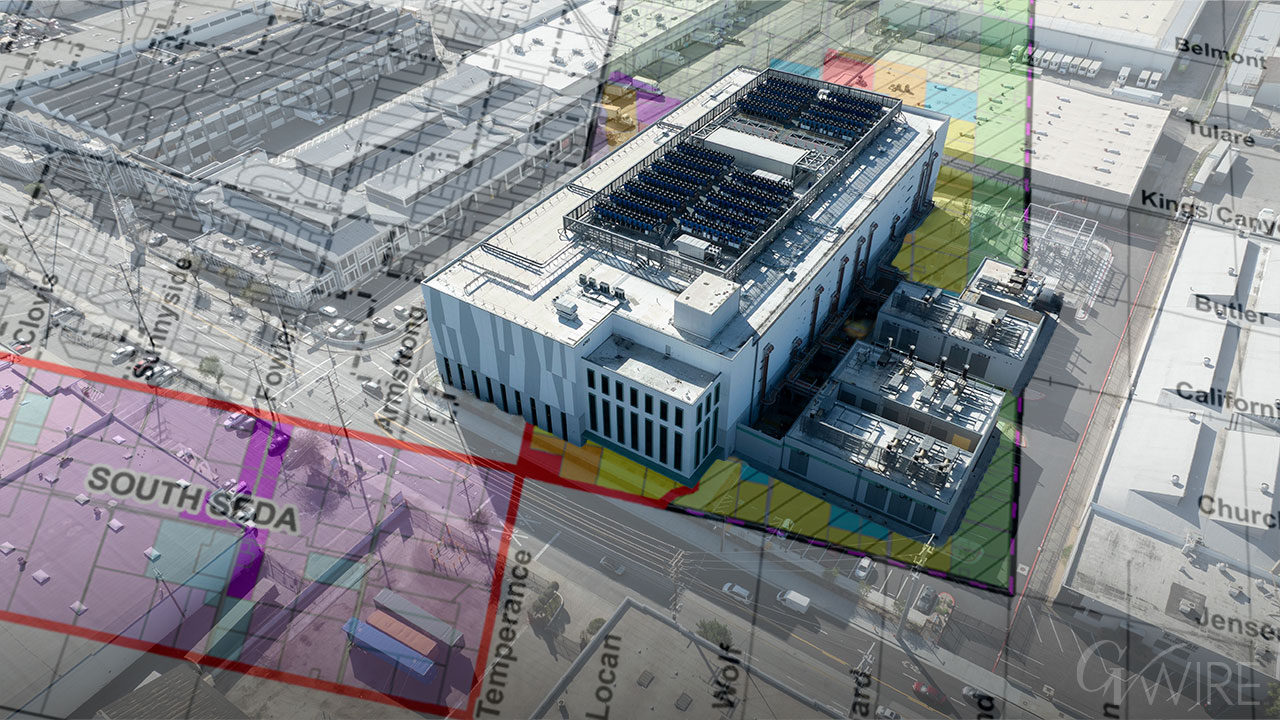
Social media claims have accused Fresno Mayor Jerry Dyer of making deals with hyperscale data centers — the massive server hubs with power demands equaling that of a small city — for his South SEDA industrial proposal.
Communications director Sontaya Rose told GV Wire that Dyer opposes data center development and that no plans currently exist to bring a data center to Fresno.
Richardson said by taking them off the table, policymakers can have real conversations and work toward consensus on a plan.
“It was clear that despite what the development code said, there was still a sense of overarching mistrust in the city’s stance toward data centers,” Richardson said. “I found that it was popping up in a lot of other conversations as pretty much anything that someone was opposed to at any point would be associated with data centers.”
‘Take My Ball and Go Home’ Politics in Fresno: Richardson
Fresno doesn’t have a definition of data centers in its development code — the encyclopedia of building and business uses planners use to decide land use. Without that definition, Planning and Development Director Jennifer Clark told the public during a recent planning commission meeting that they can’t come to the area.
City code, however, allows Clark, or anyone else in that position, to do the work of approving plans, though that still requires extensive environmental studies and approvals.
“It doesn’t mean the director has a thumbs-up, thumbs-down Julius Caesar-say over whether or not a data center gets built,” Richardson said. “It means they have to do all this homework, but the public didn’t understand that.”
Richardson’s plan, if approved, directs city staff to define data centers and then implement a 10-year ban. Richardson said 10 years would give the technology time to catch up so the city could approve future data centers if the concerns can be overcome.
But Richardson said the “take-my-ball-and-go-home” politics have gotten in the way of discussions around real issues such as term limit changes and SEDA. He said the issue goes beyond catering to the loudest as education and reasonableness around discussions have not worked. He regularly gets emails from constituents concerned about data centers.
“Everything is being associated with data centers right now, incorrectly, and it’s a deception tool being used by the opponent of this thing or that thing, and it’s disappointing,” Richardson said.
Market Knows Data Centers Not Appropriate Everywhere: Andril
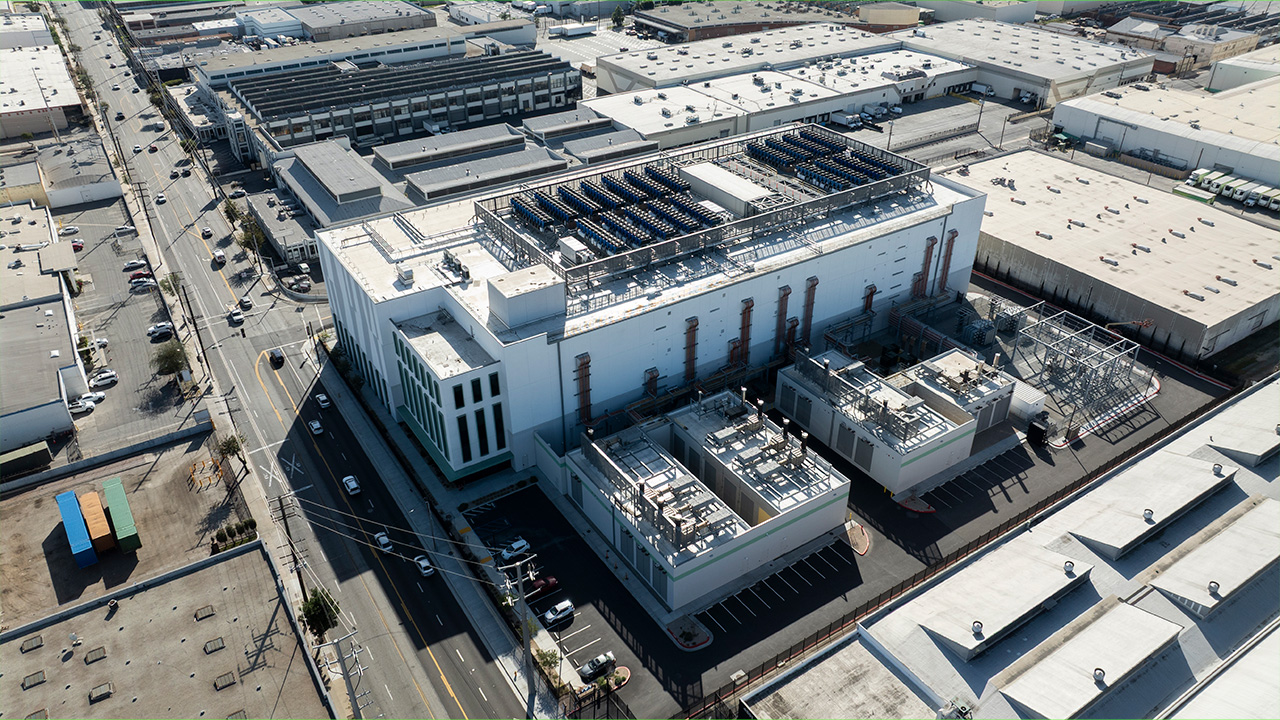
Some of the largest data centers have the energy demands of a small town, requesting from utility companies power needs equivalent to that of 50,000 homes.
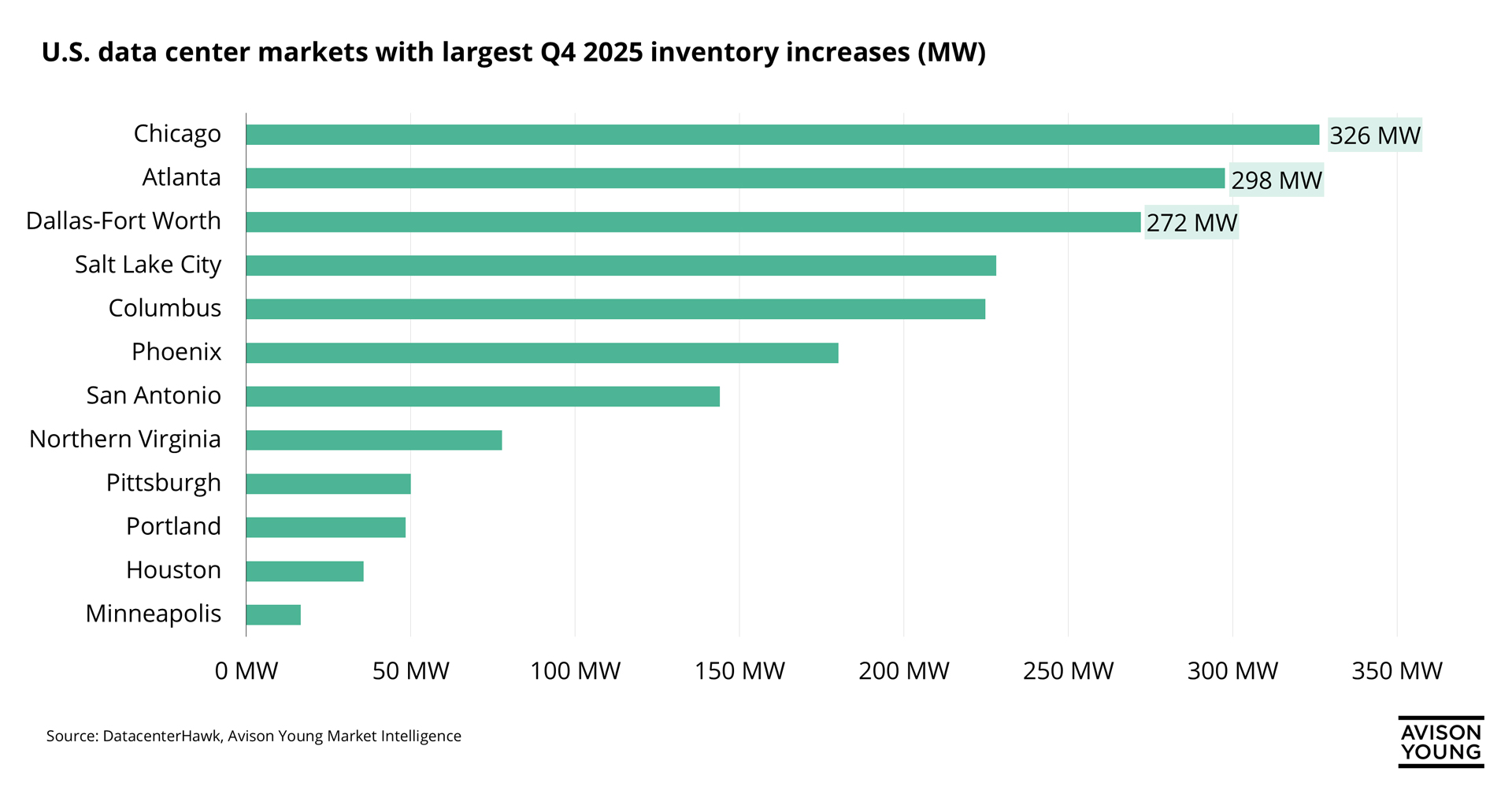
In 2023, a May congressional report showed data centers ate up about 4.4% of electricity consumption nationally, and development has only skyrocketed since. Nationwide inventory growth in the second quarter climbed 80% compared to the last quarter of 2025, according to a report from brokerage Avison Young.
The first half of 2026 saw leasing activity nearly matching that of 2025, the report stated.
Despite that growth, no California areas made it into the top 12 fastest growing markets. That’s because development costs, energy costs, and regulations can’t keep up with the voracious desire to develop quickly, said John Andril, manager of market intelligence with Avison Young.
“When the industry is valuing speed-to-deployment at scale, it’s tough to get speed and scale in California,” Andril said.
He said developers have largely recognized that there are right places and wrong places to build.
“There are some communities across the country that truly are water constrained, and perhaps a data center that consumes a lot of water should go elsewhere,” Andril said. “But there are also communities that have ample supply, so I think that would come down to a decision made by the local authorities as to whether the data center should be located there, whether the facility design is appropriate, but it is most definitely a concern that can be mitigated.”
No Data Center Requests from Fresno Irrigation District
Bill Stretch, general manager of Fresno Irrigation District, said his water agency has never been approached by anyone regarding a data center.
Current sustainability plans for the North Kings Groundwater Sustainability Agency project demands out to 2040, said a spokesperson with FID. With data center water demand not accounted for in that plan, the spokesperson said the agency would be critical of their ability to not impact the water supply.
“If the project increases those demands significantly, the proponent would have to demonstrate they have mitigation in place to offset the pumping,” the spokesperson told GV Wire.
Massive Capital Willing to Invest to Mitigate Harms
With the massive capital behind development, investors see the value in taking on improvements to overcome public objections. That means buying the extras to minimize noise, landscape features to beautify buildings, and others, Andril said.
On water demand, closed-loop systems can make it so systems can recycle coolant, meaning they aren’t constantly drawing from the aquifer. Newer technologies involving immersion cooling could lower water demand ever more.
Without the need for trucks, data centers don’t increase air pollution beyond any pollution that many come from power plants.
“Given who the tenants are in this day-and-age, they have the wherewithal to absorb some of those relatively modest increases,” Andril said.
Power demand remains a sticking point in many communities. When overall demand electricity surpasses available production, many media reports have shown that rates for everyone increase.
Localities have responded to that. In Texas, a 2025 law established higher rates for sources using more than 75 megawatts. The law also requires back-up energy generation on site capable of meeting 50% of their demand.
David Eisenhauer, spokesperson with Southern California Edison, said in some instances, the significant amount of energy sales can offset the fixed costs of the grid.
“In some cases, that revenue can exceed the additional costs of serving the data center customer,” Eisenhauer said. “When this occurs, it can help reduce rates for other customers.”
Eisenhauer said electricity demand from data centers for SoCal Edison has been “modest,” driven mostly by transportation and building electrification.
Regulations Over Moratoriums: Andril
Data centers do have their benefits, Andril said.
In Loudoun County, Virginia — “essentially the seat to the largest data center market in the world,” said Andril — tax revenue from the tech hubs now generate more than 40% of the county budget.
“The roads are amazing, I don’t have kids yet, but I’ve heard the schools are amazing, and the quality of these public services continues to increase,” said Andril.
Savings have filtered down to residents. Between 2009 and 2026, assessments on residential property taxes decreased from $1.245 per $100 of assessed value to 80.5 cents, according to Loudoun Times. Vehicle tax rates also decreased.
Not many of the biggest markets see that level of benefits, Andril saidl, but given the high assessment rates on computer equipment, they do bring a significant amount of money to local communities.
On the job front, while data centers don’t typically generate the level of employment that other commercial developments of the same size do, the jobs created are high-paying.
Andril said communities already with data centers focus mostly on finding the right spot — if it exists — and laying down rules about what they look like.
“The way that I view moratoriums isn’t necessarily an indefinite blockage of future development for that product type,” Andril said. “It could be the case that they just need some time to see how data center intended development unfolds in this area before they have the most informed view that they need in order to make decisions about how to better regulate it.”