
|
Getting your Trinity Audio player ready...
|
Turkey, Saudi Arabia and Pakistan signed a new pact Friday committing to collective defense against attacks on any of the three nations, Saudi Arabia said, in an agreement that could reshape the strategic layout of the Middle East.
The text of the agreement was not made public, making it unclear what the parties’ obligations are. But the Pakistani Foreign Ministry said in a statement that the pact “stipulates that any armed attack against any one of the three states shall be regarded as an attack against them all.”
President Recep Tayyip Erdogan of Turkey, who traveled to Saudi Arabia to sign the agreement, said in a post on social media that its implementation could include joint defense industry projects and counterterrorism operations.

The idea for a pact bringing together Turkey, Saudi Arabia and Pakistan evolved this year as wars and instability across the Middle East led many countries to explore new ways to enhance their security without relying on the United States and other Western powers.
Fueling this thinking were the U.S.-Israeli war on Iran; new attacks on Saudi Arabia that it has blamed on Iran’s allies in Yemen and Iraq; concerns about Israel’s expanding military actions; and doubts about the reliability of the United States as a defense guarantor for its Middle Eastern partners.
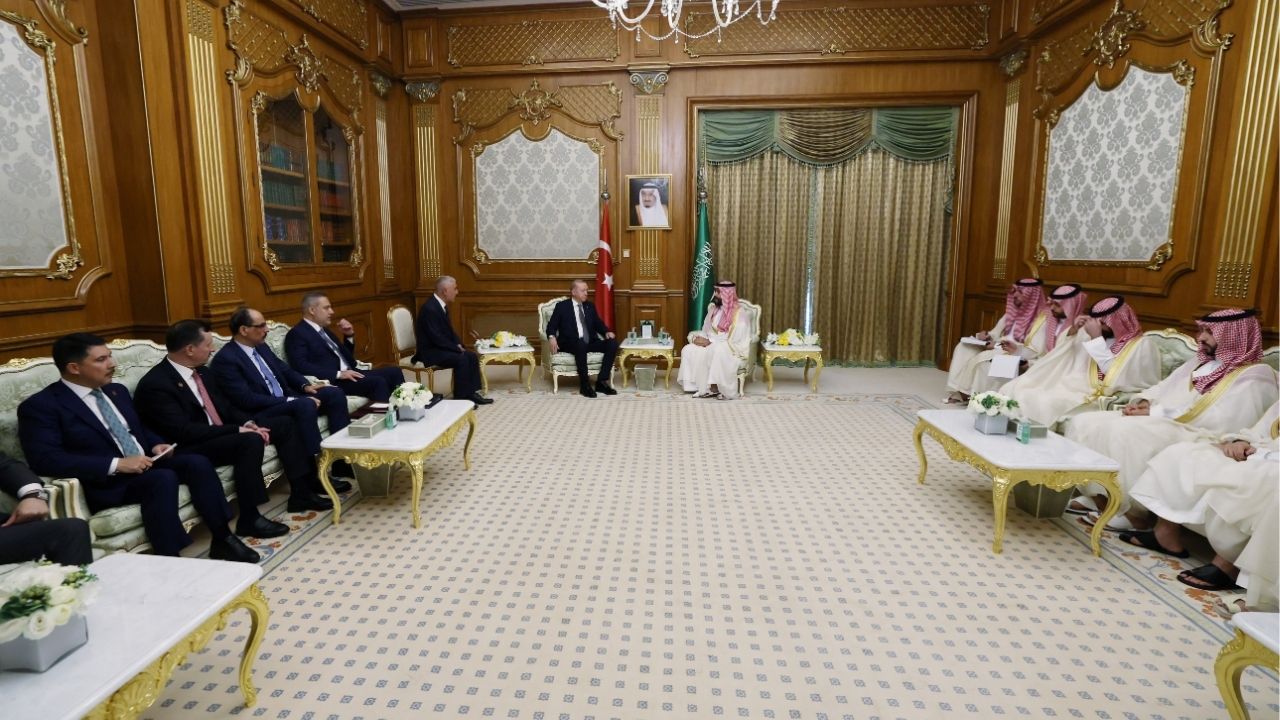
The pact, dubbed the Mecca Joint Defense Agreement, was signed Friday in the holy city of Mecca in Saudi Arabia by Erdogan, Crown Prince Mohammed bin Salman of Saudi Arabia and Prime Minister Shehbaz Sharif of Pakistan.
While Egypt participated in early discussions about such a pact, it was not mentioned as a participant Friday.
Officials from the three countries released similar statements saying that the agreement was defensive in nature, that it was not aimed at any specific country and that other states could join.
Rayed Krimly, Saudi Arabia’s deputy minister for public diplomacy, wrote on social media that the pact would allow the three countries to integrate their defenses to deter threats.
He also said that the three Muslim-majority nations did not seek to establish a new “military axis or sectarian bloc” or set off an arms race. He said the agreement would not get in the way of the individual countries’ other international obligations.
Asfandyar Mir, a senior fellow at the Stimson Center, a Washington-based research group, said the agreement was less about NATO-style military integration than about political signaling.
“What matters is three militarily capable states, in crucial geographies, with diverse relationships, are committing to one another’s defense,” he said.
“It is not intended to replace the United States,” he added. “But it certainly reflects a judgment that U.S. commitment alone is no longer sufficient to ensure security and maintain stability.”
The new pact follows efforts by Saudi Arabia to build a maritime coalition to deter attacks in the Red Sea. Last month, the kingdom invited dozens of countries to join. At least 14, including Turkey, Egypt, Pakistan and Nigeria, affirmed their support, although it remains unclear how the coalition will function.
Saudi Arabia and Pakistan already have a mutual defense pact. That agreement, signed in September 2025, “states that any aggression against either country shall be considered an aggression against both.”
Even after Iranian attacks on Saudi Arabia, Pakistan avoided direct conflict with Iran, with which it also has close ties. In March, Pakistan’s army chief met with Saudi Arabia’s defense minister to discuss Iran’s attacks on the kingdom, and Pakistan warned Iran that it was bound by the defense agreement.
The new agreement brings together three powerful countries with different strengths whose combined territory extends into Europe and Asia.
Turkey has a large military and a growing defense industry, known for producing everything from artillery shells to advanced drones and selling them to a wide range of countries.
Pakistan, too, boasts a strong military as well as a nuclear arsenal. And Saudi Arabia’s huge oil reserves give it financial heft, alongside the geographic advantage of its long coasts on the Red Sea and the Persian Gulf.
But each country also brings its own conflicts and security problems, which its partners may hesitate to get involved with.
Turkey, a NATO member, has long-running territorial disputes with Greece in the Aegean Sea as well as an increasingly acrimonious relationship with Israel.
Since last year, Pakistan has been involved in active conflict with two of its neighbors, India and Afghanistan. It fought four days of clashes with India last May. And it declared “open war” in late February against Afghanistan, which it accuses of sponsoring attacks on Pakistan. Afghanistan denies that.
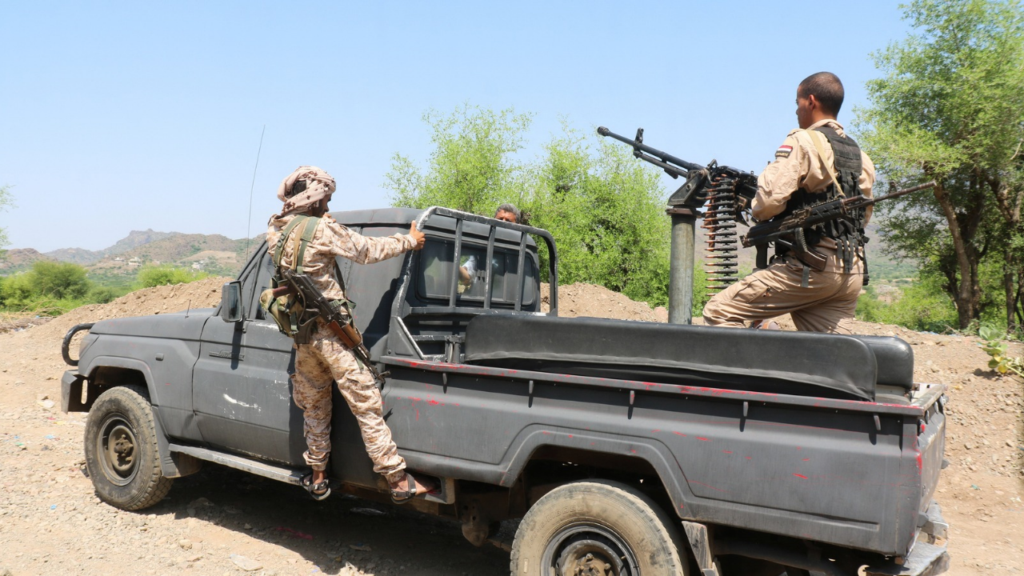
Saudi Arabia sits across the Persian Gulf from Iran, which has launched attacks on the kingdom in retaliation for U.S. and Israeli attacks. It must also deal with Houthi rebels in Yemen, who have launched attacks on Saudi shipping in the Red Sea.
On Friday, the spokesperson for a Saudi-led military coalition in Yemen, Maj. Gen. Turki al-Malki, said in a statement that Houthi shelling the day before had injured 11 civilians in southern Saudi Arabia, including a Pakistani citizen.
—
This article originally appeared in The New York Times.
By: Ben Hubbard
c.2026 The New York Times Company