


|
Getting your Trinity Audio player ready...
|
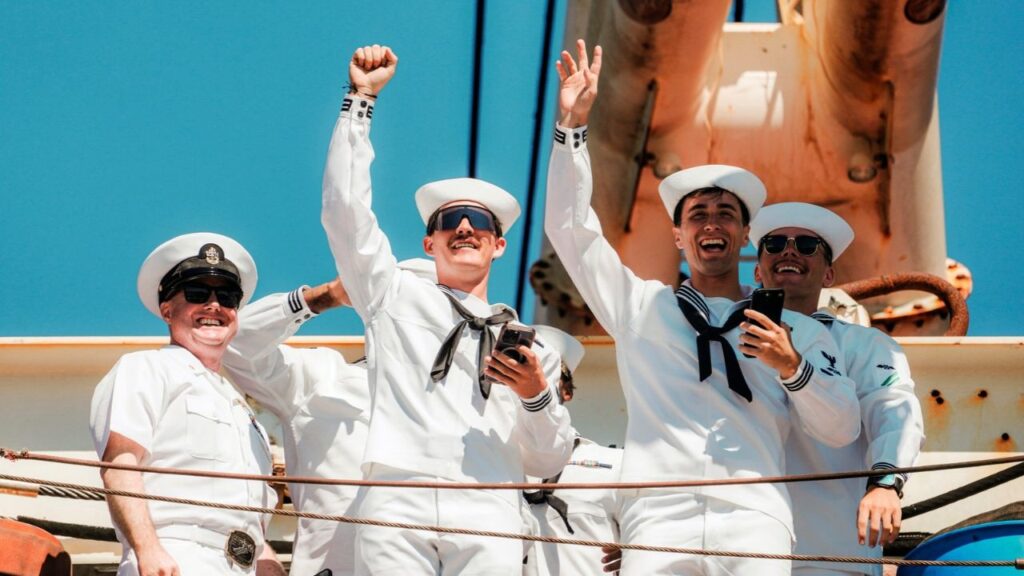
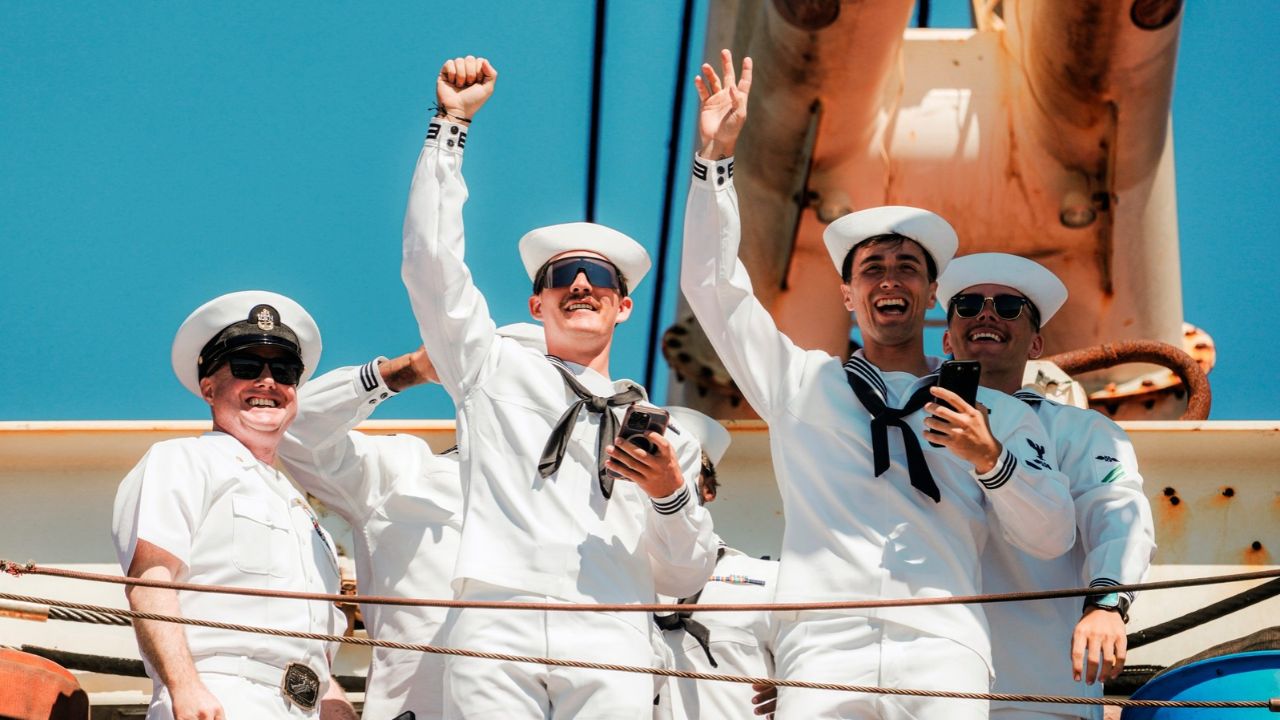
WASHINGTON — The aircraft carrier USS Abraham Lincoln, whose crew endured food shortages and mental health struggles prompted by a 322-day deployment in support of the Iran war, returned Thursday to its home port of San Diego.
Friends and family members of the crew gathered on the pier to greet the ship. They had come with signs and banners, and were clad in red, white and blue.
Many arrived before dawn, then erupted in cheers as the hulking vessel entered San Diego Bay with sailors in white summer uniforms manning the rails — and again when the ship docked shortly after 3 p.m. Eastern.

Family members expressed relief at the sight of their loved ones returning home after such a long and grueling assignment.
“It was nerve-racking when he went days and weeks without communication,” said Lashonda Jones, whose 20-year-old son, Jaysean Jones, is a boatswain’s mate, responsible for maintaining the ship. She sent him Bible Scriptures and motivational text messages to keep his spirits high.
The deployment for the Lincoln’s 5,000-member crew began before the war, when it left San Diego on Nov. 21, 2025. It spent almost a month at sea before pulling into the naval base in Guam for a brief stop for supplies.
The Lincoln nearly broke the record for longest carrier deployment since the Vietnam War.
The USS Gerald R. Ford set that record with a 327-day deployment. But unlike the Lincoln’s, the Ford’s crew was able to disembark in ports across the Mediterranean and Caribbean before steaming to the Arabian Sea before the start of the war.
The first indications of problems came from family members of Lincoln sailors, who sent reporters photos of meager meals served on the ship while supplies were running low. Many families tried to send their loved ones care packages to make up the difference, only to have their mail lost, destroyed or delivered months late.
The reports rankled Navy leaders, who downplayed the problems.
In a social media post in August, the Navy’s acting secretary, Hung Cao, accused reporters of presenting Lincoln’s sailors as “victims.” Six days later, the carrier left the Arabian Sea to begin its journey home.
The next month, in response to questions from Democratic lawmakers, Cao acknowledged that eight sailors from the Lincoln strike group had tried to take their own lives. One jumped overboard, and another tried to do so before being stopped by shipmates.
—
This article originally appeared in The New York Times.
By Jan Ransom and John Ismay/Gabriela Bhaskar
c. 2026 The New York Times Company