

|
Getting your Trinity Audio player ready...
|
AnaMaria Ávila Bugarin had racked up tens of thousands of dollars in bills for psychological evaluations, legal costs and fiduciary fees to prove what seemed obvious to most of the people around her: She didn’t have dementia.

But one of her daughters claimed she couldn’t take care of herself. Ávila Bugarin wanted to show she didn’t need a court-appointed conservator.
So the 76-year-old showed up impeccably dressed for her final exam with a neuropsychologist in September 2018, according to court records. Tearful and distraught, she explained how a quarrel over real estate had destroyed her family and landed her in a fight for the most basic human right, records show. First, she claimed, her daughter had hit her as their property dispute boiled over. Then, her daughter petitioned to get her declared incompetent.

This story was originally published by CalMatters. Sign up for their newsletters.
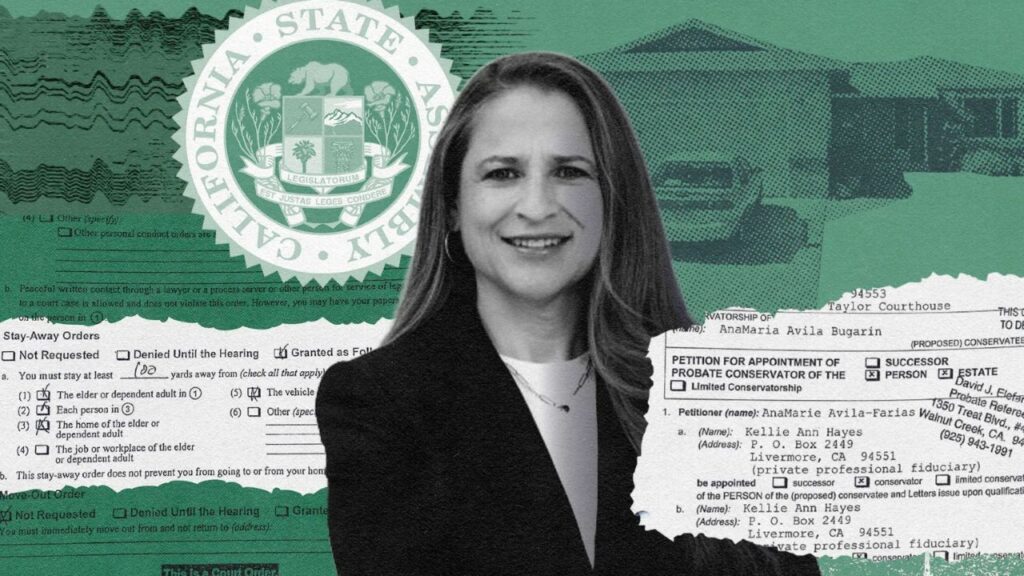
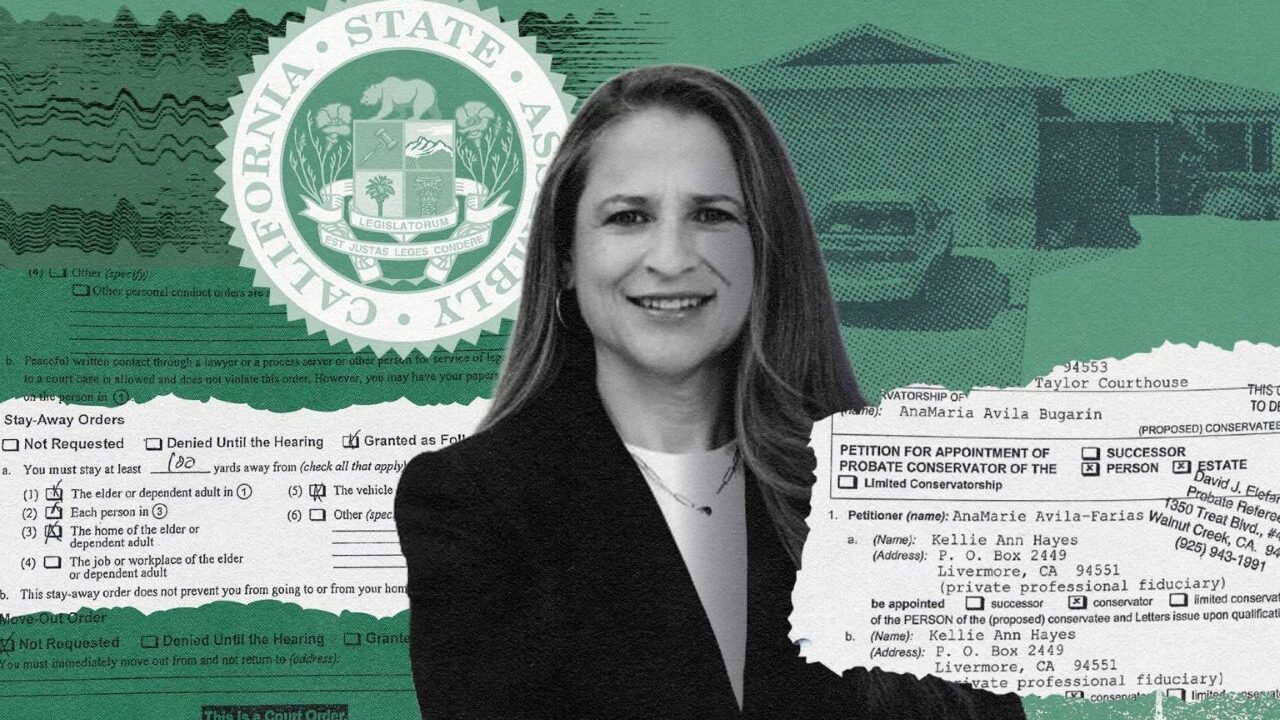
Such ugly family battles can be common in California. What makes Ávila Bugarin’s story unique is that the person who tried to strip her of her autonomy is now Assemblymember Anamarie Ávila Farías, who sits on her chamber’s eldercare committee — the legislative body that’s supposed to protect seniors.
CalMatters reviewed the case as part of our ongoing investigation into California’s conservatorship system, which is designed to protect the vulnerable by taking control of their lives and finances. Previous stories have shown that weak oversight by the state’s Professional Fiduciaries Bureau and the courts has allowed the system to be used against the people it’s supposed to protect.
Ávila Farías Filed for Bankruptcy Three Times
Records on file at the Contra Costa County Superior Court show that before Ávila Farías rose to become an assemblymember, she faced a temporary restraining order for elder abuse after allegedly hitting her mother and ended her conservatorship attempt only after her mother agreed to sign over real estate in a settlement agreement.
The records also reveal that Ávila Farías and her husband have filed for bankruptcy three times on behalf of themselves and their company since 2011, and the assemblymember provided a vastly different explanation of the property in question to the courts than she did to the Fair Political Practices Commission.
Melissa Brown, an elder-law professor emeritus at the University of the Pacific’s McGeorge School of Law, said Ávila Farías’ attempt to place her mother in conservatorship looks like “a weaponization of the process.”
Ávila Farías would not comment on details of the case, citing a confidentiality agreement that was part of the case’s settlement. But she said she plans to introduce legislation on the issue because of her experience in the case, “hopefully next year.” She didn’t provide specifics about the focus of the legislation.
Her spokesperson, Roger Salazar, said in a written statement that there “has never been a judicial finding that Anamarie Farías engaged in any wrongdoing.”
“California conservatorship proceedings commonly involve complex family dynamics,” he said.
He pointed out that she has since been named a conservator for another family member, which “reflects the court’s independent determination that she satisfied the legal standards required to serve in a fiduciary capacity.”
Her other family members also declined to comment for this story, citing the confidentiality agreement, or didn’t respond to requests for comment.
Nick Miller, a spokesperson for Assembly Speaker Robert Rivas, said the speaker was not aware of the temporary restraining order or the conservatorship petition when he appointed Ávila Farías to the committee.
Newsom Endorsed Ávila Farías for Assembly
Ávila Farías grew up in Martinez, where she served on the city council and the Contra Costa County Board of Education. She was on the board of directors for the California Housing Finance Agency from 2015 to 2024, during the court battles. Two years ago, voters sent her to the state Assembly with the endorsement of Gov. Gavin Newsom.
In 2024, the Fair Political Practices Commission received complaints that Ávila Farías had not disclosed all of her economic interests for several years. The commission closed an investigation in 2025 after she amended her forms, disclosed reportable economic interests and completed the commission’s educational course.
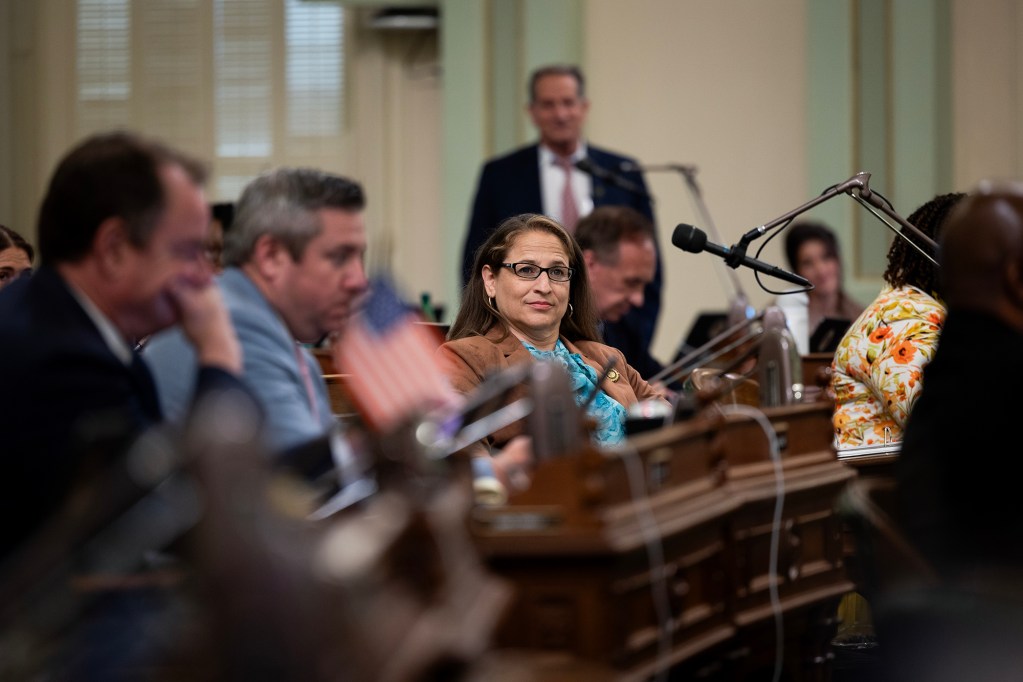
Recently, she introduced a bill that would ban some U.S. Immigration and Customs Enforcement employees from becoming police officers and teachers in California. A watered-down version of the bill passed the Assembly and is now in the Senate.
Ávila Farías sits on the Assembly’s Aging and Long-Term Care Committee and is running for a second term in the Legislature.
History of Questionable Property Transfers
Before her ascent in state politics, Ávila Farías and her husband tried their hand in real estate, leaving behind a trail of bankruptcies and questionable property transfers, court and property records show.
Their family strife centered on three properties: the family home that Ávila Farías purchased with her mother and sister, which they rented to a tenant; Ávila Farías’ permanent home; and another rental property.
In August 2008, Ávila Farías and her husband gifted the three properties to the lawmaker’s mother, Ávila Bugarin, property records show. In court filings, Ávila Bugarin maintained she had no idea she’d been given ownership of two of the properties. Ávila Farías told the court that her mother was aware of the transfers.
About three months after the transfers, the couple signed a $2.3 million business loan agreement. They defaulted on the loan about 18 months later, according to court filings, and the couple’s real estate company filed for bankruptcy in September 2011, eventually turning over ownership of an unrelated property to the lending company.
The bankruptcy case was dismissed in April 2012.
Why the Mother Started Doing Her Own Research
Years later, Ávila Bugarin said that she discovered her daughter “was behind on her mortgage” on the family home, according to the court investigator’s report. It was then, Ávila Bugarin said, that she started researching the properties, and she learned that her daughter had placed the two other homes in her name.
Ávila Bugarin told the court investigator she also learned that her daughter had taken out loans against the family home. Ávila Bugarin, who spoke limited English, told the court investigator that she signed the bank documents for the loans, thinking she was refinancing the home, not borrowing against it.
She refused to deed the two properties back to Ávila Farías, saying she’d have to get the family home back first.
The police eventually got involved.
In February 2018, according to court records filed by Ávila Bugarin, Ávila Farías stormed into her apartment, yanked the telephone from her mother’s hand and hit her wrist.
The mother filed for a temporary restraining order, asking for protection for herself and her daughter who lived with her, Judith Ávila, which a judge granted. Judith Ávila corroborated her mother’s account in court filings.
Ávila Farías denied the allegations, saying her mother slapped her instead.
Salazar pointed to a statement from another sister, RoseMarie Griffin, who was on the other end of the phone call when the altercation occurred. Griffin told the court her sister had no history of verbal or physical abuse. “I have never experienced or witnessed any behavior” that would merit a restraining order, she said.
The temporary restraining order was in place for about a year, according to court records.
After mediation over the restraining order failed, the mother filed to evict Ávila Farías from the home that was now in her name. Ávila Farías filed a request in probate court to place her mother and her sister in a conservatorship, telling the court that her mother had “an inability to carry out actions in her own rational self-interest, and is subject to delusional and severely disorganized thinking.”
She argued that her brother was unduly influencing their mother and that her mother needed a neutral conservator in light of disagreements between her and her siblings.
Ávila Farías told the court that her mother was forgetful and cited years-old incidents of her mother being scammed out of about $500 and allowing “some squatters (homeless felons)” to use her water hose as examples of why her mother needed someone else to handle her affairs.
The judge immediately placed Ávila Bugarin and Judith Ávila under a temporary conservatorship. He said Ávila Bugarin appeared to have been unduly influenced and ordered that she be evaluated. The conservatorship, albeit temporary, blocked Ávila Bugarin from making any financial or personal decisions for herself.
Doctors: Mother Able to Take Care of Herself
In subsequent proceedings to determine whether the conservatorship should be permanent, Ávila Bugarin’s other children told the court that they didn’t think their mother had dementia. Two medical doctors came to the same conclusion. And after the final exam, so did the neuropsychologist.
“Ms. Avila does not present with any form of significant cognitive deficits which would limit her ability to make medical, legal, financial or life care planning decisions for herself,” Dr. Eric Freitag told the court.
Even the court-appointed professional fiduciary — whom Ávila Farías had recommended — told the court investigator that she “hadn’t noticed any of the issues (Ávila Farías) set forth in the petition.” The fiduciary said Ávila Bugarin was “clear headed and able to take care of herself,” court records show.
A group of experts drew similar conclusions about Judith Ávila, saying she did not need a conservatorship.
Ávila Farías’ attorney, Gary Winuk, said it was appropriate to use conservatorship to figure out Ávila Bugarin’s mental capacity. “The whole purpose of the conservatorship process is to get appropriate testing to find out what someone’s capacity is,” he said.
But even after experts determined that her mother and sister had the capacity to make their own decisions, the Contra Costa County politician didn’t drop the conservatorship cases.
About a year after her petition, Ávila Farías won a significant victory: Her mother agreed to transfer ownership of the two contested properties, valued at about $1.8 million. And they both agreed to sell the family home they owned together.
Her mother also agreed to drop her petition for a restraining order. Ávila Farías, who had been arguing that her mother wasn’t competent to make her own financial decisions, said she would stop trying to get the government to take away her mother and sister’s ability to control their own lives.
Judge Orders Sale of Home Over Ávila Farías’ Objection
Five months after the settlement, Ávila Farías hadn’t listed the home for sale. The judge appointed a receiver, over Ávila Farías’ objection, to sell the home. Three months later, Ávila Farías filed for bankruptcy. The home was eventually sold in November 2020; mother and daughter used the profits to cover more than $186,000 in legal fees and other bills related to the conservatorship. Under the agreement, Ávila Farías also gave her mother $116,000 from the sale.
While the case has long since been resolved, the records from the conservatorship petition raise larger questions.
Ávila Farías had claimed that her mother hadn’t been contributing to the costs of the properties.
“For the past 20 years, Ávila Farías not only has been financially responsible for all asset liability but has also managed day-to-day operations and expenses with no financial contributions from Mom,” she wrote in a court filing.
Yet, three and a half years earlier, Ávila Farías told the Fair Political Practices Commission a completely different story.
Under pressure from a resident to recuse herself from a city council vote on a resolution that could have impacted her property value, she asked the commission to weigh in. “My mother provided the down payment and has made the loan payments ever since,” she wrote. “My mother is the sole owner of the property.”
The commission said that there was no conflict of interest. Ávila Farías voted in support of the measure.
At a city council hearing, the politician berated the resident for asking her to recuse herself.
“I conduct myself in a high moral standard, and I have my own code of conduct, that I don’t need you or any of my council members to govern,” she said.
This article was originally published on CalMatters and was republished under the Creative Commons Attribution-NonCommercial-NoDerivatives license.