
|
Getting your Trinity Audio player ready...
|
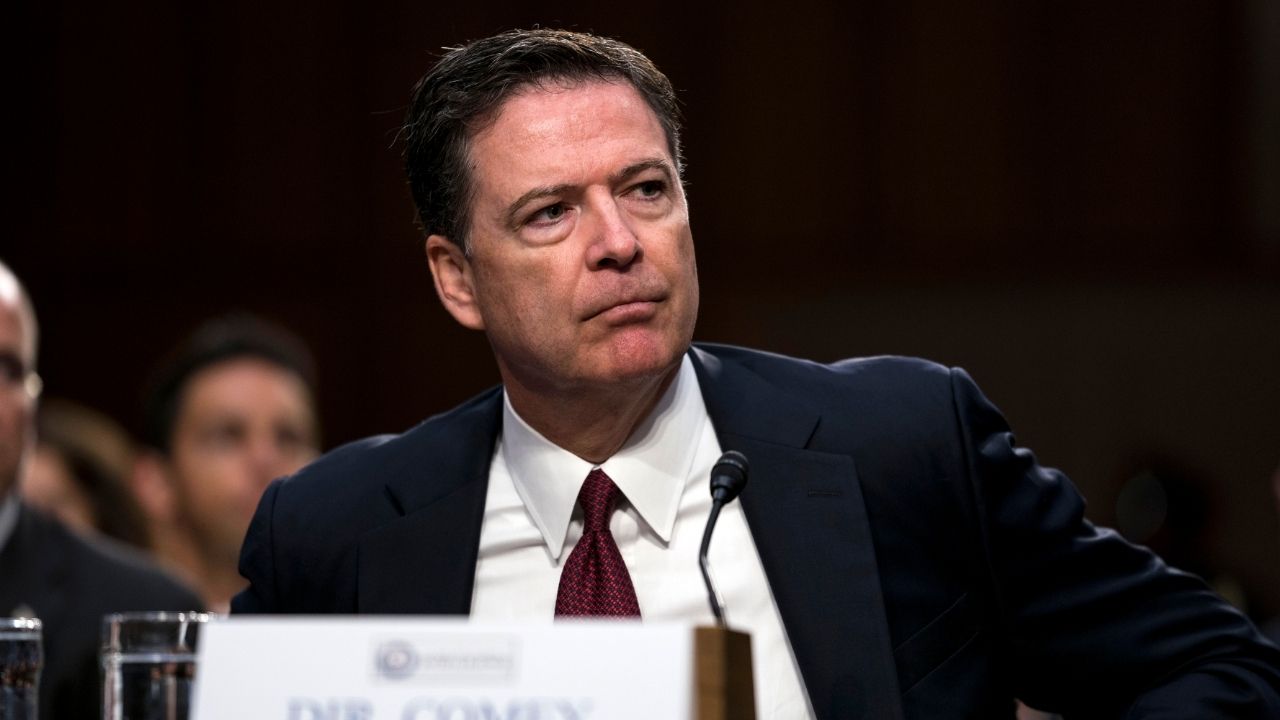
WASHINGTON — Secret Service agents who questioned former FBI Director James Comey were told to send details of the interview to Air Force One so President Donald Trump could review them, according to a new court filing by Comey’s lawyers seeking to dismiss the criminal case against him.
The filing is based on internal government documents turned over to Comey as he fights a criminal charge that a photo he posted online of seashells on a beach that said “86 47” amounted to a threat against the president.
The disclosure is the most glaring example to date of the degree to which Trump now directs federal law enforcement actions, and suggests his intense personal involvement in investigating his longtime nemesis.

Comey posted the photo to his Instagram account in May 2025, and the president’s supporters quickly denounced the post as a threat. Comey denied that, saying he had understood the term “86” to be restaurant jargon for expelling an unruly patron. The number 47 refers to the 47th president, Trump.
Hours after the social media post, the Secret Service spoke to Comey on the phone, trailed him as he drove from a vacation home in North Carolina to Virginia, and asked his cellphone service provider to give the authorities real-time tracking information about his location, according to the filing.
One Secret Service message cited in the filing from that day said that “the # 3 guy at DOJ ‘wanted to ping the cellphone’” of Comey using an exigent circumstances request, referring to a legal process typically deployed in fast-moving emergency investigations where court orders may take too long because someone could be in danger.
The Secret Service messages do not appear to name the senior Justice Department official, but the No. 3 position at the Justice Department is the associate attorney general, a job that was not filled by a Senate-confirmed official at that time. A Justice Department spokesperson declined to comment.
During that time, the Secret Service agents following Comey’s car lost him briefly because he had turned off the highway to visit the grave site of one of his children, the filing said.
The next day, Comey agreed to be interviewed face to face. One government document said that “POTUS was requesting a copy of the interview notes to use in his 6 p.m. press conference.” At the time, Trump was traveling on Air Force One, and a Secret Service agent described the interview as “a hot topic on the plane,” saying that Trump was “very interested.”
Another Secret Service official relayed that Trump had made a “direct request” for a “summary of the interview when available.”
That summary was then sent to a senior Secret Service agent on Air Force One.
Yet in an interview on Fox News that day, Trump declared, “I’m not going to get involved.” The president said Comey knew exactly what his seashell photo meant, adding, “That meant assassination.”
The interview with Comey was unusual in another respect, according to the court filing. The top lawyers at the Department of Homeland Security and the Secret Service attended the interview in person, as did a federal prosecutor from Virginia, according to the court filing.
The filing urges the judge to dismiss the case as a vindictive and selective prosecution based on the president’s long-standing personal loathing for Comey, who served as Trump’s FBI director in 2017 before Trump fired him. Comey has also sought to have the charge dismissed on the grounds that his social media post was protected by the First Amendment as nonthreatening political speech.
Moreover, he has urged the judge to scrutinize the grand jury proceedings for any suggestion that prosecutors misled members of the panel to secure the indictment in the case.
Trump and his supporters have repeatedly claimed that “86” meant, in mob parlance, to kill someone. Trying to bolster that claim, FBI investigators repeatedly searched investigative files and court records for confirmation, only to repeatedly fall short.
One agent searched the FBI’s vast Sentinel databases for references to “86” that meant killing, and the results were “inconclusive,” according to the filing.
Another investigator also scoured a 33-year-old mob trial transcript in which Comey had been the lead prosecutor for references to “86” and came up empty. Retired agents who had worked mob cases in New York were interviewed and they, too, said they did not know of the term “86” being used as slang for killing, though one retired agent conceded he generally thought of it as meaning to “get rid of things.”
At one point, an agent even interviewed former mobster Salvatore Gravano, better known as “Sammy the Bull,” who became a major government witness against the notorious Gambino crime family boss John Gotti.
Gravano, according to the court filing, said that “86” meant to gangsters “to kill,” though he also said he did not recall ever discussing the term with Comey during trial preparation. Gravano said he believed Comey’s social media post was a call for violence against Trump.
Investigators managed to find one person, identified in the filings only as “Person-1,” who claimed that Comey must have known that “86” was a term for committing violence given his history as a prosecutor on high-profile mafia cases.
Prosecutors used statements from Person-1 as evidence to obtain warrants to search Comey’s digital files, but his lawyers say the government never revealed to the judge who signed the warrants that Person-1 had told investigators that he wanted Comey to be jailed and had not communicated with him for years.
—
This article originally appeared in The New York Times.
By Devlin Barrett and Alan Feuer/Doug Mills
c. 2026 The New York Times Company