




|
Getting your Trinity Audio player ready...
|
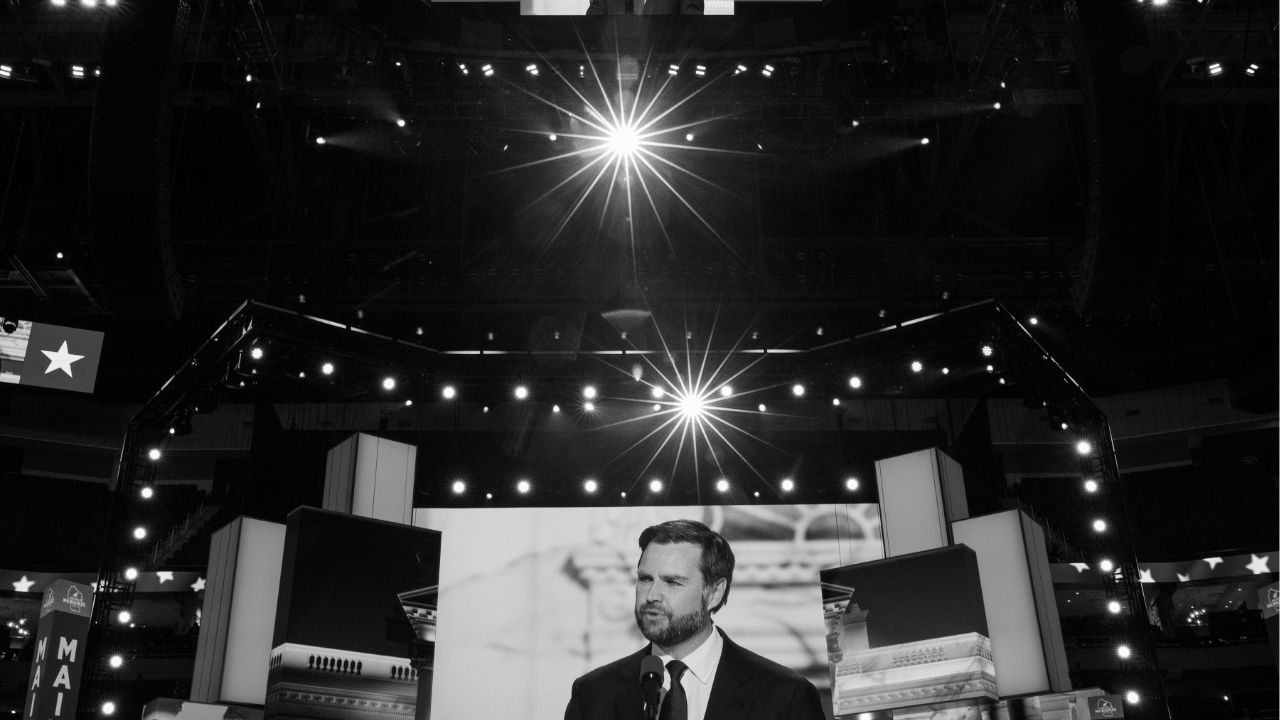
For the first year of the second Trump presidency, Vice President JD Vance served primarily as the White House’s designated tough guy. Rather than a softener of Trumpian harshness, he was charged with being (or chose to be) tougher than the president himself, whether that meant publicly pressuring Ukrainian President Volodymyr Zelenskyy or defending the Minneapolis immigration crackdown or making a symbolic flight to Greenland, the frozen object of the president’s desire.

In the past several months, Vance’s role has changed. He was the most prominent internal skeptic of the president’s decision to attack Iran and then the would-be diplomatic disentangler of the Iranian knot. (He has also embarked on a — somewhat — culturally conciliatory book tour and welcomed a new son.)
Because I think the Iran war has been a folly and a snare, I have greatly preferred this version of the Vance vice presidency to the version that seemed subsumed into id-driven conservative politics. By contrast, while I thought Marco Rubio’s performance in his first year as secretary of state was extremely effective, Rubio’s performance vis-à-vis Iran has often been a profile in evasion, letting other officials take risks to either own the war or seek peace while he keeps his options open.

Republican Party politics, however, often do not conform to my preferences, and the version of Vance that I’ve preferred is also the version who seems to his internal GOP enemies to be politically weakened. From swarming online attacks to stinging critiques from The Wall Street Journal and Ben Shapiro, there’s a palpable sense in the Vance-skeptical parts of the right that the vice president is unusually vulnerable and that a Rubio scenario for 2028 might actually be viable.
Data Trending for Rubio
The Vance skeptics have some data on their side. Rubio has crept up on Vance in a new 2028 New Hampshire primary poll and sits not that far below the vice president in betting markets. And you can certainly make a case that being initially right about the Iran war doesn’t offer much political upside to the vice president.
First, even amid growing doubts about the conflict, most of the Republican base doesn’t want to be told that the president made a terrible mistake in going to war, and a vice president can’t campaign that way regardless. And since Vance can’t campaign that way, because he has to defend his boss, his position won’t be fully satisfying to the anti-war right either, whether embodied by Tucker Carlson or Joe Rogan.
This dilemma could have been resolved by a Vance peace deal, letting the vice president credit President Donald Trump with a supposed victory while earning his own credit for dealmaking from those who see things clearly. But obviously the efforts to end the war have not succeeded yet, and the June memorandum of understanding between the United States and Iran, mainly negotiated by Vance, is currently bobbing, bullet-strafed, in the Strait of Hormuz. So you could argue that he’s now trapped betwixt and between — a scapegoat for hawks who think the administration hasn’t been tough enough but not successful enough diplomatically to satisfy conservatives looking for a peacemaker.
But the challenge for the anti-Vance voices is that it’s not enough to have a story where the Iran war has created various political problems for him. You need a story where he is so weakened that Trump himself decides to favor Rubio as a successor — because there’s no way that the secretary of state campaigns against the vice president without Trump’s tacit blessing.
Such a story was imaginable at the start of the war. If it had gone well, Vance’s opposition would have looked foolish, and Rubio could have then positioned himself as the champion of a successful hawkish foreign policy.
The War Aside, Is Trump Warming to Vance?
But from where we are right now, the position of difficulty and stalemate, there’s no evidence that Trump regards Vance more skeptically because of his initial opposition to the war. Indeed, there’s reporting that the president has warmed to the vice president over the past few months — albeit with Vance’s weight loss given partial credit for the shift. And some of Vance’s most controversy-courting comments on the war, his critiques of Israel’s posture especially, almost certainly reflect the president’s own frustrations.
So how would you get from here to a world where Rubio becomes the heir apparent? If the war grinds on in stalemate and ends in embarrassment for America, I cannot imagine a successful Republican primary campaign being waged on the premise that Vance is too dovish or anti-interventionist. If Trump ramps up the hostilities and the war becomes an even bigger debacle, that’s bad for all his would-be heirs but hardly a boon for a dump-Vance movement.
Which leaves only a scenario where Trump sharply escalates, his vice president opposes the escalation while his secretary of state champions it, and the Iranian regime collapses and gas prices with it, leaving Trump with Rubio to thank for victory and Vance to blame for standing in its way.
That’s the future where I might bet on Rubio for 2028. But it’s also not a future that I would bet on happening.
–
This article originally appeared in The New York Times.
By Ross Douthat/Damon Winter
c.2026 The New York Times Company





![[hubspot type=form portal=8576119 id=f5235c74-daca-46b2-b841-0fec24b5a509]](https://gvwire.com/wp-content/uploads/2026/09/GVH_LaborDaySavings_300x250_static.jpg)
