
|
Getting your Trinity Audio player ready...
|
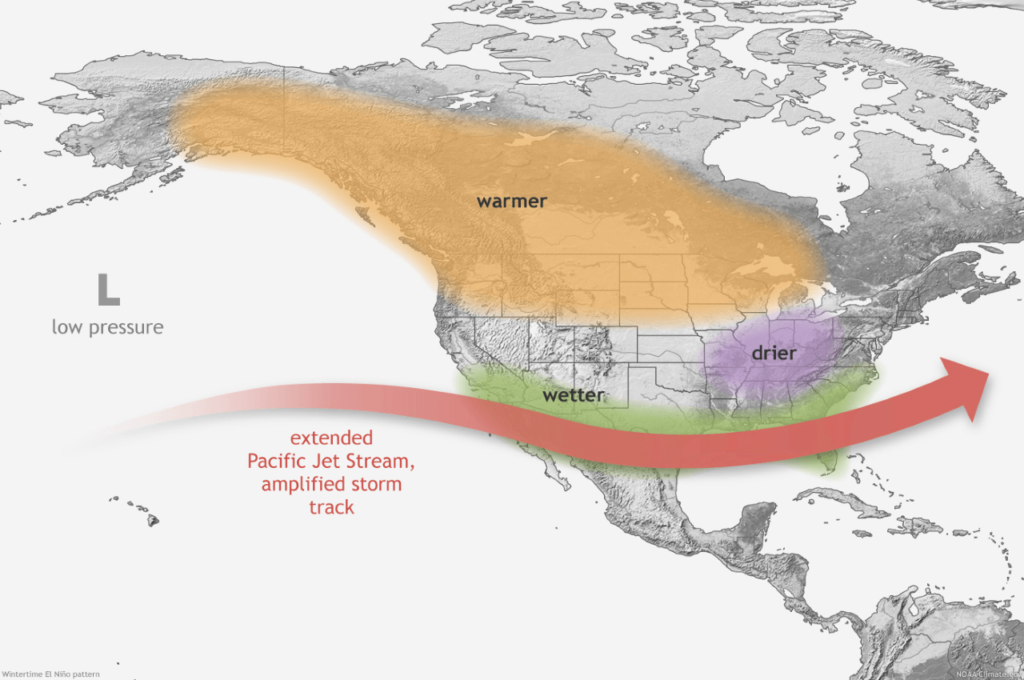
El Niño is here, it’s getting stronger, and there’s a 97% chance it will last through early spring, says the National Oceanic and Atmospheric Administration.
NOAA also is virtually certain that this El Niño will be “strong” or “very strong” October through December. When the experts at NOAA say “very strong,” think of what you and I might call a “super El Niño.”
Weather, of course, is more fickle than a politician overdosed on polls. What El Niño helps deliver depends on global location. Thus far, El Niño is combining with the earth’s warming surface to make it unbearably hot in many parts of the world.

What Is Kokushobi?
The Japan Meteorological Agency has introduced a new term — kokushobi — to describe days predicted to reach 40 degrees Celsius (104 Farenheit). The word means “harsh” or “cruel.”
JMA picked kokushobi based on the results of an online survey that generated 478,000 responses, The Japan Times reported. Chōmōshobi, meaning “super extremely hot day,” came in a distance second.
As for what’s ahead on the heat front, NOAA is confident that “2026 will rank among the 10 warmest years on record, and very likely that it will place within the top five.”
Past Super El Niños Deliver Buckets of Rain
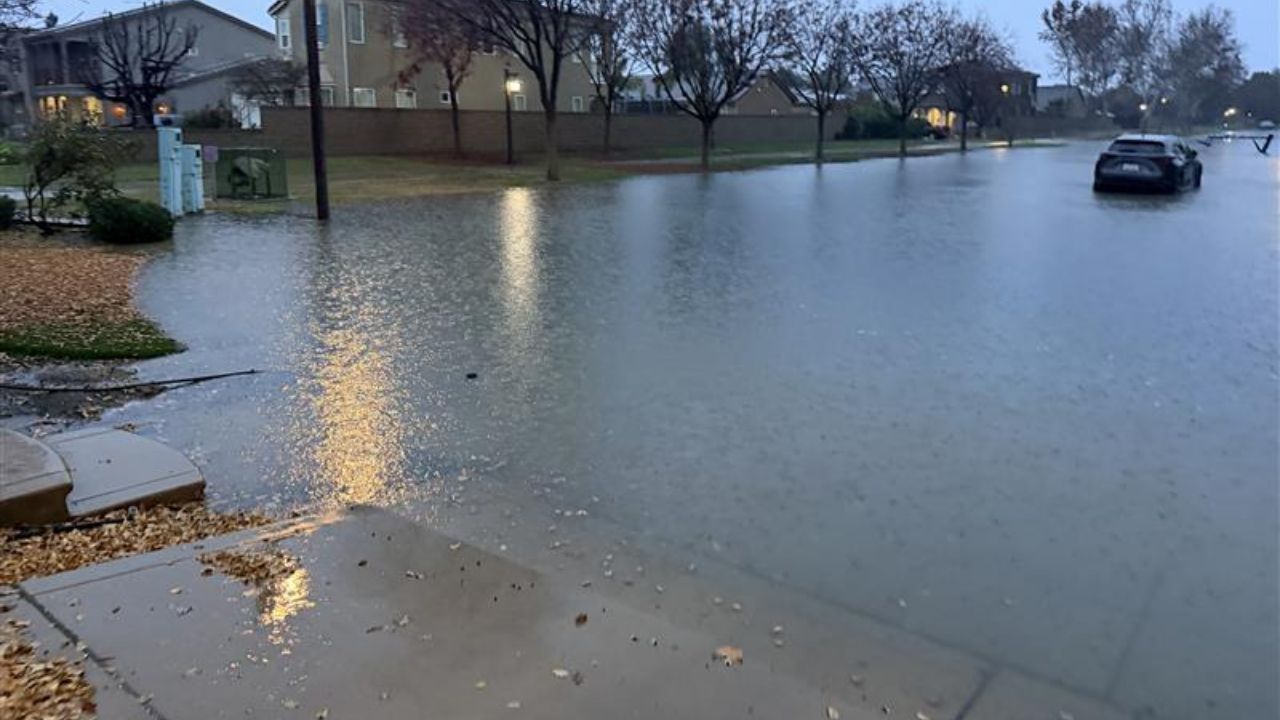
In Fresno and other San Joaquin Valley cities, however, super El Niño is closely linked with plentiful, sometimes record-breaking rain.
Thus far, this El Niño is matching 1997-98, the second strongest since 1950. And when you examine Fresno rainfall in the four “very strong” El Niño cycles — 1982-83, 1991-92, 1997-98, 2015-16 — you find totals that delight farmers and spike umbrella sales.
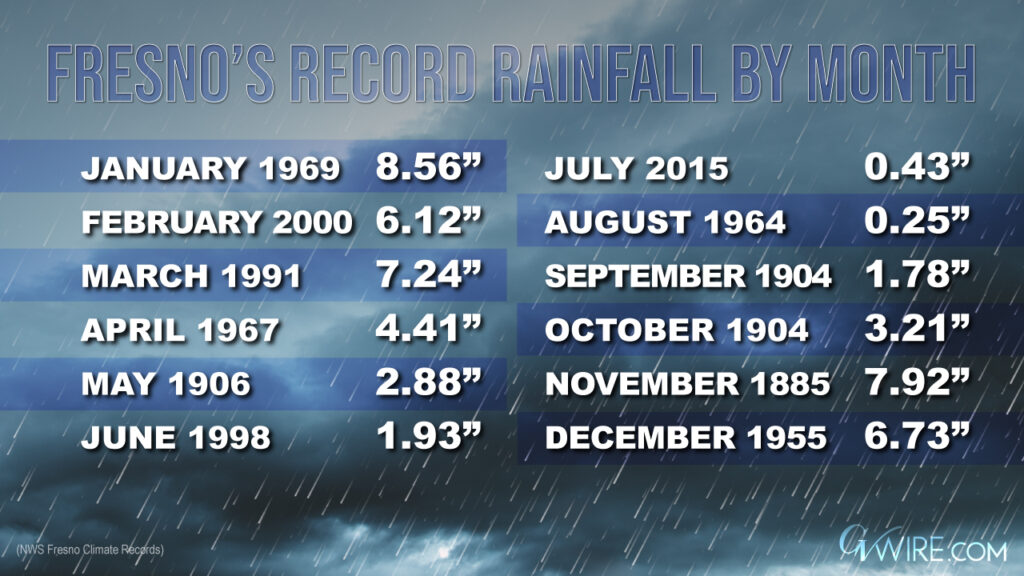
In 1983, Fresno set a calendar year precipitation record that’s yet to be broken with 21.61 inches. That was more rain than in all of 2012, 2013, and 2014 combined.
In 1998, 17.65 inches fell — sixth-wettest in city history. The calendar year of 1982 recorded 16.08 inches. A strong November and December in 2015 signaled the end to drought and ushered in 2016, which produced 13.65 inches, more than two inches above the National Weather Service’s “normal” for Fresno.
Words of caution: NOAA says that “no two El Niño events are the same.” Meaning Fresno could be dry, wet or something in-between through spring.
Learn more about El Niño at this link.