


|
Getting your Trinity Audio player ready...
|
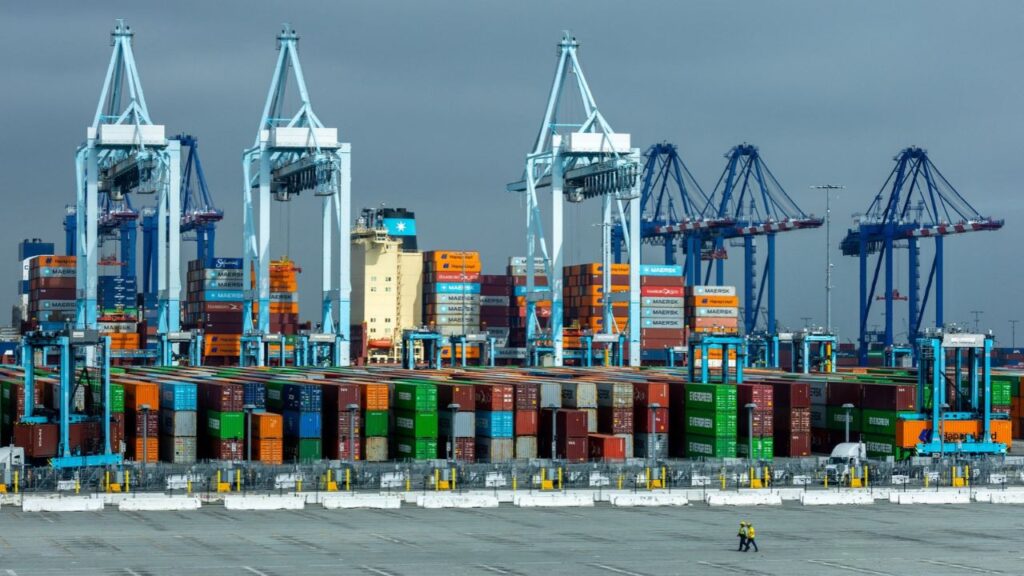
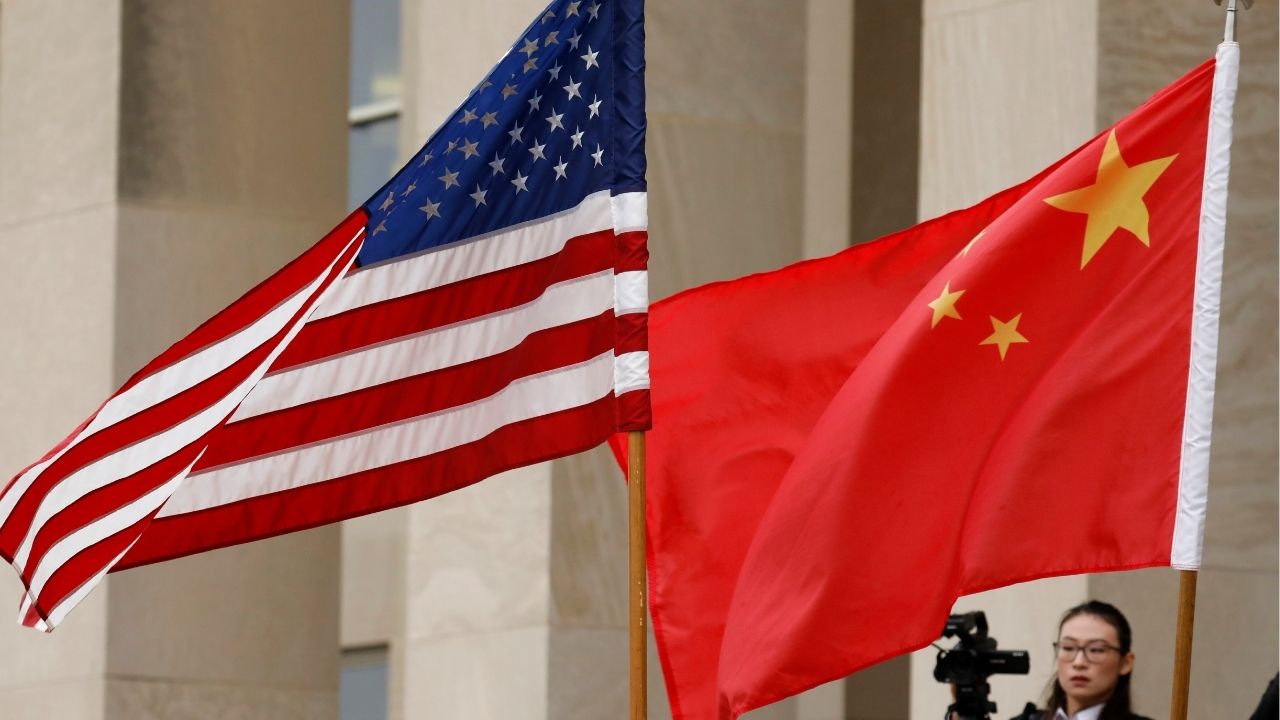
The United States on Friday banned imports from 43 more Chinese companies over alleged rights abuses of Uyghur and other minority groups, targeting firms in supply chains from electronics to food and metals, a government notice showed.
The companies were added to the Uyghur Forced Labor Prevention Act Entity List, which creates a presumption that goods made wholly or partly by listed entities are made with forced labour and cannot enter the United States unless importers can prove otherwise.
Beijing has regularly dismissed accusations of forced labour and other abuses against Uyghurs and other Muslim minorities in the region of Xinjiang.

The notice published by the U.S. Department of Homeland Security marks the first time companies have been added to the list under the Trump administration. It brings the number of mentioned entities to 187 from 144 — the largest single expansion since the act creating the list was signed into law in 2021.
CHINA SAYS IT WILL TAKE ‘NECESSARY MEASURES’
China’s Commerce Ministry on Saturday condemned the U.S. action as an unfounded unilateral sanction, which it said had come just a day after trade officials from both countries had what it described as a constructive video call.
China would take “necessary measures” to protect its companies, the ministry added without going into more detail.
Four companies were listed over what the U.S. government said was their work with Xinjiang authorities to recruit, transfer or receive Uyghurs and other persecuted groups.
The Federal Register notice said the other 41 were added because they source materials from Xinjiang or from entities linked to government labour programs there.
“Today’s action by the Trump administration strengthens America’s economy against products made with slave labor,” Representative John Moolenaar, chairman of the House Select Committee on China, said in a statement.
China’s embassy in Washington called such allegations “a lie” on Friday and said Chinese law prohibits forced labour and that workers in Xinjiang are free to choose their occupations.
INCLUDES COMPANIES WITH US SALES LINKS
The listings include suppliers of materials used in electric-vehicle and energy-storage batteries.
Reuters contacted 10 of the newly listed companies for comment but none responded outside normal business hours.
Those included SDIC Xinjiang Lithium Industry, which makes lithium carbonate, and its parent, SDIC Xinjiang Luobupo Potash, which were listed over their sourcing of lithium and potassium from brine at Xinjiang’s Lop Nur Salt Lake.
Xinjiang Tianhongji Technology, which makes materials for lithium- and sodium-ion batteries, was also added. The U.S. notice said it sources petroleum coke, anthracite and asphalt from Xinjiang to make battery materials.
Hunan Aihua Group, a Chinese maker of aluminum electrolytic capacitors used in consumer electronics, industrial equipment, vehicles and renewable-energy systems, was listed because the U.S. government said it sources materials including chemical foil from a production base in Xinjiang.
Aihua sells capacitors under the AiSHi brand and has a North American sales office in Glen Allen, Virginia, according to its website. Its products are also sold by U.S. electronics distributor DigiKey.
Chacha Food, a snack-food producer, was also added. The U.S. notice said Chacha exports products including nuts and roasted seeds to nearly 50 countries and regions and sources agricultural products from Xinjiang.
Chacha Food has previously identified the United States as its largest overseas market. In a 2019 report, state-owned China Daily said the company had launched products in Walmart and Costco stores, mainly in New York and Los Angeles. Reuters could not immediately establish whether those retail arrangements remain in place.
TRANSFORMERS, SOLAR MATERIALS, ALLOYS, GOLD
The companies that Reuters contacted for comment did not immediately respond on their social media accounts to the U.S. listing or the details in it.
Among the largest was TBEA Co, which makes transformers and other transmission equipment, aluminum products and high-purity polysilicon, a material used in solar panels.
The U.S. notice said TBEA sources aluminum and aluminum-alloy products from Xinjiang. It also listed TBEA subsidiary Xinjiang Tianchi Energy, saying the unit sources coal from the region.
The action also covers Tianshan Aluminum Group and seven affiliates. Tianshan says it has 1.4 million tons of annual electrolytic-aluminum capacity and a 2.5 million-ton alumina production line.
Shandong Gold Mining, which has assets or projects in China, Argentina, Ghana and Namibia, was also listed along with units including Shandong Gold Smelting.
The U.S. notice said the group sources gold from Xinjiang, and one of its subsidiaries owns and operates the region’s largest single gold mine.
–
(Reporting by Karen Freifeld and Eduardo Baptista; editing by Chizu Nomiyama, David Holmes, Nick Zieminski and Andrew Heavens)