



|
Getting your Trinity Audio player ready...
|
SAN FRANCISCO — A San Francisco jury deadlocked Thursday on the most serious count in the trial against seven demonstrators who blocked traffic on the Golden Gate Bridge in 2024 while protesting U.S. funding for Israeli military efforts in the Gaza Strip.
Jurors could not reach a unanimous decision on the lone felony count of conspiracy, which carried a potential 15-year state prison sentence that many activists and lawyers in the Bay Area saw as unusually severe. Each defendant was found guilty of several misdemeanors, including false imprisonment and obstruction of a thoroughfare.
The protesters were part of a larger group, which calls itself the Golden Gate 26, who on Tax Day in April 2024 parked in the middle of the iconic bridge and poured out of their cars to stage a protest. Most of them stood in front of their vehicles and held banners, including one that read, “Stop the World for Gaza.” A smaller group locked their arms together in metal tubes and refused to budge for four hours until they were arrested and their cars were towed.

Sentencing Scheduled for Aug. 21
The misdemeanors each carry a maximum jail sentence of six months to a year, according to the defendants’ lawyers. Sentencing was scheduled for Aug. 21.
Still, the defendants and their supporters characterized the verdict as a win, since the jurors did not convict on the felony charge. After leaving the courtroom, they hoisted the red-and-green Palestinian flag across the street, on the steps of gilded San Francisco City Hall.
Nuha Abusamra, a deputy public defender, said that blocking the Golden Gate Bridge for a few hours was the least that Americans could have done to raise awareness about what was happening to Palestinians. She called the charges against the seven “egregious.”
“Today remains a victory — we do not solely fight to win,” she said. “We fight for the resistance.”
The seven who chained themselves together were the ones who were on trial in a San Francisco courtroom. The trial began May 20, and the jury deliberated for seven days before reaching a verdict.
Drivers Infuriated by Bridge Shutdown
Prosecutors said that the demonstrators had threatened public safety and forced people to miss work and medical appointments. Nobody was believed to have died or been injured as a result of the bridge shutdown, but many drivers were infuriated.
The San Francisco district attorney’s push for the felony count surprised many people in a Bay Area region long known for its counterculture and anti-war activism. Some saw it as the latest sign that San Francisco was shedding its progressive identity and focusing more on law and order, with moderate Democrats asserting their leadership over the city.
The district attorney, Brooke Jenkins, could seek to retry the protesters on two deadlocked counts: the felony count of conspiracy and a misdemeanor count of trespass that interfered with business. She did not immediately respond to a request for comment.
Bhavika Anandpura, one of the defendants, said that she did not regret the protest that occurred two years ago. It was a small act, she said, compared with the fight the Palestinian people have been waging for decades.
“After we got on the bridge and the banner was finally hoisted, I remember looking around at these beautiful faces and just taking a breath, exhaling,” she said. “It felt like such a relief to realize that I could actually do something.”
Supporters Pack Courtroom, Shout ‘Free Palestine’
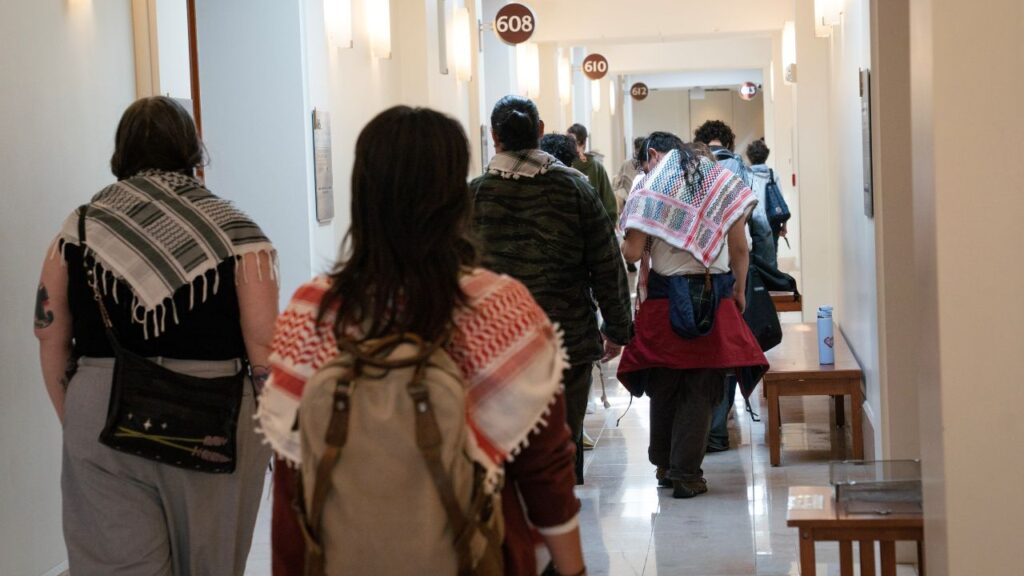
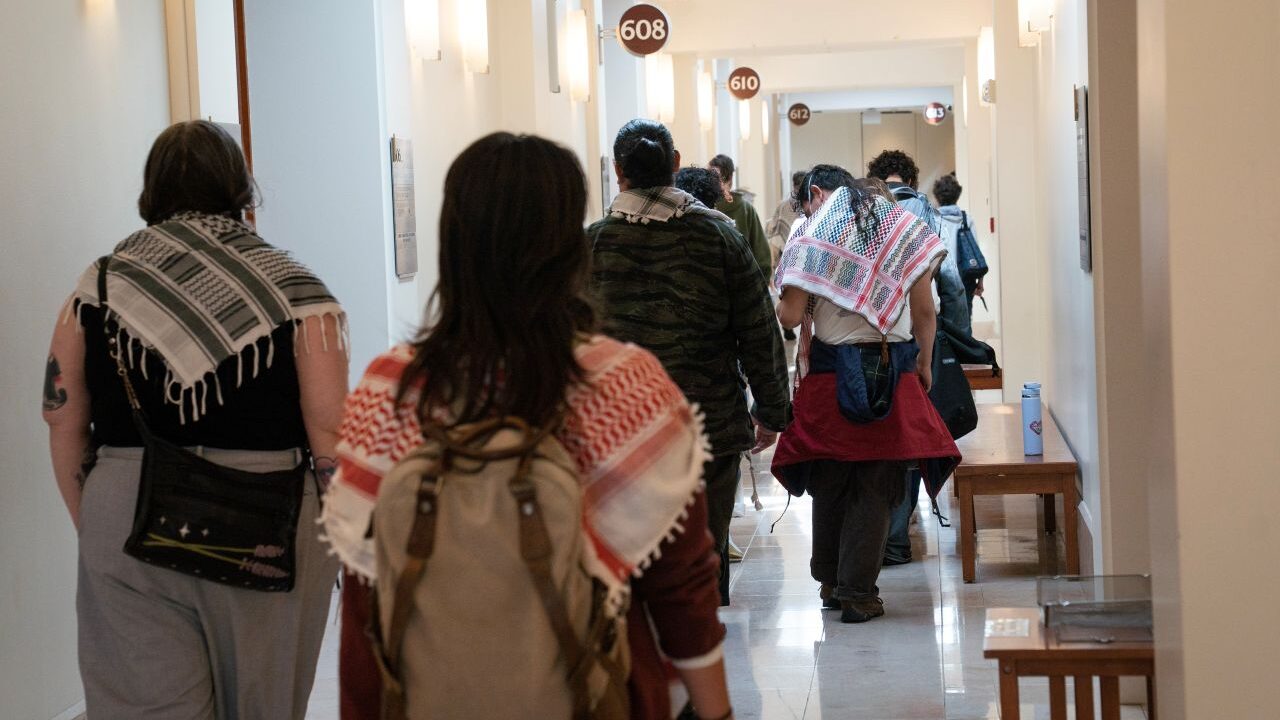
The courtroom was packed Thursday with supporters of the defendants, many of them holding hands and wearing a kaffiyeh, the scarf that signifies support for Palestinians. As the clerk read the guilty verdicts aloud, many shook their heads and wiped tears from their cheeks.
Among those in the gallery were people who held banners at the 2024 protest but did not link arms during the bridge closure. Some of them had their records wiped clear after they paid restitution and performed community service.
The defendants’ supporters were kicked out of the courtroom after they began booing and shouting “Free Palestine” once the verdicts were read. One of the supporters told the jurors that they should be ashamed of themselves.
Judge Teresa Caffese ordered the jury room cleared and thanked the jurors for their service. One of the jurors held back tears.
“This was a hard case for me,” Caffese said. “I know it was for you.”
This article originally appeared in The New York Times.
By Soumya Karlamangla/Minh Connors
c.2026 The New York Times Company