

|
Getting your Trinity Audio player ready...
|
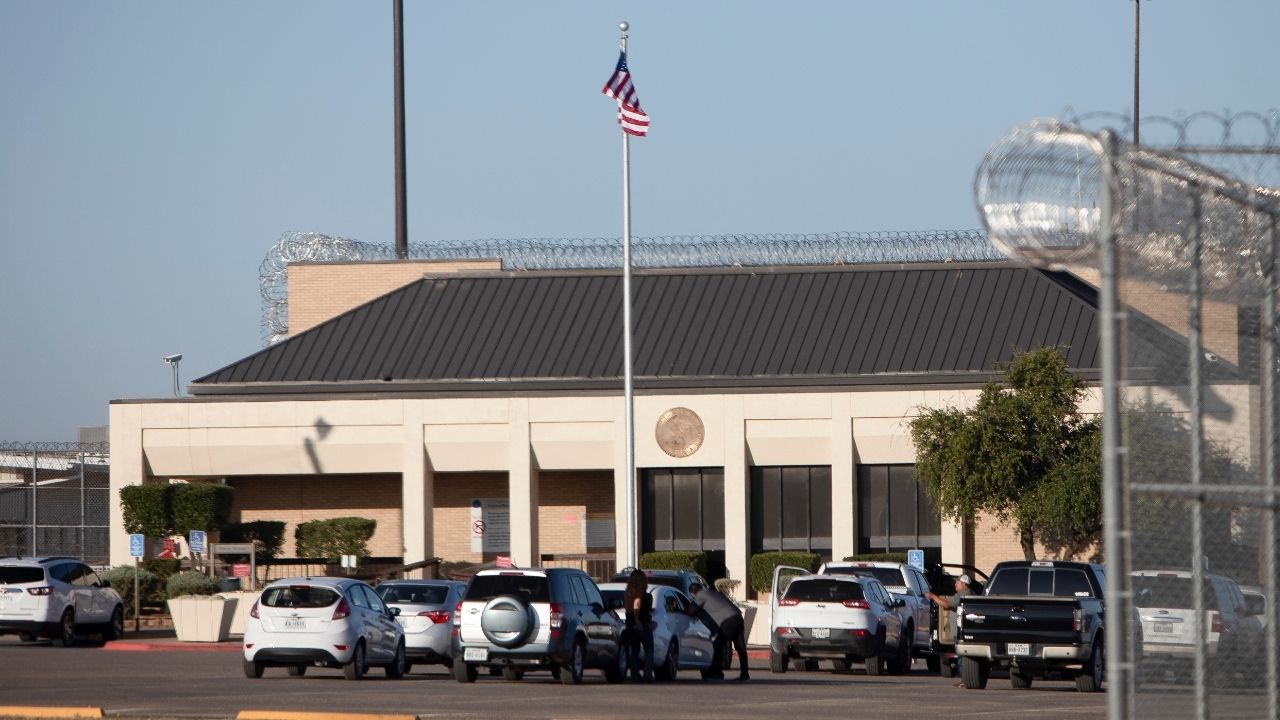
WASHINGTON — The Federal Bureau of Prisons said Wednesday that it would close at least six facilities that house thousands of inmates, citing “extreme staffing challenges” and crumbling infrastructure.
The closure plan, the most expansive effort to shut down or consolidate federal prisons in response to funding shortages, comes less than a year after the bureau won an infusion of $5 billion in funding from President Donald Trump’s signature domestic policy bill.
The units are minimum- and low-security facilities and satellite complexes, meaning they typically house inmates considered lower risk. They include prisons in Texas, in Beaumont, Big Spring and La Tuna, and facilities in Lexington, Kentucky, Petersburg, Virginia, and Taft, California. The highest-population facility, in Beaumont, houses 1,651 inmates in its low-security prison, and 514 in an adjacent minimum-security camp.

The Bureau of Prisons added that an unspecified number of staff members at Big Spring and La Tuna would be laid off, while other staff members would be transferred to nearby facilities. An official at the Council of Prison Locals, who spoke on the condition of anonymity for fear of retaliation, said that the union, which has long opposed efforts to close federal prisons and cut jobs, had not been aware of the plan to close the facilities until the bureau made its announcement Wednesday.
The bureau did not answer questions about where inmates would be moved once the facilities closed. But in announcing the closures, the bureau added that it would upgrade minimum-security prison camps in Morgantown, West Virginia, and Duluth, Minnesota. The facilities, which currently house about 400 inmates, are expected to transition from minimum-security camps — for inmates deemed to be the least risky — to low-security prisons, allowing them to house inmates considered more risky.
The Biden administration signaled in December 2024 that it would make similar moves to cut costs and address crumbling facilities, saying that it would shut down the Morgantown and Duluth camps. At the time, the Bureau of Prisons said that the Duluth facility had “aging and dilapidated infrastructure, including several condemned buildings that have contaminants such as asbestos and lead paint.”
The planned closures come as the bureau struggles with a yearslong staffing crisis and derelict conditions across its prisons. Many of the roughly 35,000 Bureau of Prisons employees often earn less than state and county corrections workers.
In recent years, shortages of corrections officers have gotten so bad that teachers, case managers, counselors, facilities workers and even secretaries were being enlisted to serve as corrections officers to make up for shortfalls.
William K. Marshall III, the director of the bureau, said in a statement Wednesday that the infusion of $5 billion from Trump’s signature domestic policy bill last year would help with some of the problems. But he added that it was “not sufficient to fully resolve the operational and infrastructure challenges that have accumulated over decades.” The bureau also acknowledged those shortcomings, noting in its statement that it was “currently confronting a deferred-maintenance backlog exceeding $4 billion.”
The Taft prison had already been emptied of inmates in the first Trump administration after it was deemed in “critical disrepair.” The bureau estimated at the time that it would cost nearly $200 million to repair and reopen the prison. But it later abandoned the effort during the Biden administration as the project was considered “uniquely expensive.”
Amid a wider effort by the Trump administration to assert more control over the federal workforce, Marshall moved to end union protections for bureau workers last year, canceling the collective bargaining agreement with the Council of Prison Locals.
The union official noted that without the contract, prison workers laid off by the prison closures would be given only 60 days’ notice. The union contract had previously mandated a notification window of nine months.
—
This article originally appeared in The New York Times.
By Chris Cameron/Julia Robinson
c. 2026 The New York Times Company