

|
Getting your Trinity Audio player ready...
|
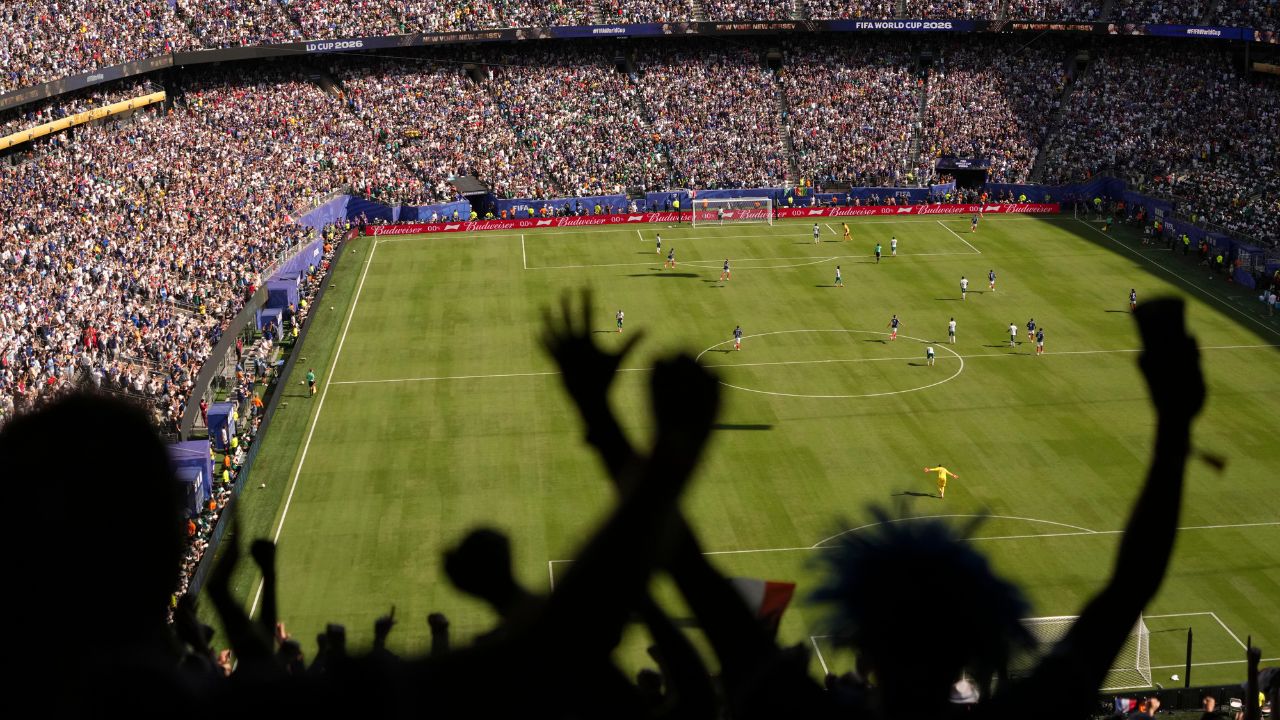
Bosnia and Herzegovina, which faces the United States in a World Cup round of 32 game Wednesday in Santa Clara, California, was founded in 1992 when Yugoslavia broke up. But its history and role in world affairs began much earlier.
So, for those who are passionate about the World Cup, but maybe not so much about world history and toponymy: What is there to know about Bosnia and Herzegovina, and why is that “and” in the middle?
Bosnia makes up the northern part of the country on the Balkan Peninsula in Eastern Europe, and the smaller Herzegovina lies in the south. “Bosnia” is used as a common shorthand for both parts.

War-Torn History
The two regions have an often war-torn history, bouncing in and out of other nations and empires through the years. The name Bosnia, which comes from the Bosna River, dates to at least the 10th century. Herzegovina was an Austrian duchy (Herzog means “duke” in German). That name was first regularly used in the 15th century.
(It should be noted that “Bosnia and Herzegovina” is the English spelling and the one used by the United Nations. In the Bosnian language, the country is known as “Bosna i Hercegovina,” which explains why people watching the match on Fox in the United States will see the team designated with the shorthand “BIH.”)
The two lands were united after they were each conquered by the Ottoman Empire: Bosnia in 1463, and Herzegovina 20 years later.
The first reference to Bosnia and Herzegovina in The New York Times archives, from Sept. 18, 1860, hinted at a history and future of conflict. It informed readers that “Agitation continued to prevail in Bosnia and the Herzegovina, but the Sultan had ordered the Grand Vizier to return immediately, without visiting these provinces.”
In 1878, after one of the Russian-Turkish wars, the powers of Europe redrew the maps as part of the Treaty of Berlin, and Austria-Hungary took over rulership of Bosnia and Herzegovina.
Remember Yugoslavia?
After that empire was defeated in World War I, the Treaty of Versailles created a new country, Yugoslavia, that included Bosnia and Herzegovina, as well as Serbia, Montenegro, Slovenia, Macedonia and Croatia. As communism was falling in Eastern Europe, that state began to splinter, and parts of Yugoslavia sought to assert themselves, or to dominate others.
After a terrible three-year war, Bosnia and Herzegovina finally gained fully recognized autonomy.
Outside Bosnia and Herzegovina, “and” is generally found only in the names of countries that want to give equal billing to two islands. The U.N.’s official list includes Antigua and Barbuda, St. Kitts and Nevis, St. Vincent and the Grenadines, Sao Tome and Principe, Trinidad and Tobago, and the United Kingdom of Great Britain and Northern Ireland.
This month, Bosnia and Herzegovina is getting attention for its exploits on the soccer field. It qualified for the World Cup by beating the traditional power Italy in a playoff in June, and topped Qatar in its final group match to advance into this game against the United States. In its only other World Cup appearance, in 2014, it did not make it out of the group stage.
‘I am From Bosnia, Take Me to America’
Many of its fans are grooving to the nation’s jaunty, unofficial World Cup anthem, “I am From Bosnia, Take Me to America” by Dubioza Kolektiv. When the song was first recorded in 2011, it evoked disillusionment with the state as well as mixed feelings about the dream of immigrating to the United States. Now the title has a new meaning: heading to America not for a new life but to triumph on the pitch.
Bosnia and Herzegovina has a chance to get that triumph Wednesday night.
This article originally appeared in The New York Times.
c.2026 The New York Times Company