
|
Getting your Trinity Audio player ready...
|
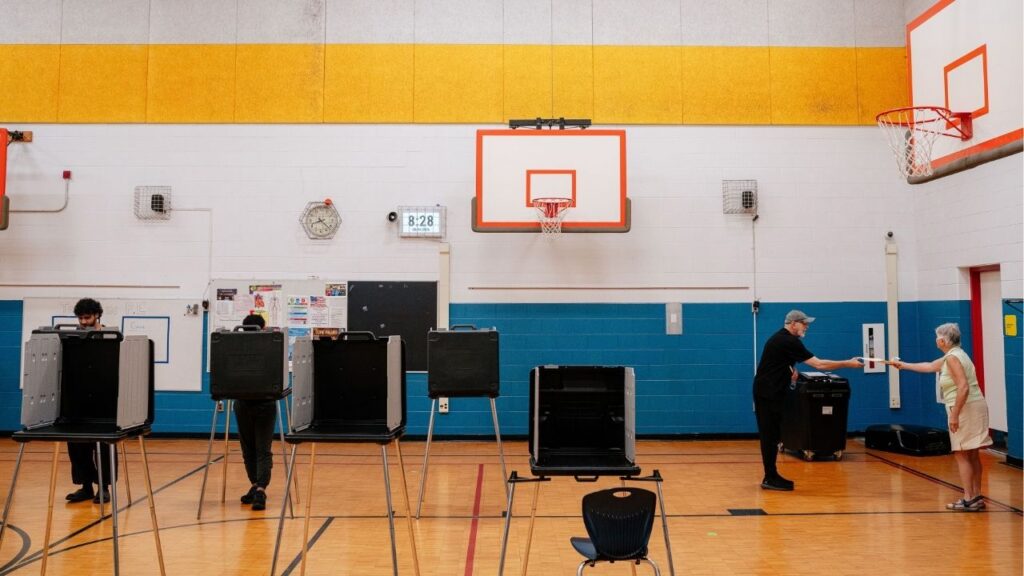
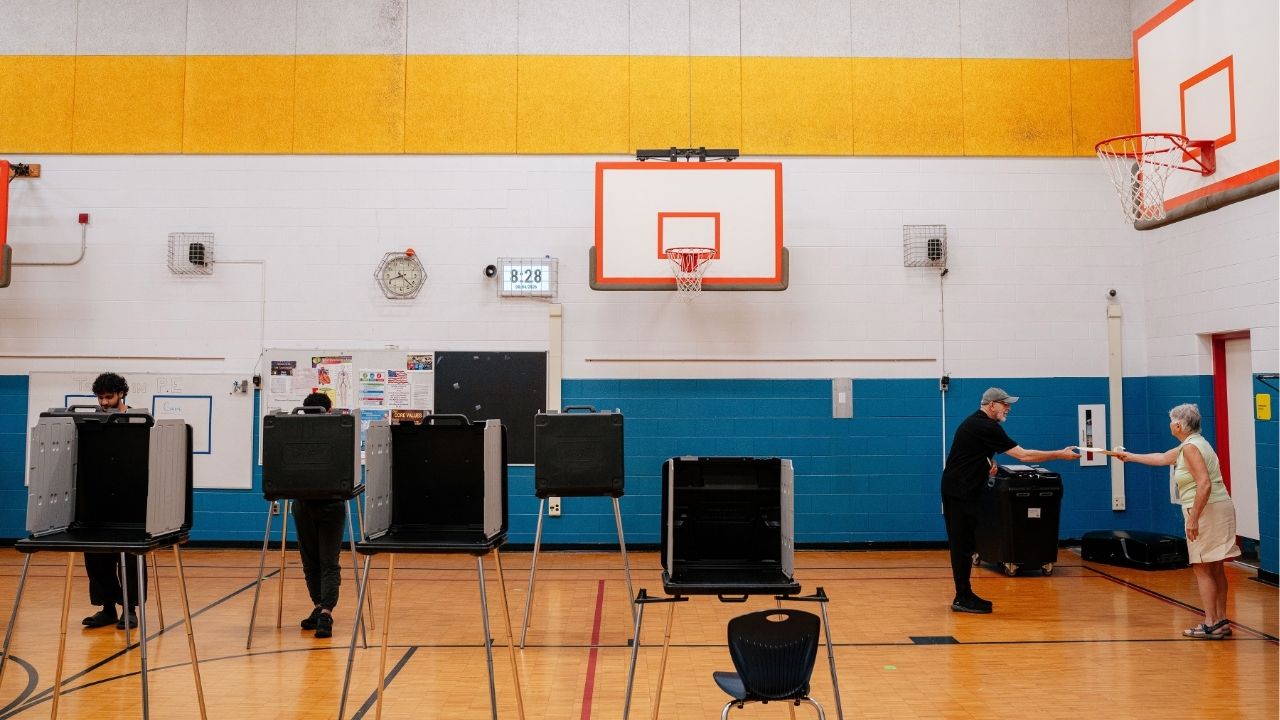
DETROIT — One of this year’s biggest primary elections is underway in Michigan, where two Democratic Senate candidates with deep ideological disagreements and sharply different styles are facing off in a major test of the party’s direction.
The bitter, expensive race pits Dr. Abdul El-Sayed, a progressive former public health official, against Rep. Haley Stevens, a centrist supported by party leaders. The winner will defend the seat of Sen. Gary Peters, a Democrat who is retiring, in a battleground state that could determine control of the Senate. Along with Michigan, four other states are holding primaries Tuesday: Kansas, Virginia, Washington and Missouri.
In Michigan, El-Sayed, a proponent of universal healthcare and a forceful critic of U.S. military aid to Israel, planned to spend spent part of Tuesday talking to voters in the Detroit area, according to his campaign. Stevens, who casts herself as a bipartisan antidote to Washington dysfunction and a strong ally of Israel, started the day at a church in Grand Rapids, Michigan, and planned to make her way to Detroit by the evening, her campaign said.

Stevens wasted little time lacing into her opponent Tuesday morning, telling reporters in Grand Rapids that he was running for “celebrity and fame and probably fortune as well.”
El-Sayed, a former Detroit and Wayne County health official, called such claims “odd” in an interview last week and said he’d focused on “getting things done in the places and in the spaces where people don’t pay attention.” El-Sayed, who has led in the limited public polling available, has also sounded increasingly confident notes about his ability to prevail in a general election.
The winner of Tuesday’s primary will take on former Rep. Mike Rogers, who is running unopposed for the Republican nomination. Democrats have anxiously debated which candidate would mount a stronger campaign against him this fall, and Stevens’ supporters have argued that she would be better positioned in a closely divided state.
El-Sayed told reporters Monday night that Rogers was a “generationally bad candidate” and suggested that it would feel “inevitable” when, he predicted, he beat Rogers by 7 percentage points. A representative for Rogers did not reply to a request for comment.
After voting in suburban Detroit on Tuesday, Stevens also described Rogers as a “failed candidate,” and said she did not understand why President Donald Trump “keeps going with these guys who lose.” Rogers lost to Sen. Elissa Slotkin, a Democrat, in 2024, even as Trump won Michigan.
It was a rare moment of agreement between the Democratic candidates, who have spent weeks trading attacks, sometimes in strikingly personal terms. In an interview with an activist published in recent days, El-Sayed called Stevens “the least capable candidate in America” as he assailed her support from the American Israel Public Affairs Committee, whose main super political action committee spent tens of millions of dollars to back her. Stevens responded by writing on social media that he wanted to “blame all” of his “problems on Jewish Americans.”
Also on Tuesday, Stevens charged that El-Sayed had “made this whole race about Israel, when I’ve made it about Michigan.”
After such a rancorous primary, some Democrats are worried about party unity headed into the general election in the closely divided state. State Sen. Mallory McMorrow, who dropped out of the Democratic Senate primary this summer, has increasingly signaled that she intends to be a vocal advocate for uniting around the eventual nominee.
In Detroit, voters are also choosing whether to back Rep. Shri Thanedar, a second-term Democrat, or the democratic socialist challenging him, state Rep. Donavan McKinney. And in a swing congressional district that includes Lansing, two centrist Democrats and a progressive are battling to determine who will take on Rep. Tom Barrett, a vulnerable Republican who has sought distance from President Donald Trump.
Here’s what else to watch for:
— A Missouri comeback? Former Rep. Cori Bush, a democratic socialist, lost two years ago to Wesley Bell, a Democrat who was lifted by spending by pro-Israel groups. Now Bush is trying to wrest back the solidly blue St. Louis-area seat from Bell.
— Heavy AIPAC-tied spending: The Senate race in Michigan has been deluged by about $60 million in outside spending for Stevens. More than half came from AIPAC’s super PAC arm, and that funding became a core issue in the contest.
— Control in Kansas: With Gov. Laura Kelly of Kansas, a Democrat, leaving office because of term limits, Democrats and Republicans have piled into the race to replace her. State Sen. Ty Masterson has Trump’s endorsement in the Republican primary. Two state lawmakers are running against a mayor in the Democratic primary.
— A Pacific primary fight: Rep. Marie Gluesenkamp Perez, an outspoken centrist Democrat, is trying to fend off primary challengers in her southwestern Washington state district.
—
This article originally appeared in The New York Times.
By Katie Glueck and Tim Balk / Nick Hagen
c. 2026 The New York Times Company