
|
Getting your Trinity Audio player ready...
|
President Donald Trump’s angry claim Monday that Iran was being “unbelievably duplicitous” in its dealings with the United States was just the latest sign of his struggle to understand his rivals in Tehran.
Trump considers himself a master of sizing up and exploiting his adversaries. But Iran’s leaders have baffled him.
“All they do is make me angry,” he told reporters last week. “They just make me angry.”

More frustration could be in store for the U.S. president. Trump officials say a new deal to reopen the Strait of Hormuz may be near, but Iran continues to insist on collecting fees there that Trump has ruled unacceptable.
Trump’s inability to strike a favorable deal with Iran has not only cost him politically among war-weary voters, but continued strife around the crucial waterway has made for volatile oil prices at the expense of U.S. consumers and the global economy.
Trump is hardly the first U.S. president who has struggled to read Iran. Each of his predecessors since the country’s 1979 Islamic Revolution has tried to decode Iran’s murky power structure and the mindset of its political leadership.
Most have come up short; some have been burned badly. A rare exception is President Barack Obama, whose 2015 nuclear deal with Iran was a 20-month diplomatic effort. Obama considered it a major achievement, despite criticism from Republicans and some Democrats that Iran had lured him into a flawed deal by feigning moderation.
But Trump may be the president who “has least understood Iran’s leadership,” said Kenneth Pollack, a former CIA analyst and National Security Council official who has studied Iran for decades.
“In many ways, Trump represents the epitome of America’s frustrations with Iran,” Pollack said. “He has been both the most desirous of making a deal with Iran, and the one who used the most force against it. He has found that neither got him what he wanted.”
Trump often speaks as if massive force will produce a quick deal.
After the war opened with a Feb. 28 airstrike that killed Iran’s supreme leader of nearly 40 years, Ali Khamenei, Trump called on Iran’s people to rise up and “take over” their government. He added that he would then “choose” Iran’s next leader.
More senior Iranian officials would also be killed in airstrikes. But no popular uprising emerged.
Iran’s hard-line government instead doubled down. In March, it named a new supreme leader, Khamenei’s son, Mojtaba Khamenei. U.S. officials consider him even more rigid — and more interested in acquiring a nuclear bomb — than his father.
“For decades, American policymakers have consistently underappreciated the ideological commitment and deeply institutionalized structure of power in the Islamic Republic,” said Suzanne Maloney, vice president and director for foreign policy at the Brookings Institution in Washington.
One problem, Maloney noted, is how little direct exposure U.S. officials have had to top Iranian leaders. No U.S. official ever met Iran’s first supreme leader, Ayatollah Ruhollah Khomeini, or the late Khamenei, nor his son.
Maloney said that war appears to have strengthened the power of Iran’s religious and military leadership, leaving no “viable alternative power center.”
Iran’s semi-democratic political system, which features a president and parliament under the total religious authority of its supreme leader, has at times included high-level officials open to friendlier relations with the United States.
But past appeals by Washington to those figures have mostly ended in regret.
Dennis Ross, a veteran of Middle East diplomacy who served presidents of both parties, said that “the Iranians seem to understand us better than we understand them.”
‘Bitter Disappointment’
In 1980, President Jimmy Carter approved secret talks with Iran’s foreign minister in an effort to free the 52 American hostages seized from the U.S. Embassy in Tehran the year before.
Carter’s diary entries show him obsessing, much like Trump, on details of Iran’s political machinations — including feuds among top Iranian officials.
In early 1980, Carter thought he had struck a deal to free the hostages in return for the release of billions in frozen Iranian assets and a pledge of U.S. noninterference in Iranian affairs, among other things.
But in what Carter called “a bitter disappointment,” Khomeini shot down the idea, blindsiding U.S. officials and his own subordinates. Carter would eventually order a hostage rescue mission that failed before finalizing a deal that freed the Americans on his last day in office.
Secret Weapons Deals
Five years later, President Ronald Reagan directed aides to explore a message from an Iranian arms dealer who claimed that moderate Iranian officials would be open to establishing friendly ties once the aging Khomeini had died.
In what Reagan later called a search for “a strategic opening,” he approved the secret sale of U.S. weapons to Iran in exchange for the release of American hostages held in Lebanon. The arrangement became part of what is known as the Iran-Contra affair because money from the arms sales was covertly diverted, in defiance of Congress, to an anti-communist rebel group in Nicaragua known as the Contras.
The affair’s exposure engulfed Reagan’s presidency in scandal, as several U.S. officials pleaded guilty or were convicted of felonies; Reagan’s former national security adviser attempted suicide.
The opening with Iran turned out to be a mirage. No friendly moderates emerged in Tehran, and the CIA believed the arms dealer who began it all was a fraud. Reagan, denying knowledge of key events, apologized in a national address, while defending his original goal of courting Iranian moderates.
A Hopeful Moment Passes
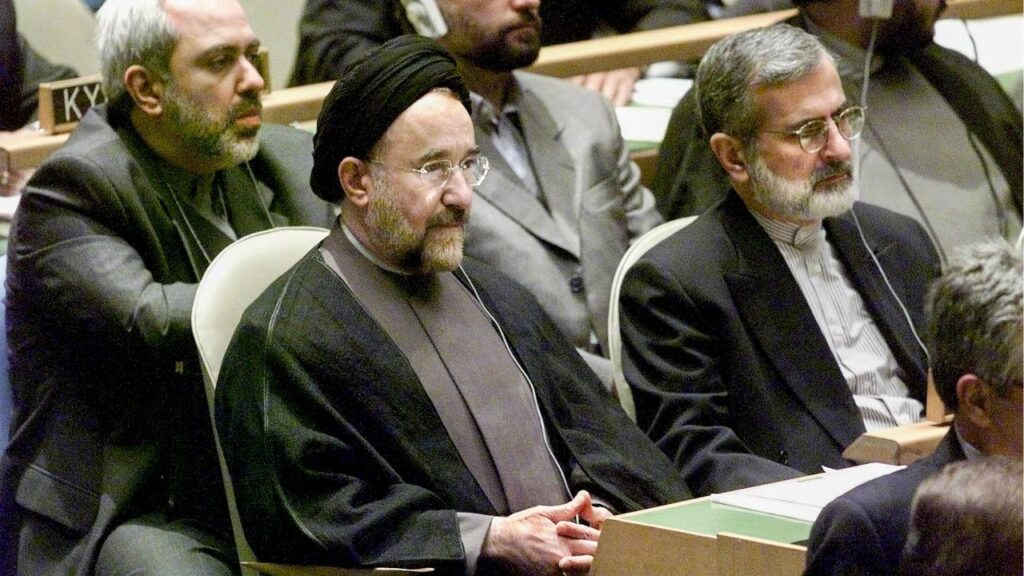
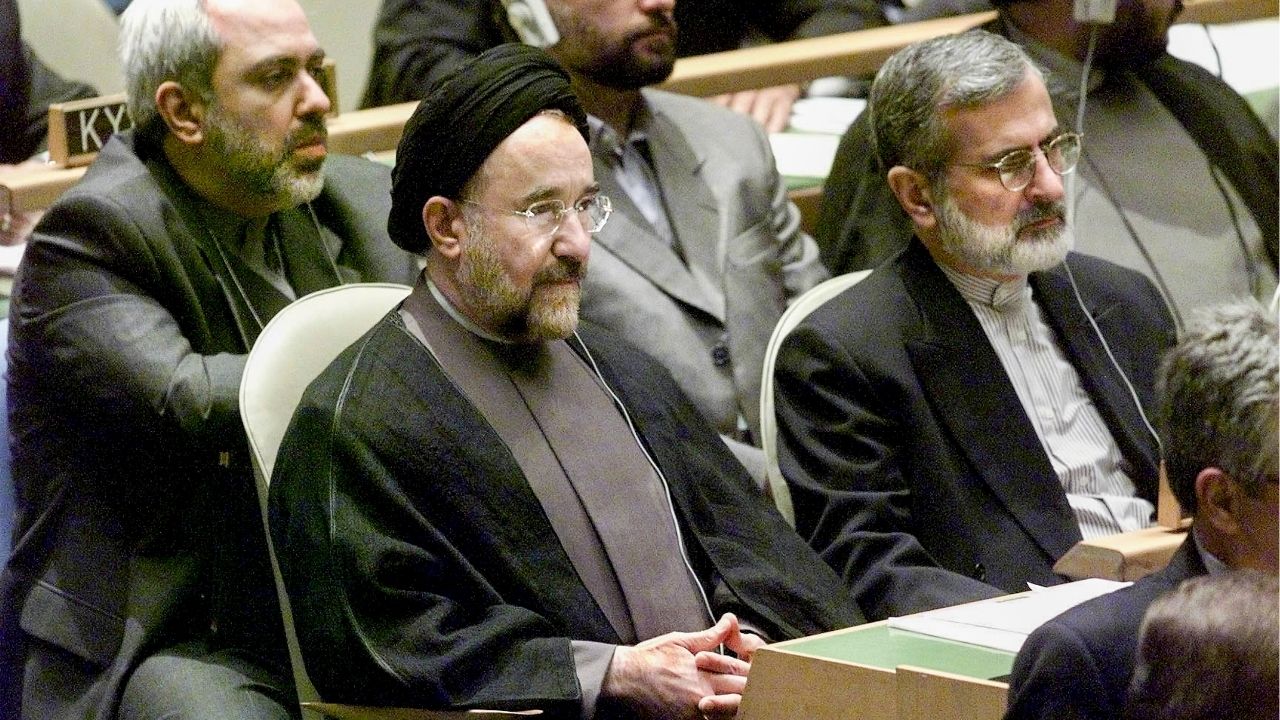
A more tangible opportunity emerged for President Bill Clinton in 1997, when Iran elected a reformist candidate, Mohammad Khatami, as its president. Khatami called for good relations with the United States and expressed regret for the embassy hostage crisis.
This was the real thing.
Clinton reciprocated with gestures such as the restoration of U.S. imports of Iranian pistachios and carpets, and conciliatory remarks acknowledging some of Iran’s historical grievances.
Secretary of State Madeleine Albright even issued a public apology for the CIA’s backing of a 1953 coup that overthrew Iran’s prime minister after he nationalized the country’s Western-dominated oil industry.
But powerful hard-liners opposed Khatami’s moderate vision, in part because reconciliation with the United States threatened the foundations of their anti-Western ideology.
Days after Albright’s speech, the elder Khamenei, who became supreme leader after Khomeini’s death in 1989, dismissed her words — and any possibility of dialogue with Washington.
Khatami later said privately that Khamenei believed that Iran could never make peace with the United States, according to Karim Sadjadpour, an Iran expert at the Carnegie Endowment for International Peace.
Outmaneuvering Washington
Only Obama has pulled off a major diplomatic agreement with Iran, in the form of the 2015 nuclear deal that placed limits on Iran’s atomic program lasting up to 15 years in exchange for relief from economic sanctions.
Many officials in the Obama administration hoped that agreement, negotiated with another moderate Iranian leader, Hassan Rouhani, might be a first step toward better relations. But that was not to be. Khamenei approved the deal but showed no desire for taking things further; critics said that confirmed their warnings that Rouhani would amount to a replay of Khatami.
Iranian suspicions that the U.S. could not be trusted were soon affirmed. In 2018, Trump withdrew from the nuclear deal and imposed even harsher economic sanctions than had been in place before the agreement.
Iran responded by accelerating its nuclear program, putting it on course for a violent collision with the United States and the war Trump initiated in February.
Since then, Ross said, Iran has continued to outmaneuver Washington, which Trump’s obvious impatience to conclude the war has made easier.
“They tend to read our sense of urgency as a form of leverage,” Ross said. “We always seem in a hurry to get things done. They operate under the premise that time serves their interests more than ours.”
—
This article originally appeared in The New York Times.
By Michael Crowley / Richard Perry
c. 2026 The New York Times Company