


|
Getting your Trinity Audio player ready...
|
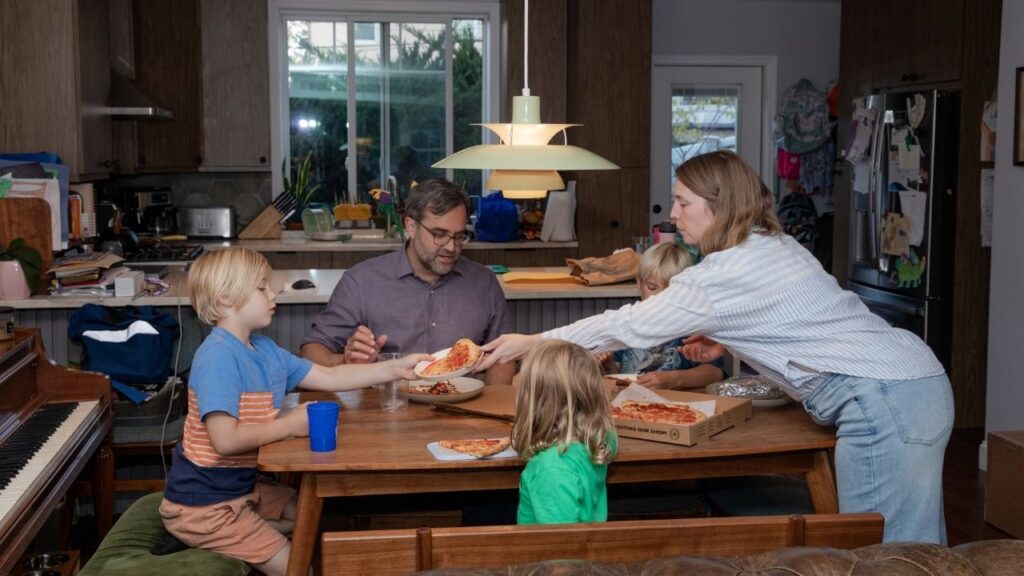
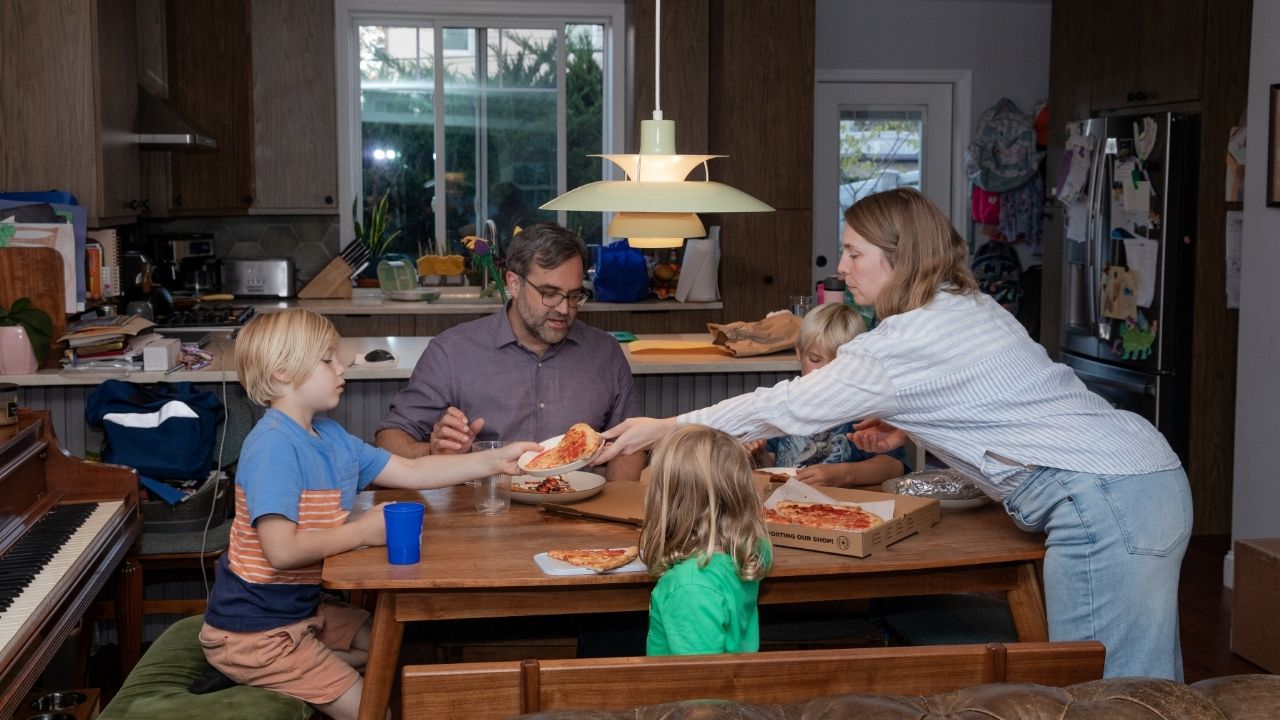
In most families in the United States, parents work full time — and 60% of those who do say they spend too little time with their children, according to a Pew Research Center survey released Tuesday.
Nearly half miss events their children are involved in. Majorities say they don’t have time for hobbies, socializing, exercising or relaxing. Most handle family responsibilities during the workday and do work during family time.
Yet even though they’re stretched thin, they also wouldn’t necessarily choose another arrangement, a variety of surveys show. Most parents say they’re happy, they have positive relationships with their children, and they want to work. Their challenge, the results suggest, is having enough time and flexibility to do it all.

The findings echo another recent survey, conducted by NORC at the University of Chicago on behalf of the New Practice Lab at New America, a left-leaning think tank. It found that the trade-off often came down to time versus money. Most parents, though they wanted to work, wished they had more time to spend on family and personal life, but needed the income to support their families.
Work is set up assuming there’s a parent at home, “someone who’s picking up the rest of your life and making those ends meet,” said Corinne Low, an economist studying gender at the Wharton School at Penn. But that doesn’t reflect reality for most families today, she added. Even as most parents work, they are also investing more time, money and effort into parenting than previous generations.
Mothers find it hardest to balance work and family, Pew found. They do more of the day-to-day parenting and household chores, and are more likely to take time off work for unexpected childcare. They’re also more likely to say they have too little time for leisure activities: 74% of full-time working mothers say they don’t have enough time for hobbies or interests.
But a significant share of fathers also feel crunched for time, reflecting the fact that the gender roles in families are less fixed today, and fathers are more involved in childcare than previous generations. (Pew’s survey, of 2,242 working parents, asked questions about division of household labor of opposite-sex couples.)
Finding enough time is a challenge for working parents across demographic divides. But parents who have children 5 and younger, who are not married or living with a partner, or who are low earners find work-family balance most difficult.
Low-income parents are least likely to have flexible schedules, predictable hours or workplace policies like paid leave or remote work that help them juggle.
More than half of low-income workers say they feel extremely or very worried about losing pay if they have to take unplanned time off work for a child-related reason. Roughly a third are concerned about losing their job, or worry their boss might think they’re uncommitted to work. That anxiety is also heightened for single parents, the survey found.
“I feel like employers can sometimes look at you like, ‘Oh, you’re a single parent, are you going to call out? Are you going to be late?’” said Elise Yeung, a nurse in San Francisco. “Sometimes those situations aren’t on purpose.”
She has acquaintances who have lost their jobs because they had to take time off for childcare: “Those call-outs are used against you; you get written up or you get let go.”
She’s grateful to have a steady job. She became a single mother unexpectedly, without a career or college degree, and went to nursing school with the help of JVS, a nonprofit that helps people learn new skills. But her son is always on her mind, even at work. She said she worries about getting caught checking her phone in case there’s a message from school, and relies on people from her church to watch him when childcare falls through.
This is a common experience for working parents, Pew found — they do parenting tasks while working, and work tasks while parenting.
Blurring the lines between work and family doesn’t necessarily make it easy to combine the two, the survey found. Parents described being pulled in two directions at once: A majority said they’ve felt they can’t give 100% at home, and nearly half said they’ve felt they can’t do so at work. But having the flexibility to handle tasks at different times can make the juggle feel more doable, they said.
A different survey, by Gallup, found that half of workers in the United States preferred a job that allowed them to blend work and life throughout the day — doing a family obligation midday and making up the time in the evening, for example — rather than a strict separation.
Overall, full-time working parents said they benefited from both working and parenting, even if it was hard.
Eighty-three percent of parents in couples in which both parents worked full time said it benefited their family’s financial situation. Half said it benefited their children’s well-being, and another third said it didn’t have a positive or negative impact on children’s well-being.
What most parents want is more flexibility to handle family needs when they come up, the survey found.
Large majorities said it would help to have paid leave for family or medical reasons, flexible hours or the ability to work from home when needed. Yet only half had paid leave, and a quarter or less had flexibility on hours or location — and low-income workers were much less likely to have these benefits.
For those whose jobs don’t allow for flexibility on where or when work happens, predictability in hours makes it easier to balance work and family, parents in the Pew survey said. Again, low-income workers were least likely to have this.
Policies such as flexibility, predictable hours and paid leave help parents combine work and family, said Blessing Adesiyan, founder and CEO of the Care Gap, which advises companies and policymakers. Without them, she said, “your employees will run out of time.”
—
This article originally appeared in The New York Times.
By Claire Cain Miller/Natalie Keyssar
c. 2026 The New York Times Company