
|
Getting your Trinity Audio player ready...
|
Halting efforts at diplomacy in the Middle East came under new strain Monday, as Israel and Iran threatened to escalate military action in the intertwined conflicts in Iran and Lebanon.
Prime Minister Benjamin Netanyahu on Monday ordered Israel’s military to attack Hezbollah, Iran’s close ally, in Beirut’s southern outskirts. And Iran’s military threatened that if Israel took such action, it would come under attack, and said that residents of northern Israel should evacuate.
The U.N. Security Council called an emergency session to discuss Lebanon on Monday afternoon. Iran has demanded that any truce include an end to Israeli attacks in Lebanon, where fighting has continued during a fragile ceasefire among the United States, Israel and Iran.

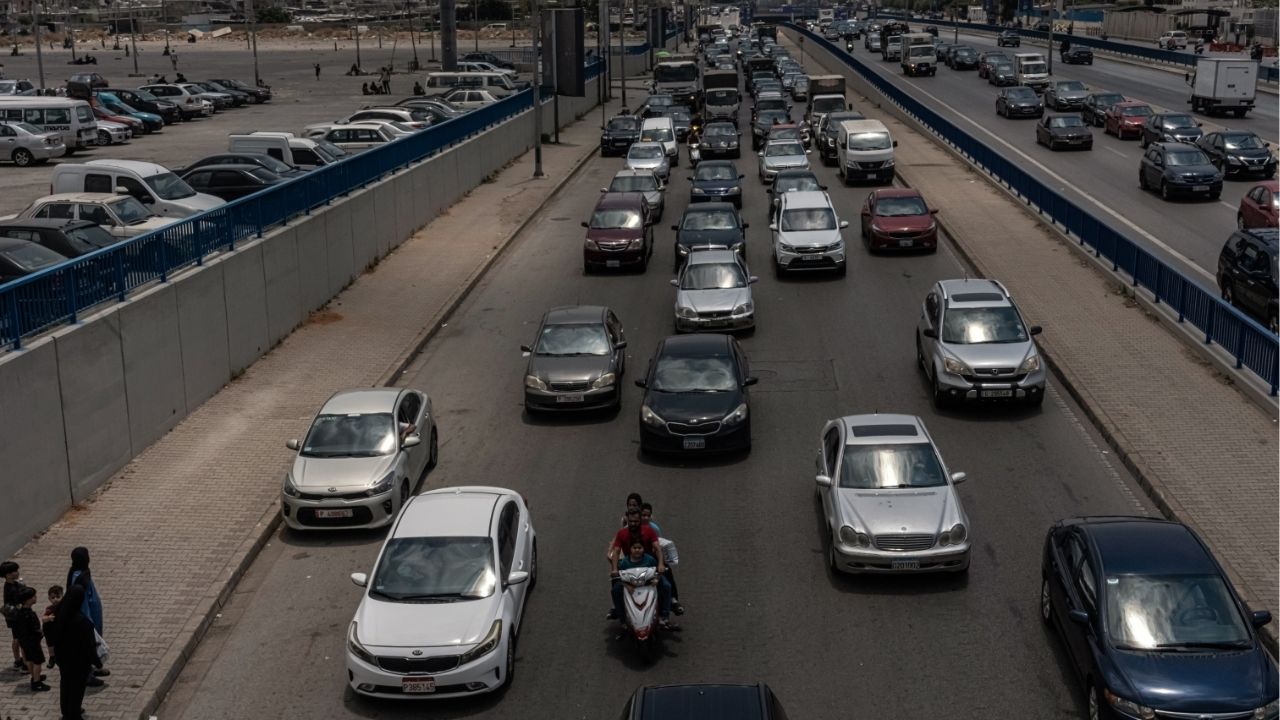
Netanyahu said he had ordered an attack on the southern outskirts of Beirut, the Lebanese capital, a Hezbollah stronghold known as Dahiyeh. The Israeli military told residents to evacuate the area, prompting thousands to flee. But several hours later, there was no sign of an attack there.
Iran’s military headquarters said in a statement that in retaliation for any attacks on Dahiyeh, there would be attacks on northern Israel, according to the official state broadcaster IRIB, but did not explicitly say who would conduct them. Iran launched missiles and drones at Israel in the early part of the war, but has not done so in almost two months.
President Donald Trump later posted on social media that he had spoken with Netanyahu and, indirectly, with Hezbollah. He said they had agreed not to attack each other, though neither side confirmed Trump’s characterization of the calls.
Earlier Monday, oil prices surged after Iran’s semiofficial Tasnim News Agency reported that Iran would suspend its involvement in peace negotiations with the United States, and would seek “complete closure” of the Strait of Hormuz, in reaction to Israel’s military actions in Lebanon.
The report by Tasnim, which is affiliated with Iran’s powerful Revolutionary Guard, did not name a source, and its claims could not be immediately verified. Comments on social media by top Iranian officials did not indicate any withdrawal from peace talks, and Trump later wrote on social media that “talks are continuing” with Iran.
Here’s What Else We’re Covering:
— Energy markets: Global markets convulsed after the Tasnim report, with oil prices rising sharply and government bond yields rising too. Stocks were mixed, sliding in Europe but barely budging in the U.S.
— Trump comments: Trump said on social media early Monday that criticism from Republicans and Democrats had made negotiations on a deal with Iran more difficult.
— Lebanon castle: The Israeli military said Sunday that it had captured a strategic, Crusader-era castle in southern Lebanon as part of the most sweeping Israeli invasion in decades.
— Strait of Hormuz: U.S. forces have helped coordinate the passage of around 70 commercial ships through the Strait of Hormuz in the last three weeks, according to U.S. officials.
—
This article originally appeared in The New York Times.
By Aaron Boxerman, Christina Goldbaum and Joe Rennison/Daniel Berehulak
c. 2026 The New York Times Company