
|
Getting your Trinity Audio player ready...
|
The U.S. Supreme Court on Thursday allowed the abortion pill to be prescribed through telemedicine and dispensed by mail, restoring for now a 2023 federal rule challenged by Republican-governed Louisiana that had made access to the medication easier.
The justices granted requests by two manufacturers of the abortion pill, called mifepristone, to lift a lower court’s block on the rule that was issued by the U.S. Food and Drug Administration during Democratic former President Joe Biden’s administration, while the legal challenge plays out.
The brief order was unsigned and offered no reasoning, as is common with emergency actions by the Supreme Court. Conservative Justices Samuel Alito and Clarence Thomas dissented from the decision.

The New Orleans-based 5th U.S. Circuit Court of Appeals on May 1 had ordered the imposition of a previous federal rule that required an in-person clinician visit in order to receive mifepristone.
Drugmakers Danco Laboratories and GenBioPro appealed the 5th Circuit action restricting access to mifepristone. The Supreme Court in interim decisions on May 4 and May 11 put the 5th Circuit’s May 1 action on hold to give the justices more time to decide how to proceed.
The case has put the contentious issue of abortion back in front of the justices, with the November U.S. congressional elections looming and President Donald Trump’s fellow Republicans fighting to retain control of Congress.
Supreme Court’s Dobbs Ruling
The ongoing battles over abortion rights follow the Supreme Court’s 2022 ruling that overturned its 1973 Roe v. Wade precedent that had recognized a woman’s constitutional right to terminate her pregnancy and legalized abortion nationwide.
That ruling, in a case called Dobbs v. Jackson Women’s Health Organization, prompted 13 states to enact near-total bans on the procedure, while several others sharply restrict access. Those laws have driven a surge in medication abortion.
Since the Dobbs ruling, anti-abortion advocates have targeted mifepristone, claiming that it is unsafe for women to take and that the FDA should not have approved it or relaxed limits on its use.
Abortion rights advocates have called the legal challenges to mifepristone the biggest threat to abortion access in the United States since the court’s Dobbs decision.
The Supreme Court in 2024 unanimously rejected an initial bid by anti-abortion groups and doctors to roll back FDA regulations that had eased access to the drug, ruling that these plaintiffs lacked the necessary legal standing to pursue the challenge.
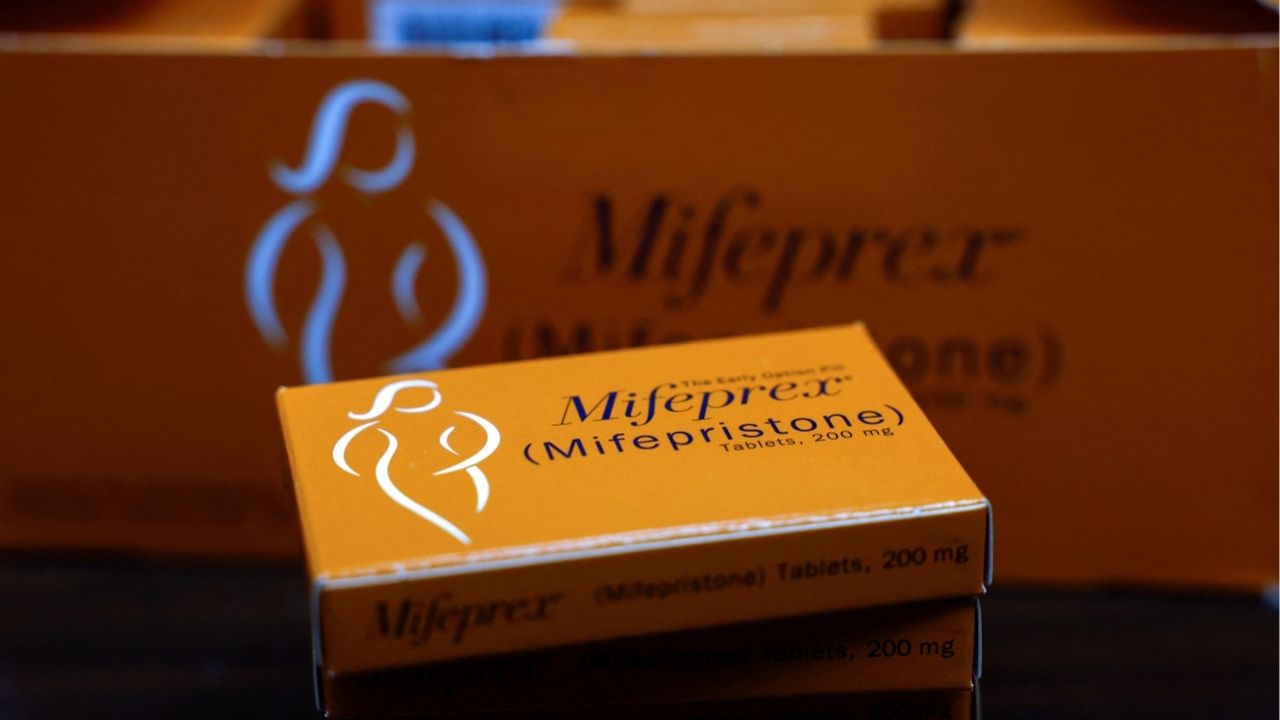
The brand-name version of mifepristone, Mifeprex, is Danco’s only product, and GenBioPro derives most of its revenue from the generic version, the companies said in court filings.
The FDA has said mifepristone was approved based on scientific evidence and continues to be safe and effective for its intended purpose when used as directed.
Reproductive health experts note that hundreds of clinical trials, studies and medical reviews have shown that mifepristone is safe and that complications are exceedingly rare. They have said abortion opponents have misrepresented studies that actually show that complications and serious adverse events for women who have accessed the pill by telehealth and the mail are rare.
Mifepristone Was Approved in 2000
Mifepristone was given FDA regulatory approval in 2000.
Medication abortion, typically a two-drug regimen consisting of mifepristone followed by misoprostol, accounts for about two-thirds of U.S. abortions and is used to terminate a pregnancy within the first 10 weeks.
Louisiana sued the Food and Drug Administration in 2025 claiming that the 2023 rule that eliminated the in-person dispensing requirement was illegal and has allowed medication abortions to skyrocket despite the state’s near-total ban on abortion. Louisiana claimed the FDA ignored the risks of serious adverse events posed by mifepristone by women taking it, including sepsis and hemorrhaging.
Danco Laboratories and GenBioPro intervened in the litigation to defend the regulation. Republican President Donald Trump’s administration opposed the state’s challenge, citing an ongoing review of safety regulations concerning mifepristone. The administration also argued that Louisiana does not have legal standing to pursue its case.
In April, U.S. District Judge David Joseph in Lafayette, Louisiana, declined to block the regulation but agreed with the administration to put the case on hold pending the review. A three-judge 5th Circuit panel subsequently blocked the regulation, deciding that Louisiana was likely to prevail in its legal challenge.
Abortion rights advocates have called the Trump administration’s review politically motivated and unnecessary given decades of studies showing the safety of mifepristone. They have said that the review could lead to tighter restrictions on the medication.
(Reporting by Andrew Chung in New York; Additional reporting by John Kruzel; Editing by Will Dunham)