

|
Getting your Trinity Audio player ready...
|
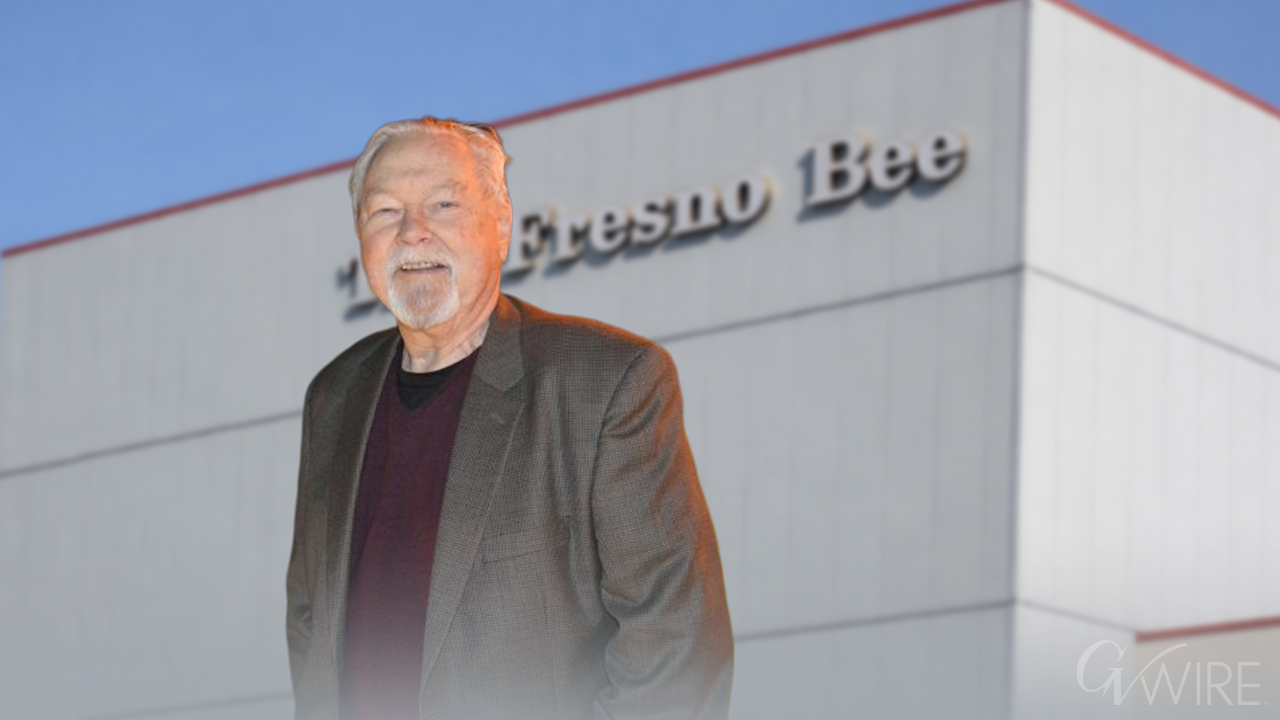
When the news broke that the old Fresno Bee building in west Fresno was going to be torn down, it stirred a deep wave of nostalgia tied to my 48 years at the newspaper. It also brought a sobering realization: A place that once mattered so much to so many people will soon be nothing more than an empty field.

By Jim Boren
Opinion
For nearly half a century, that building was a home to reporters and editors who worked long hours under constant deadlines, driven by a shared belief in the power and responsibility of good journalism. Within those walls, some of the most compelling and award-winning stories in the region were researched, written, debated, edited, and published. This was journalism that informed the public, held institutions accountable, and helped make the community better.
The building was where young reporters first learned the joys of journalism, and how to do the work well. We learned the craft because seasoned journalists took the time to pass along hard-earned wisdom. I became a better reporter sitting across the desk from veteran Eli Setencich, and just down the hall from editorial page editor Tom Kirwan. They guided me with patience and care, especially when my youthful confidence—or inexperience—led me astray in the strange and complicated world of Fresno.

In those early years, I was shaped by many others: George Gruner, Don Slinkard, Ray Steele, Desa Belyea, Diane Webster, Gene Rose, Joe Rosato, just to name a few. I worry that I may not fully acknowledge everyone who has contributed to my growth over the years. There are countless others, of course, and I am deeply grateful to each of them. My point is this: for every byline, there are many others behind it—editors, mentors, and colleagues—whose guidance and support make the work possible. For every great story I wrote, there was an unsung copy editor behind me who made it better.
As I read about the Bee Building — now owned by the city and slated for demolition — I felt sadness. I didn’t want this place to disappear without the recognition it deserves. The only thing a writer can do in such a moment is to write about it, to capture not just the walls, but the life and memories that filled them. The building sits on a 15-acre site, and reporters often took walks across the grounds to clear their heads and get some exercise after long hours at their desks, feeling the fresh air and the rhythm of the city near them.
It’s About the People and Teamwork in That Building
The Bee Building was never just a building. It was a place where friendships were forged under the glow of late-night deadlines, where colleagues met their life partners, and where coworkers became an extended family. Births were celebrated, weddings toasted, and deaths mourned together. In these shared moments — both joyful and heartbreaking — the newsroom became far more than a workplace. My daughter spent some of her preschool years there, sometimes napping under my desk as I finished a story.
At 1626 E Street, it was more than an address; it was a home, set against familiar sidewalks and streets that had quietly witnessed the rhythm of everyday life.
It’s hard to explain newsroom culture to someone who hasn’t lived it. The relentless beat of deadlines, the quiet competition to write a sharper, smarter story than your colleagues, the way the clock seems to mock you as you sit at a typewriter with 20 minutes to go, and the words just won’t come.
That’s when an editor might lean over, sensing your struggle, and suggest: “Try this angle.” In the chaos, you knew you were part of a team: when someone hit a wall, others jumped in, offering ideas, proofreading lines, or just lending a hand to get the story out. It was exhausting, intense, sometimes maddening. But you were never alone.
Long before technology made journalism easy, reporters in the field faced a race against time. Mobile phones were decades away, so if you wanted to file a story, you had to find a payphone, sometimes miles from the action. You’d stare at your scribbled notes from a grape field in Tulare County, where the United Farmworkers were striking, and somehow dictate a story that made sense to a typist back at the office, all while the clock was ticking and the chaos of the picket lines were in the distance.
Every word had to count, every detail mattered, and yet you felt alive in the midst of it, shaping the story as it unfolded. When you finally reached the end of the dictated story and the typist read it back to you — and it actually made sense — it was one of the greatest feelings in the work. It was like hitting a walk-off home run: fist in the air, heart racing, adrenaline pumping, and knowing you had nailed it.
Okay, maybe that’s a bit of an exaggeration. But anyone who’s ever had to dictate a story on deadline from raw notes knows exactly what I mean.
A Building Meant for a Newspaper, and Not Much Else
As the newspaper industry began to splinter, and The Bee’s owner neared bankruptcy, I realized this building was unlikely to survive beyond its role as a newspaper headquarters. It housed a three-story press that few buyers could afford to dismantle. After I became executive editor, I joined a team working to sell the building, and we approached numerous potential buyers. Almost uniformly, they said the true value lay in the 15 acres with freeway access—not in a worn-out newspaper building lacking adequate heating and cooling systems.
I remember The Bee’s 75th anniversary in 1997, a time when the newspaper was so revered that people lined up down E Street to Stanislaus just for a chance to tour the building, see the massive press, and speak with the journalists who brought them the news. Today, that reverence feels distant, as the newspaper business struggles under a broken business model disrupted by big tech and politics.
And so the old Bee building, like the valiant journalism it once housed, is slowly becoming a ghost of its former self. Yet even as the presses fell silent and the desks were cleared, the building’s true legacy endures: the relationships forged, the memories made, and the sense of purpose that lived within its walls. Though it may vanish from the landscape, its imprint remains — in the stories told, the lives touched, and the journalists shaped by the work done there.
About the Author
Jim Boren is the executive director of the Institute for Media and Public Trust at Fresno State and an adjunct faculty member at the university. He teaches advanced reporting in the Media, Communications and Journalism Department. He retired in 2018 as Executive Editor and Senior Vice President of The Fresno Bee. You can read his commentary at this link.
Make Your Voice Heard
GV Wire encourages vigorous debate from people and organizations on local, state, national, and international issues. Submit your op-ed or letter to bmcewen@gvwire.com for consideration.