
|
Getting your Trinity Audio player ready...
|
President Donald Trump is set to meet Chinese President Xi Jinping in May on his first visit to China in eight years.
Here is how the rivalry between the world’s two biggest economies has unfolded since Trump returned to the White House in 2025.
Developments This Year
MAY – China invokes anti-sanctions law to counter U.S. blacklisting of refiners, telling companies not to comply.

U.S. Treasury Secretary Scott Bessent urges China to step up diplomatic efforts to persuade Iran to open the Strait of Hormuz to international shipping.
APRIL – China’s State Council gave authorities power to investigate and act against foreign countries, companies, or international bodies that “adopt discriminatory measures” undermining industrial and supply chains. It also authorized countermeasures against foreign countries for exercising “unlawful extraterritorial jurisdiction”.
Chinese officials held initial talks with providers of equipment to make solar panels as they consider curbs on exports of the most advanced technology to the United States, Reuters reported.
U.S. sanctions some refineries in China for buying billions of dollars’ worth of Iranian oil, blocking their U.S. assets and preventing Americans from doing business with them.
At the end of the month Chinese Vice Premier He Lifeng, U.S. Trade Representative Jamieson Greer, and Bessent hold a video call featuring “candid, in-depth and constructive exchanges”.
MARCH – U.S. launches new Section 301 unfair-trade investigations into Chinese industries, spurring reciprocal action by China. Trump delays Beijing visit to mid-May because of the Iran war.
Bessent and Greer meet He Lifeng and top trade negotiator Li Chenggang in Paris for a sixth round of talks that both sides described as “constructive”.
FEBRUARY – U.S. Supreme Court rejects Trump’s global tariff regime. Trump indicates he will still use tariffs.
U.S. and Israel begin attacks on Iran, disrupting global energy supplies, raising costs for manufacturers, and threatening the world economy.
China is the world’s biggest energy importer, the largest industrial power, and relies heavily on global demand for economic growth.
JANUARY – China ends 2025 with a record trade surplus, likely reaping dividends from shifting trade to Southeast Asia, Africa and Latin America as a decline accelerated in exports to the United States.
Key Developments in 2025
OCTOBER – China flexes its dominance on critical minerals, widening export controls to further rare earth elements and more scrutiny of semiconductor users.
U.S. layers another 100% duty on Chinese imports and introduces export controls on critical software. Each targets the other’s shipping industry.
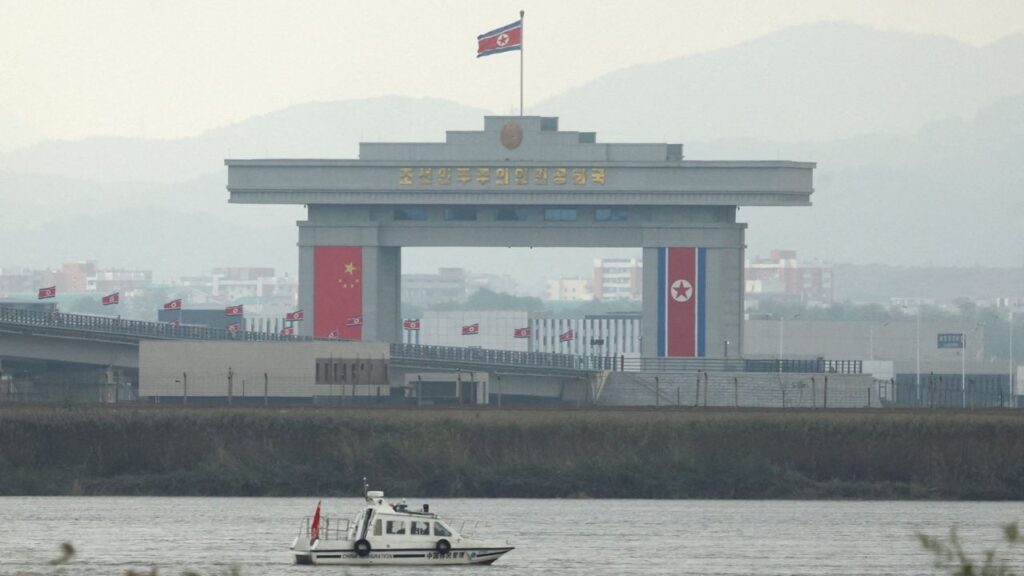
Trump and Xi agree to new a trade truce at a meeting in the, South Korean city of Busan. Washington will trim tariffs while Beijing targets the illicit fentanyl trade, resume U.S. soybean purchases and pause the rare earth export curbs.
SEPTEMBER – Both nations discuss TikTok divestiture. U.S. pushes to talk about trade of chemicals, aircraft engines and parts with China.
JUNE-AUGUST – Trump says trade truce back on track after some Chinese rare earth magnet producers begin to receive export licenses. U.S. starts issuing licenses to Nvidia to export its advanced artificial intelligence chips to China, while Trump urges China to quadruple U.S. soybean purchases. Tariff truce is extended by 90 days.
MAY – At the first round of trade talks, held in Geneva, both sides strike a 90-day truce that bring down lofty tariffs. Three weeks later, Trump says China violated deal to mutually roll back tariffs and ease curbs on critical minerals exports. China says U.S. introduced “discriminatory restrictive” measures against it.
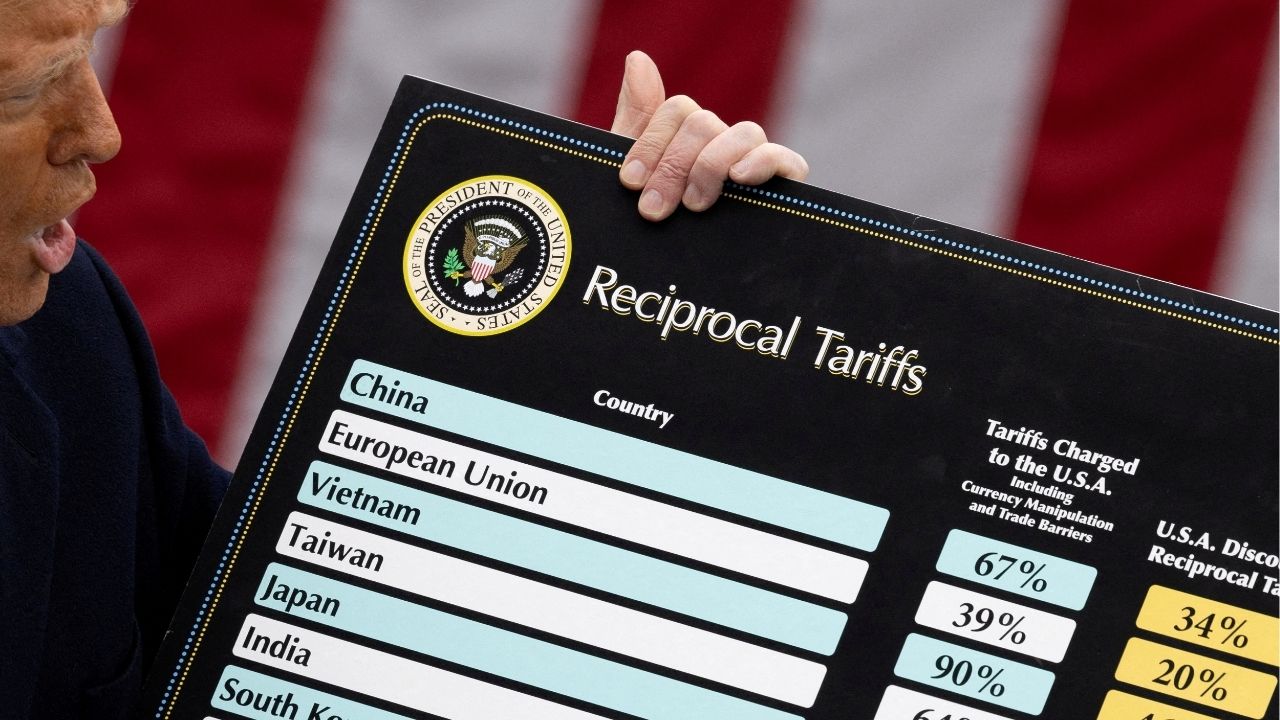
APRIL – After returning to office with a 10% punitive tariff on Chinese goods, Trump announces at the start of April sweeping “Liberation Day” tariffs on all imports that further hurt ties with China.
China retaliates and both countries take turns raising levies against each other to exceed 100%. China also begins restricting some rare earths exports.
—
(Compiled by Liz Lee and Marius Zaharia; Editing by Thomas Derpinghaus and Clarence Fernandez)