

|
Getting your Trinity Audio player ready...
|
WASHINGTON — Sen. Roger Marshall, the first-term Republican incumbent, is under siege in Kansas with the midterms just days off. Ken Paxton, the Republican Senate candidate in Texas and the state’s attorney general, is embroiled in multiple unsavory scandals and struggling.
Polls also show Democratic Senate candidates running strong in Iowa and Alaska, and on the cusp of victory in North Carolina, playing offense in what should be safe Republican terrain. At the same time, independent candidates are within striking distance of Republican Senate candidates in Montana, Nebraska and even South Dakota.
“This is as good a political environment as Democrats could ever wish,” said Amy Walter, the editor of the nonpartisan Cook Political Report, “and as bad as Republicans could ever imagine.”

Yet with the exception of North Carolina, it is far from certain that Democrats can pull off a single upset in any of the red states typically considered out of reach for them. They are competing not only against individual Republicans but also against ideological and structural advantages that have turned those states into reliable GOP strongholds and locked down the Senate map in recent years.
It wasn’t long ago that Nebraska, Montana, Iowa, the Dakotas and Alaska were represented by Democratic senators. But Republicans have solidified their grip on those states, suggesting that if Democrats cannot make inroads in this election, when Republicans are on the ropes, it could be some time before they again have such an opening.
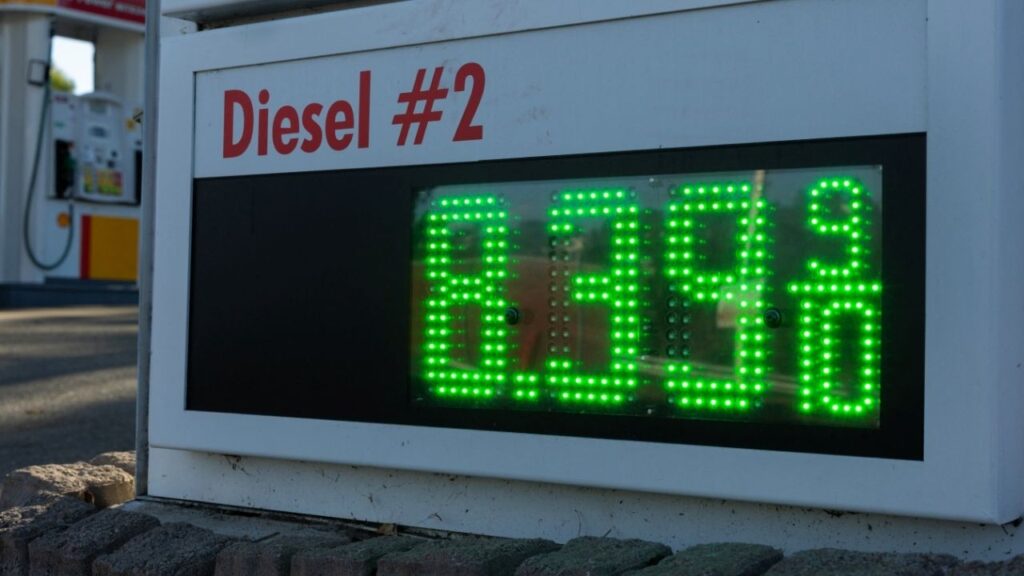
“If you can’t win under these conditions, you ain’t gonna win for a long time,” said Jon Tester, the former Democratic senator from Montana who lost his seat in 2024 after three terms as his state moved away from Democrats. He pointed to anti-President Donald Trump fervor, soaring fuel costs and the economic struggles of everyday Americans as reasons Republicans were highly vulnerable on their home turf.
The Senate map is always evolving, with population shifts and social conditions sparking changes in party thinking about where to devote attention and resources. As recently as the 1990s, the South was the epicenter of new Democratic thinking, as President Bill Clinton showed that Democrats could still appeal to rural and lower-income voters, and he had plenty of allies from the region on Capitol Hill.
At the time, states like Louisiana and Arkansas were represented by at least one and often two Democratic senators. Conversely, Republicans could still be elected in places like New York, Illinois and the Pacific Northwest.
But that political environment steadily eroded, and Republicans rose in the South and the Great Plains while elected Democrats mostly disappeared there. Pushed out of spots like North Dakota and vast expanses of Middle America, Democrats concentrated on urban areas, promoting a more progressive brand of politics.
That was a big mistake, critics say.
“The national Democratic Party hasn’t done what it should in places like Montana,” said Seth Bodnar, an Army veteran and former president of the University of Montana, who is running as an independent candidate in that state. “This strategy of trading blue-collar workers in rural areas to win in the cities and suburbs — that’s not a strategy for success in Montana.”
Over the years, changes in the map have had a profound effect on the way the parties treat elections, with some states essentially considered the property of one party or another, limiting the battlefield. The number of seats considered truly competitive has dwindled significantly, a phenomenon that started in the House but has taken hold more recently in the Senate.
That has had a major impact on the way the Senate operates, as senators have increasingly retreated to their partisan corners, unconcerned about a threat from across the aisle. In a growing number of states, they need to worry only about primaries, in which the incentive is to move right in the case of Republicans and left for Democrats, which has yielded a profoundly polarized Senate.
At present, just three states — Maine, Pennsylvania and Wisconsin — have split Senate delegations, illustrating how rigid the one-party hold is on Senate seats. It is the lowest total since the direct election of senators began more than a century ago.
But Democrats spied red-state openings this year amid the backlash to Trump administration policies, including tariffs and the war with Iran, which have contributed to high costs and economic pain in parts of the nation that might not otherwise seriously entertain a Democratic candidate. And they have had strong candidates step up.
The contested Senate map has steadily expanded into red states. In recent days, the super political action committee aligned with Sen. Chuck Schumer, D-N.Y, the minority leader, put more than $1 million into advertising in Mississippi, a state that has not elected a Democratic senator since 1982. But Democrats believe Scott Colom, a state prosecutor, has a chance against Republican Sen. Cindy Hyde-Smith.
Just how far Democrats can reach into red America won’t be known until after Election Day, but party strategists say that any wins could position the party for future gains.
“Every once in a while, the bottom falls out for the party in power, and when that happens, it’s possible to dramatically expand the number of states that you can win,” said Adam Jentleson, a former top Democratic Senate aide. He is also the founder of the Searchlight Institute, which aims to expand the Senate battleground and build an enduring Democratic majority.
Jentleson noted that most senators elected next month will serve through the entirety of the next president’s first term. And history shows that incumbent senators, with all the advantages of office, tend to get reelected.
With Democrats also poised to win some red-state governorships, Jentleson said those governors could work with new Democratic senators to restore the party’s presence in states where it has been written off, providing a foundation to build on in coming elections.
He pointed to Republican-held seats in states like Wisconsin and North Carolina that could then be vulnerable in the next election. He said this year’s election could prove similar to 2006, when Democrats seized House and Senate majorities in Congress and then expanded those gains in 2008.
“What this should be for us is 2006 and 2008, when one good cycle leads to another,” Jentleson said.
But Democrats first have to win next month in states where they have had little success — and that is no sure thing. It presents a test of their possible appeal in states that seemed all but lost to the party.
“If you can’t win now,” Tester said, “when can you win?”
—
This article originally appeared in The New York Times.
By Carl Hulse/Clayton Steward
c. 2026 The New York Times Company