
|
Getting your Trinity Audio player ready...
|
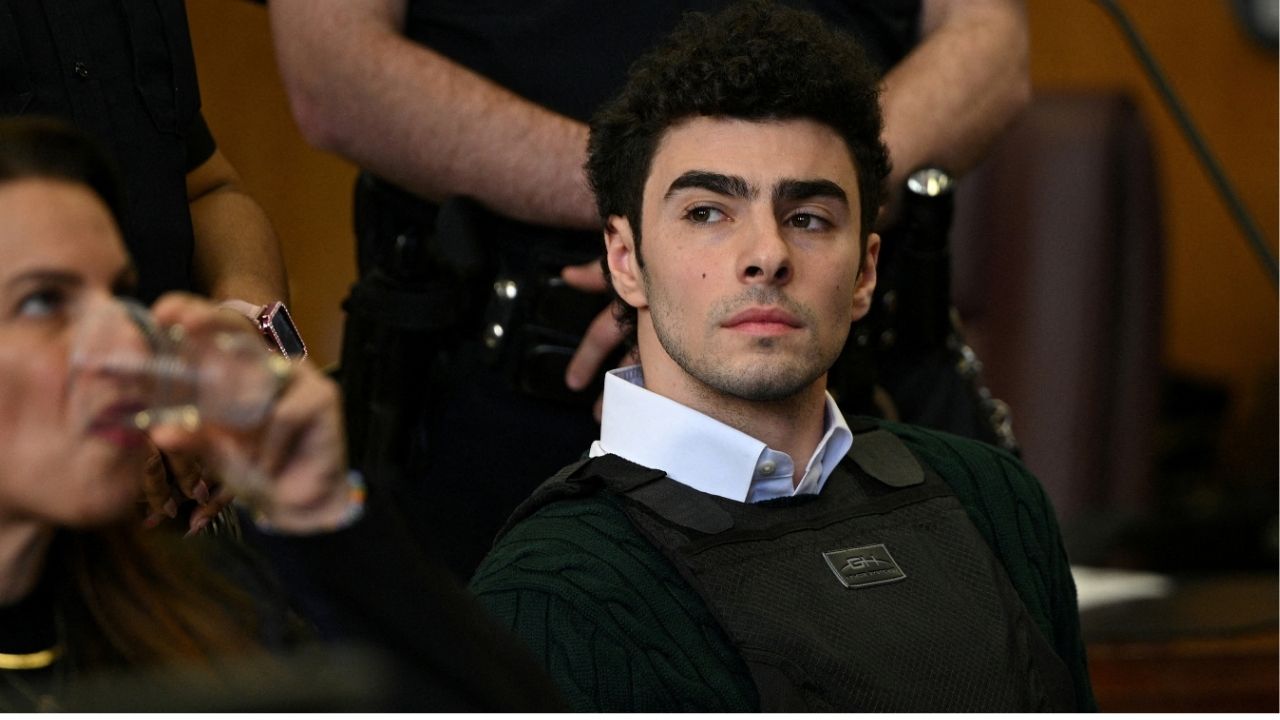
The Manhattan district attorney’s office secured a partial victory Monday when a state judge ruled that a gun and notebook found inside Luigi Mangione’s backpack could be used as evidence during his murder trial in September.
Inside of the notebook was what prosecutors have called a manifesto decrying America’s “parasitic” insurance industry and its system of for-profit healthcare. And the gun, prosecutors have said, was connected to shell casings found at the scene of the killing. The judge, however, ruled that some other evidence from the backpack and some statements could not be used.
Among the items that will be excluded are a gun magazine, a cellphone, a passport, a wallet and a computer chip, Justice Gregory Carro of state Supreme Court in Manhattan said. In court, Carro said he found that the search of the backpack at a McDonald’s in Pennsylvania where Mangione was arrested had been “an improper, warrantless search.”

Carro said that only some of the statements made by Mangione on the day of his arrest, Dec. 9, 2024, would be allowed.
A hush fell over the courtroom shortly before 10 a.m., as the judge’s written decision dropped. Some of Mangione’s supporters, seated alongside the press, appeared thrilled at the decision. “Oh my God, yes,” a woman whispered to another, touching her palm to her chest over her heart.
The decision came after prosecutors with the Manhattan district attorney’s office spent three weeks arguing that evidence found in Mangione’s backpack — ammunition, a homemade silencer, a red notebook, handwritten notes and a 3D-printed gun — should all be allowed into a trial.
Mangione’s lawyers said that since the officers who arrested him did not have a warrant to search the backpack, evidence found inside it should not be used in the trial. Police also failed to read Mangione his Miranda rights and ignored his request to remain silent by continuing to ask him questions, his lawyers said.
Mangione is accused of killing Brian Thompson, the CEO of UnitedHealthcare, as Thompson walked into a Manhattan hotel to prepare for an investor conference on the morning of Dec. 4, 2024. Surveillance footage showed that as Thompson walked toward the hotel’s entrance, a man in a hoodie emerged from between parked cars, leveled a handgun affixed with a silencer and fired.
The killing and the brazen way it was conducted shocked many Americans. But some rallied around the gunman, viewing the killing as a manifestation of Americans’ frustration with rising healthcare costs. Law enforcement agencies in New York launched a nationwide search.
Five days later, officers in Altoona, Pennsylvania, arrested Mangione in a McDonald’s in connection with the killing.
The focus of the ruling Monday was what happened in the minutes after Altoona officers approached Mangione, as he sat with a steak, egg and cheese McMuffin and a hash brown, scrolling on a laptop. His black backpack sat next to him.
Within a half-hour, after he had given the officers a fake driver’s license, police handcuffed Mangione. As he was led outside, body camera footage shows two officers searching the bag on a table. They pulled out a sandwich, a bag of sliced bread and an ammunition magazine wrapped in wet underwear.
Officers searched the backpack again at the Altoona police station, where one officer announced that she had found a handgun, according to body camera footage. A supervisor instructed her to move the bag away from where Mangione was being processed and into a hallway. The officer then began pulling out more items, including the silencer. Police later searched the bag for a third time.
In court last year, Mangione’s lawyers pointed to moments when officers were recorded in body camera footage asking colleagues if they should get a warrant before rifling through the backpack. Altoona officers, who were called to testify, defended their actions, testifying they followed Pennsylvania law and their department’s policies.
Beyond what was found in the backpack, prosecutors have said they collected hundreds of hours of video tracking the gunman’s path — and another discarded backpack that contained a piece of chewed gum — and have linked Mangione’s DNA to items the gunman discarded during his flight after the shooting.
They have a flash drive that was on a necklace that Mangione wore when he was arrested. And there is the fake New Jersey license that Mangione gave officers, which prosecutors say matches one used at an Upper West Side hostel where the gunman is believed to have stayed.
The Manhattan district attorney’s office charged Mangione with 11 counts, including murder and terrorism. Days later, federal prosecutors in the Southern District of New York charged him on four counts. He also faces charges in Pennsylvania.
Since then, both cases in New York have narrowed. In Manhattan federal court, Mangione had faced a charge that carried a potential death penalty, which the judge later dismissed.
In the state case, Carro dismissed a terrorism charge, saying he had found the evidence to support it “legally insufficient.” Mangione still faces a state charge of second-degree murder, for which he could receive a sentence of 25 years to life if convicted.
He is scheduled to go on trial in state Supreme Court in Manhattan in September.
–
This article originally appeared in The New York Times.
By Hurubie Meko and Anusha Bayya
c. 2026 The New York Times Company