

|
Getting your Trinity Audio player ready...
|
The New York Times on Monday accused the Defense Department of violating the First Amendment by requiring journalists to have an official escort at all times when visiting the Pentagon.
The suit, filed in U.S. District Court in Washington, is the second time the newspaper has sued over the Trump administration’s restrictions on reporters who cover the military complex.
The new lawsuit says the Pentagon escort policy is unconstitutional because it imposes unreasonable burdens on reporters. Journalists must, under the policy the department adopted in March, “call or email for an appointment, wait for a response, get an escort, ask their question” and then leave the building. The suit asks the court to force the Pentagon to lift the restriction.

The Pentagon did not immediately return a request for comment.
The Times’ case is the latest salvo in a legal battle over the Pentagon’s escalating efforts to restrict reporters who cover the military complex. Pete Hegseth, the defense secretary, has repeatedly curtailed journalists’ access within the Pentagon, including an escort requirement for certain Pentagon corridors. In October, the department imposed a comprehensive set of restrictions that let the agency designate journalists as “security risks” and revoke their press passes.
The Times in December sued the Pentagon on the grounds that the restrictions violated the First and Fifth Amendment rights of its journalists.
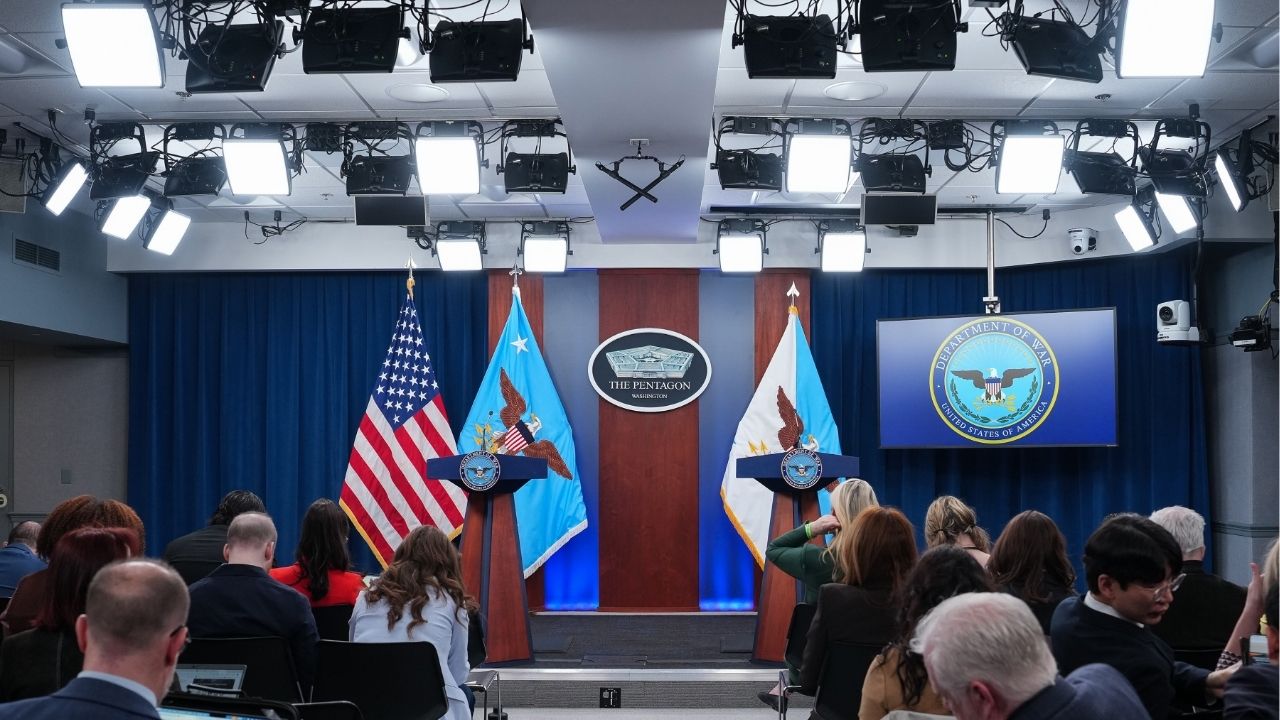
In March, Judge Paul Friedman of U.S. District Court ruled in favor of the Times, tossing out major parts of the October policy. Shortly after, the Pentagon released an “interim” policy that mandated official escorts for every visit, among other changes. The department also closed the long-standing workspace for journalists in the Pentagon.
Friedman tossed out the heart of the interim policy as well, but the Pentagon asked an appeals court to allow the escort requirement to remain in place while it appealed both rulings by the judge. In April, a divided three-judge panel for the U.S. Court of Appeals for the District of Columbia Circuit allowed the escort requirement to remain in place during the appeal.
In its latest lawsuit, the Times said that the interim policy was “patently retaliatory” and that the escort requirement rendered the press passes of Times journalists “essentially worthless.” The point of the new suit, the complaint says, is to challenge the interim policy “on its own terms.”
—
This article originally appeared in The New York Times.
By Erik Wemple/Eric Lee
c. 2026 The New York Times Company