
|
Getting your Trinity Audio player ready...
|
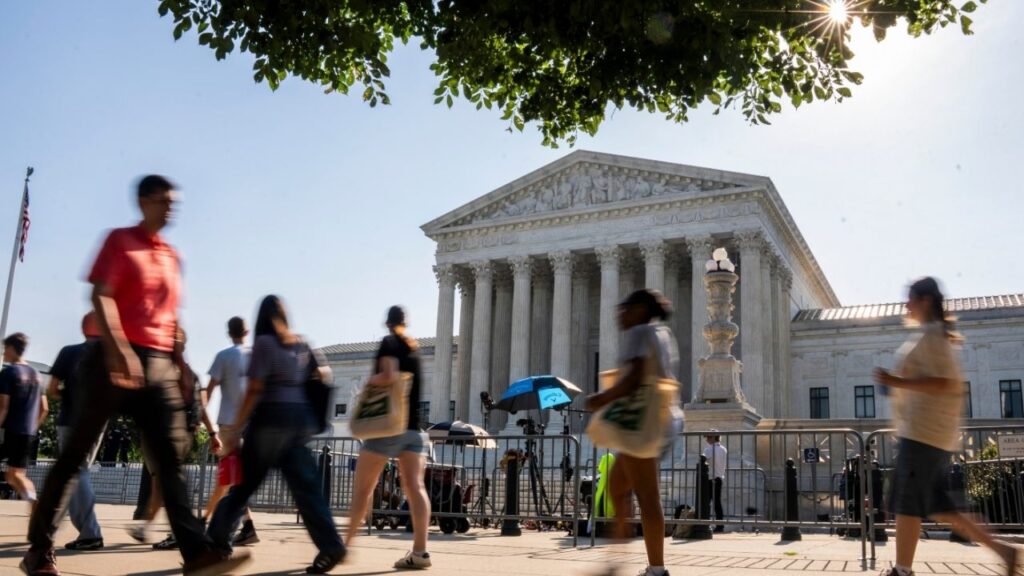
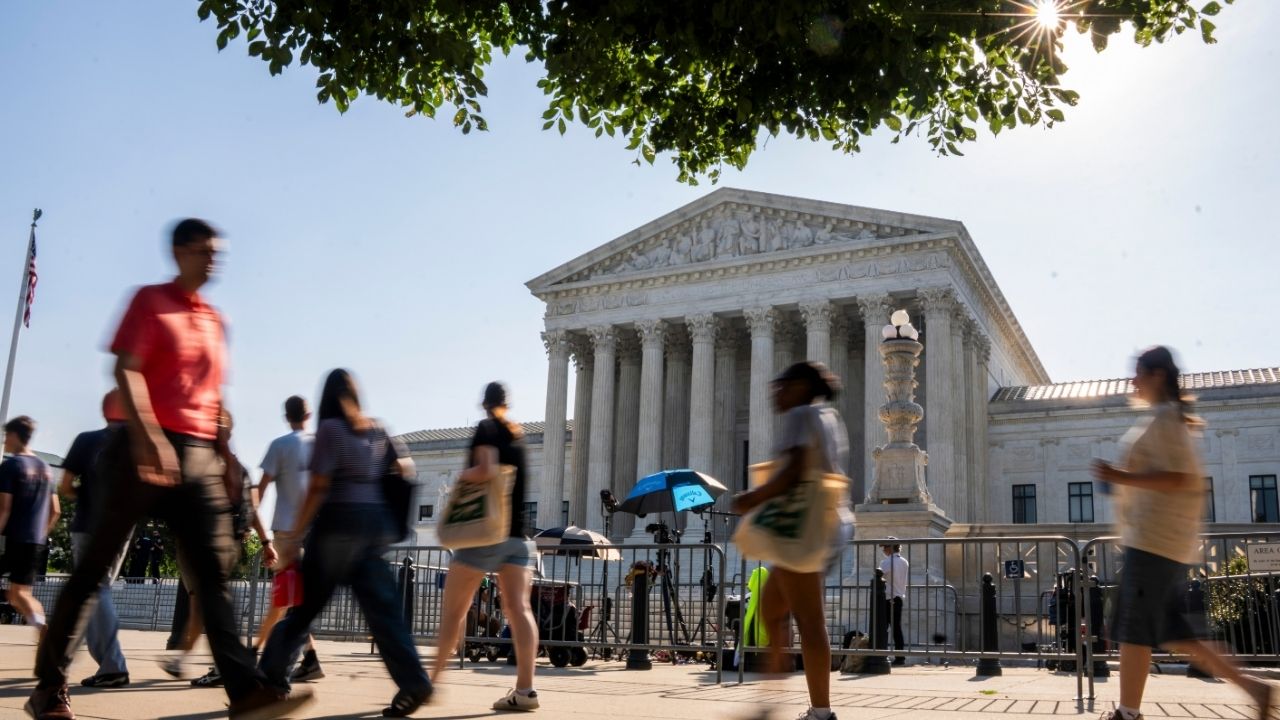
WASHINGTON — The Supreme Court refused Tuesday to immediately block an immigration-related agreement between the Justice Department and the state of Texas affecting the rules for deportation proceedings that opponents have described as “egregious collusion” between the Republican-led state and the Trump administration.
Three cities and an immigrant advocacy group had asked the justices to halt the deal and clear a path to reinstate a Biden administration policy that had given immigration judges discretion to postpone deportation proceedings in certain cases.
The cities — Baltimore; New Haven, Connecticut; and Columbus, Ohio — have significant immigrant communities and back the Biden-era policy, saying it was an important procedure that has existed in some form for decades and has implications for hundreds of thousands of cases.

The Supreme Court’s one-sentence order did not include any reasoning, which is often the case when the justices respond to emergency requests. There were no noted dissents.
At issue was the rule known as “administrative closure,” which gives immigration judges discretion to suspend deportation proceedings in some situations, such as when an individual is seeking humanitarian protections or other legal status to remain in the country. The cities told the court that the administrative closure process was intended to “promote efficiency or protect due process rights.”
Between 2013 and 2017, the number of removal cases closed using the rule increased from nearly 172,000 to more than 268,000, according to the Trump administration.
During the first Trump administration, the attorney general found that immigration judges lacked the authority “to indefinitely suspend immigration proceedings through administrative closure.” In 2024, the Justice Department issued a new rule that once again gave immigration judges the discretion to halt some deportation proceedings.
As part of President Donald Trump’s mass-deportation agenda, the administration has overhauled immigration courts and pressured judges to deport more people. Unlike the independent federal judiciary, immigration courts are part of the Justice Department.
In April 2025, the acting director of the Executive Office for Immigration Review, the unit at the Justice Department that runs the immigration courts, issued a memo saying it “could not — and will not — defend” the 2024 rule reinstating the administrative closure process. But the office said immigration judges should continue to follow it “unless they have a legal basis for not doing so.”
Ken Paxton, the Republican attorney general in Texas and an ally of Trump, sued the federal government in June over the 2024 rule, which he argued operated as de facto amnesty because it allowed immigration judges to delay deportation proceedings, in some cases for years. The continued presence of immigrants lacking permanent legal status, the state said, caused “fiscal, public safety and sovereign harms.”
The two sides were ideologically aligned but formally on opposite sides in a lawsuit. On the same day the lawsuit was filed, the two sides told a judge they had agreed to settle it, ending the matter with a binding agreement removing the immigration judges’ discretion. America First Legal, a group co-founded by Stephen Miller, a senior White House adviser and the architect of much of Trump’s immigration policy, has helped represent Texas.
The lawsuit was filed in Wichita Falls, Texas, a go-to destination for the Justice Department. At the time, Judge Reed O’Connor, who was nominated by President George W. Bush, heard every case brought in that division.
O’Connor quickly signed off on the settlement with a brief order and later ruled that the cities and advocates did not have legal grounds known as standing to sue. The 5th U.S. Circuit Court of Appeals refused to block the agreement, and opponents then asked the Supreme Court to intervene.
In court filings, city officials and Centro Legal, which provides legal services to immigrants, said the proposed agreement was an abuse of the court system because the federal government and the state of Texas were on the same side. The move, they said, allowed the administration to undo an agency action without going through the proper process.
Paxton’s office told the justices in a filing that there had been a live, legitimate controversy between the state and the administration because the rule was still in effect when Texas sued.
The cities said they would be harmed by the settlement in part because of the potential loss of tax revenue from residents who might be deported and because crime victims living in the country illegally might be discouraged from cooperating with law enforcement in the face of reopened deportation hearings.
In response, D. John Sauer, the solicitor general, said the challengers did not have legal grounds to intervene because they were not regulated by the rule, which applies to immigrants in removal proceedings and not to the cities. He pushed back on the assertion that the deal struck with Texas would be immune from a legal challenge. Undocumented immigrations, he said, could potentially bring lawsuits targeting the elimination of the rule.
—
This article originally appeared in The New York Times.
By Ann E. Marimow/Allison Robbert
c. 2026 The New York Times Company