


|
Getting your Trinity Audio player ready...
|
The brothers of Chi Phi were texting one another in a panic.
On the afternoon of Nov. 8, 2024, Cornell University suspended the fraternity for suspected drug use. Three hours later, the school in Ithaca, New York, sent an email blast with the subject line, “Crime ALERT: Sexual Assault — Edgemoor Lane, City of Ithaca.”
It read: “The victim reported being sexually assaulted by several males and coerced into consuming ketamine and other drugs.”

The Chi Phi house was indeed on Edgemoor Lane, and there was a night the brothers were worried about. But a simple detail in the email gave them fleeting hope.
“Dates don’t add up,” one man wrote to the other three brothers in the chat. Was the suspension notice referring maybe to a different Chi Phi party? Was that Risky Business Night? The more likely date the email was describing, they feared, was Oct. 19, 2024: Hawaiian Night, when things had gotten out of hand with a sorority sister.
“What’s the plan of action?” Matthew Ingalls, a sophomore studying math and economics, wrote. He had been in touch with the woman from Hawaiian Night several times since the party, text messages showed, and he had offered to call her again.
“I don’t think she would have reported this,” Ingalls offered to the group text.
He was wrong.
The woman, now known as Jane Doe, would go on to file a lawsuit describing a night at the Chi Phi house that began with a threesome with two of the brothers on the text chain but was followed by sex acts with several other Chi Phi brothers. Those encounters, which Jane Doe said took place while she was incapacitated by ketamine and liquor, were, she later came to believe, a crime.
This article is based on a cache of documents collected during the university’s sexual assault investigation and obtained by The New York Times. Across more than 1,000 pages, the records paint a lurid picture of life inside the Tudor mansion of the Xi chapter of Chi Phi — one at odds with the “house on the hill,” as the fraternity’s website described it, that “still stands today as a monument to the ideals of brotherhood for which this chapter was founded.”
Judging from the lawsuit and even the accused brothers’ own statements, those ideals had warped and devolved inside that house on Hawaiian Night. And the events of that evening and the days that followed all played out over texts that were later submitted to investigators — texts seeming to invite anyone in the fraternity to join the brothers having sex with Jane Doe, and later ones urging calm as rumors spread.
‘It’ll Blow Over In a Couple Days’
In the wake of Hawaiian Night, the Chi Phi brothers seemed to have reason to believe that things might just return to normal. Various brothers reached out to Jane Doe with texts that sought to confirm everything was good.
“I just wanted to apologize for how things went down the other night,” one brother, Jonathan Newell, texted Jane Doe the following Monday, Oct. 21, 2024. He apologized repeatedly for being “too fucked up” to have prevented other Chi Phi brothers from entering the bedroom.
“We’ve been shutting down any stories we’ve heard,” he wrote. “But again I’m so so sorry.”
Jane Doe had gone to the party to see another brother, Ingalls, at the end of a very bad day. Someone had stolen her wallet while she was at the gym that afternoon, and she’d started drinking on an empty stomach and was already feeling a little drunk by the time she arrived at the Chi Phi house, she told investigators.
Ingalls had personally invited her to the party to “rip the Kraken,” the nickname for the fraternity’s bong, but soon after she’d arrived, he’d suggested a three-way, and in her drunken state, she’d agreed.
Now, days later, Ingalls sounded reassuring.
“It’ll blow over in a couple days I imagine,” he texted her. “Until then we just have to sit tight. How’ve you been coping with the stress? You need anything?”
But on private Chi Phi chats, the young men were worried about how the stories spreading on campus would affect them. As early as Sunday, there were rumblings among sororities and fraternities alike about a “gang bang” at Chi Phi.
“The talk of the town,” one of the seven men accused in Jane Doe’s lawsuit, Gillio Lopes, told investigators later. He said he had consensual sex with her that night.
“Most of the upperclassmen in the house mentioned it to me at one point or another that day,” Lopes said. “People just finding the situation relatively amusing.”
Over the next week and a half, Jane Doe’s own thinking about that night changed. Her sisters at Delta Delta Delta were alarmed by how she described what had happened that night, and bruises had formed on her buttocks. She was treated at the campus clinic for a urinary tract infection that she told the medical staff was contracted “in a traumatic way.”
But in her exchanges with the Chi Phi brothers, she seemed to be trying to move on.
“At the end of the day non of the sexual stuff was illegal and honestly i really liked being w u and matt,” she wrote to Newell, even as she fumed about what she felt was happening to her reputation. “i know im socially a massive slut rn and like can’t bare to hear it cuz im really not.”
But by the end of October, she was coming to believe that she had been a victim of sexual assault who was too incapacitated by alcohol and ketamine to be able to give consent. “I was raped,” she would flatly tell investigators.
There was a Halloween party planned at Chi Phi, and she’d said she planned to go until she got the sense that she had been uninvited.
“Yall aren’t my friends,” she texted Ingalls on Oct. 30, 2024. “Yall are covering your asses.”
Six days later, she went to the emergency room for a rape kit and then reported her sexual assault to the university.
‘We Never Lock the Doors’
“What’s the name of your lawyer,” Ingalls texted another brother three days after the email alert.
“I meeting him tmw,” the other man replied.
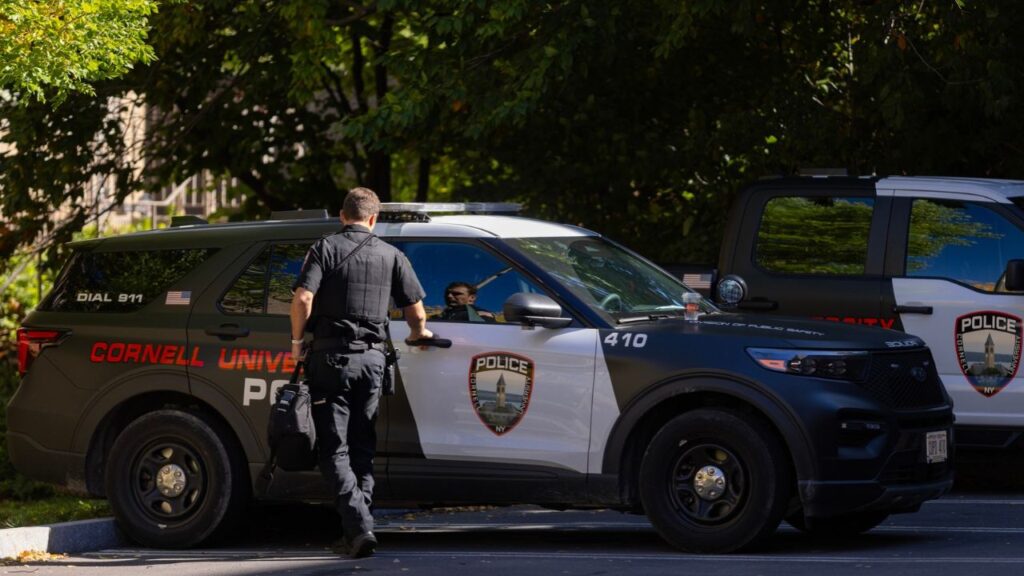
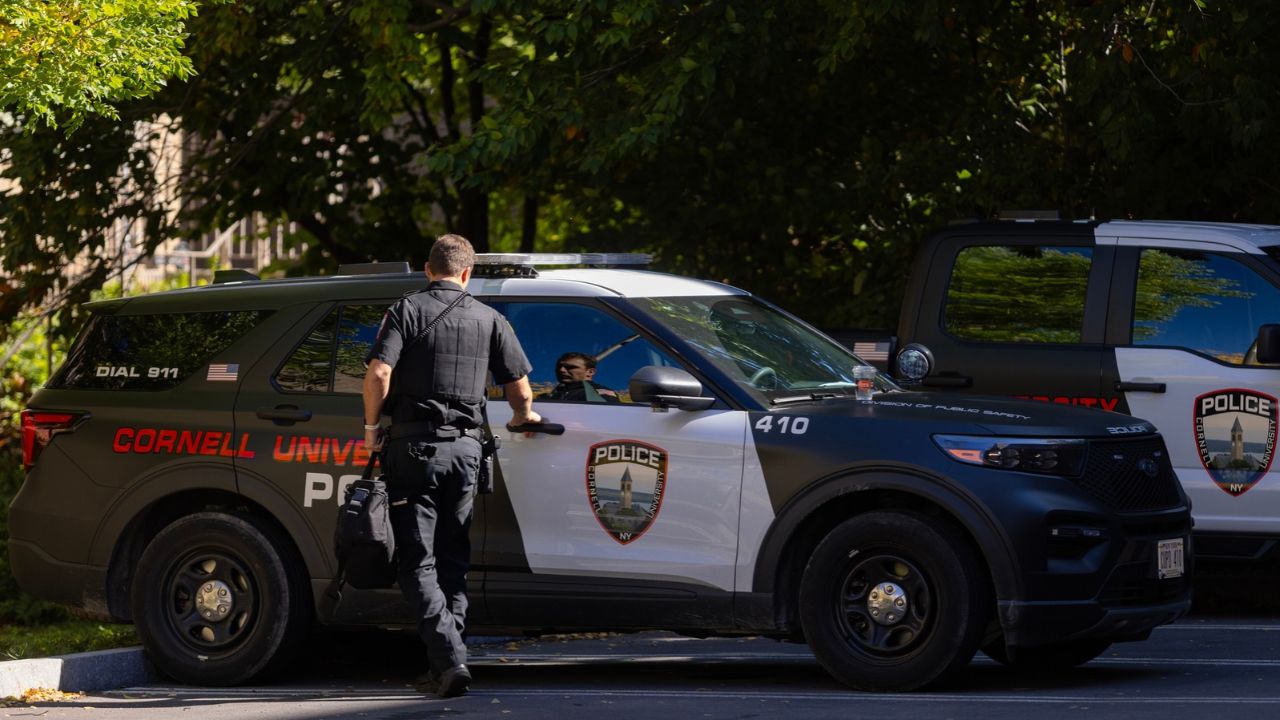
In the weeks that followed, several Chi Phi brothers named in the lawsuit were summoned before campus police officers and investigators with the university’s Title IX office, which is supposed to ensure compliance with federal civil rights laws.
Their versions of events that night, which often don’t line up with one another, matter-of-factly describe a room filling with men who, in their telling, have consensual sex in one form or another with the same woman. At least one brother gave his statement while his father listened virtually.
All the men have denied any wrongdoing and said that any sex that occurred that night was consensual. None of them have been charged with a crime.
Newell, a sophomore, shared a large bedroom with two brothers. But it was also a sort of common room in the house.
“It’s regularly used by brothers during events,” Newell later told investigators. “They just go in there, hang out, do whatever. We never lock the doors.”
This was where Jane Doe’s first sexual encounter happened that night, a threesome with Newell and Ingalls, which, according to her statement, she mistakenly presumed meant that they were bisexual, as she is.
Downstairs, the party was winding down. There were Chi Phi parties in the past that ended with people leaving in ambulances. This was not one of those parties.
“It was kind of like a ‘meh’ night,” one attendee recalled later in an interview with investigators.
Others would say the same thing about Chi Phi as a whole, which has been described as a “mid-tier” fraternity in the Greek landscape at Cornell.
Some friends and stragglers stuck around the house. Upstairs, a woman was vomiting in the fire staircase. The bartender — a sophomore studying information science named Winston Lee, who was assigned to remain sober that night — helped her get an Uber home.
The men’s accounts of that night have gaps within their details.
Newell recalled Ingalls noticing a bag of ketamine in his room and vaguely wondering how it got there — it was the second time that had happened lately, he told investigators. He took some and soon, he was vomiting in a trash can beside Ingalls.
Ketamine is a powerful and fast-acting anesthetic, rendering a dissociating or numbing effect on users for up to an hour or so, and unpredictable when combined with alcohol.
Newell described its effect on him to investigators: “I never really passed out. But there were pieces of my memory that I just can’t remember.” Ingalls eventually did pass out, and when Newell finished vomiting in a trash can, he looked up and saw that a third man, Lopes, a sophomore, had entered the room and was kissing Jane Doe. Soon, Lopes and Jane Doe were having sex. Ingalls woke up. “He was really confused,” Newell told investigators.
As this was happening, the door opened again, and “a couple other guys kind of poked their head in,” Newell recalled to investigators.
It is possible that these men had seen a Snapchat text sent from Newell’s account to a group of more than 50 fraternity brothers with an apparent invitation: “free pussy in alum pu,” meaning “pull up” to the alumni room upstairs, where Jane Doe was.
Ingalls followed up: “Like you can walk in and whip it out.”
Newell told investigators he didn’t remember sending or seeing any such texts.
Before the night ended, Jane Doe was led through the hallways to yet another room on an upper floor, where she eventually fell asleep. She woke up sometime around 10 a.m. in bed with Ingalls, who, according to her interview, asked for oral sex. She said no, and he drove her back to the Tri Delta house.
In the days that followed, the Chi Phi brothers appeared to make a plan.
“Just deny,” Newell recalled in his interview with investigators. “That was really it.”
‘This Semester Is Cooked’
After the fraternity was suspended in November, the Chi Phi house seems to have slowly cleared out as the semester wound down. All the brothers were told to find other housing.
“You know even if everything gets sorted before add/drop im withdrawing next semester,” Ingalls texted another of the seven fraternity brothers in January 2025, a little more than a week before the spring term would start.
“Yeah I figure this semester is cooked either way,” Lopes replied.
Scott Norris was a junior at Cornell at the time, and he showed up at his interview with investigators with a negative drug test for ketamine. “I’m excited to get this resolved,” he told them.
He had left the party, he said, and he was hanging out in an upper room with Scott Kretzschmar, a junior studying human biology. Then they saw the Snapchat message from Newell. Norris said he thought it might be a joke, but that he needed to see for himself.
“I was genuinely concerned and wanted to investigate what’s going on,” he said.
Norris and Kretzschmar, who was still wearing what he called “a Hawaiian necklace” from the party, entered the room where Jane Doe and four men were gathered. Satisfied that everything appeared “normal,” he told investigators, and nothing improper was happening, he and Kretzschmar left.
An investigator then showed him a screenshot from that “free pussy” text thread, in which he responded “Free…” and later, when someone asked, “Shop still open?” he responded “Yeah.”
Norris told investigators that the screenshot helped jog his memory. “I do now remember we were kind of just bantering about it in the chat, which I would never have done had I known what had actually gone on,” he said.
In the end, the men were given a range of punishments. Ingalls and Newell were expelled. Lee and Lopes received suspensions and disciplinary probation. Diego Sarabia, whom Jane Doe accused of forcibly kissing her and who had already graduated by the time of his punishment, was issued a persona non grata order, barring him from campus. Norris and Kretzschmar, who said they only stayed five minutes in the room, but who Jane Doe said had snorted ketamine off her body, were ordered to study sexual harassment, social media use and bystander intervention; they were also required to write “reflection papers.”
‘Looks Sad’
A Title IX investigator visited the Chi Phi house in January 2025. It was now vacant, months after the fraternity’s suspension in November.
The photographs the investigator took as she toured the house that day were included in the cache of documents obtained by the Times.
She photographed cigarette butts ground into a rug. A discarded condom in a wastebasket. Empty bags of snacks, empty beer cans, empty bottles. A bong.
A shelf with Narcan boxes. Beside them, protein powder.
In her own interview, Jane Doe thought back to the last moments before she, in effect, became Jane Doe, standing outside the Chi Phi house, excited to see Ingalls. She’d found him attractive.
She’d texted him to say she’d arrived, because she didn’t want to wait outside a frat house in the cold night to be let inside.
That, she said, “looks sad.”
—
This article originally appeared in The New York Times.
By Michael Wilson/Lauren Petracca
c. 2026 The New York Times Company