
|
Getting your Trinity Audio player ready...
|
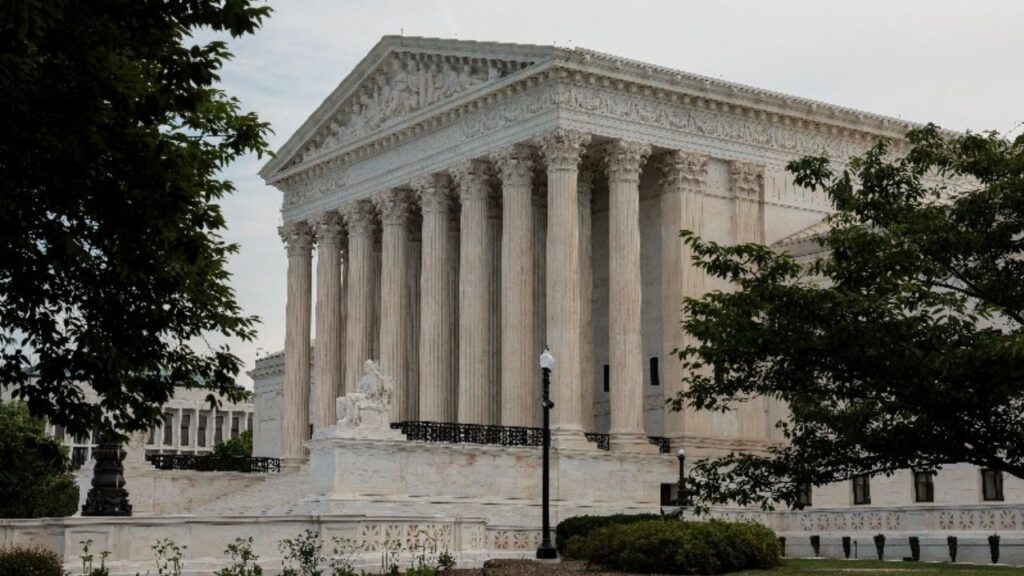
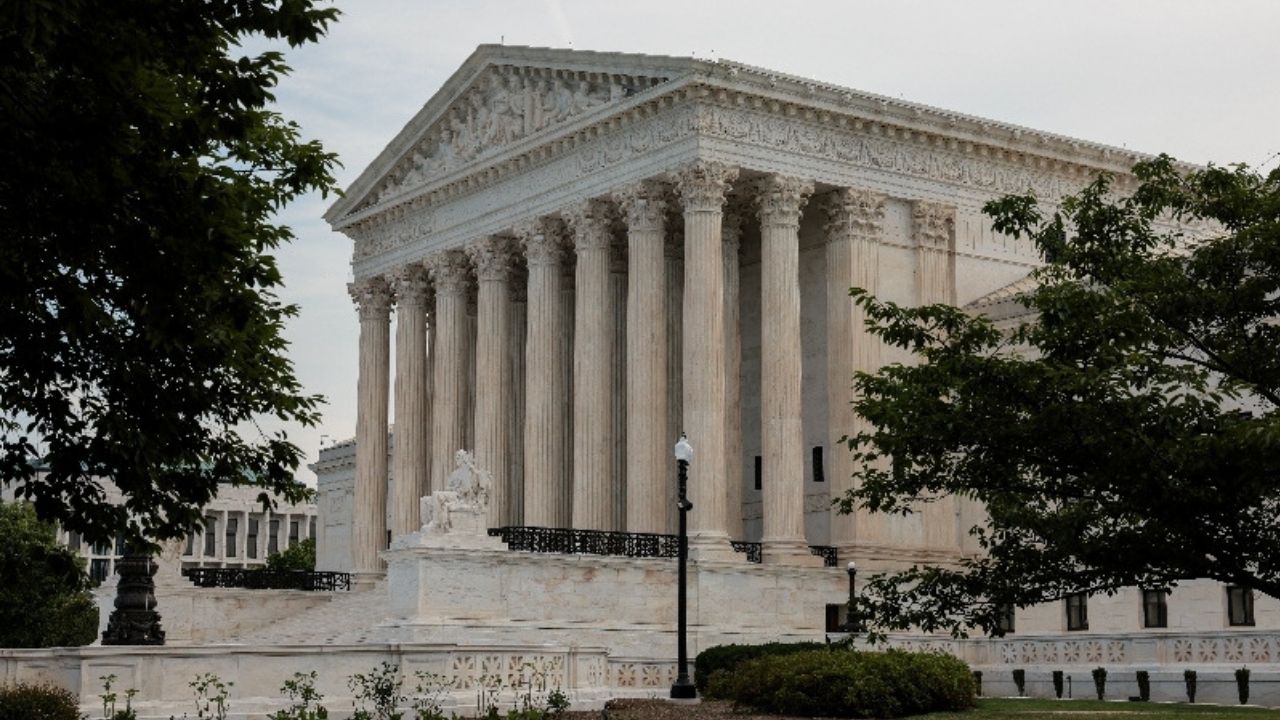
The U.S. Supreme Court revived on Friday an expanded immigration database that President Donald Trump’s administration said aims to combat voting by noncitizens but critics contend could disenfranchise eligible voters.
The justices granted the Justice Department’s request to block a judge’s order that had stopped state officials from using Social Security numbers and other information to conduct sweeping checks of the citizenship status of registered voters against federal records.
The administration’s data-sharing arrangement is one in a series of actions boosting the federal government’s involvement in voting ahead of November’s midterm elections in which Trump’s fellow Republicans seek to maintain control of Congress. The U.S. Constitution gives individual states the primary authority to run and administer elections.

The Department of Homeland Security last year redesigned a federal database known as the Systematic Alien Verification for Entitlements, or SAVE, used to verify a person’s citizenship and immigration status. The revamp allowed users to search many records at a time and to conduct searches using individuals’ Social Security numbers.
Since then, several Republican-led states have compared their voter lists to the database, and some voters flagged as potential noncitizens have had their registrations canceled.
Critics say such election-related actions by Republicans are driven less by concerns over election security than by an attempt to gain political advantage by narrowing the electorate, risking the disenfranchisement of eligible, often Democratic-leaning voters.
Trump has carried out hardline policies toward immigration and has made false claims of widespread voting fraud including in his 2020 election loss to Democratic former President Joe Biden.
Advocacy groups that sued to block the revised SAVE system said that the new approach has resulted in people who were wrongfully identified as noncitizens being kicked off voter rolls. They have argued that SAVE can be outdated, meaning immigrants who have become naturalized U.S. citizens and are thus eligible to vote are sometimes labeled as noncitizens.
The modified system’s overall error rate is not publicly known. The Department of Homeland Security and Justice Department did not provide that information when asked.
In their Supreme Court filing, the advocacy groups cited a Travis County, Texas, election official who said 25% of the system’s noncitizen matches there involved people who had already proven their U.S. citizenship, and news reports finding that at least 81% of the system’s responses in St. Louis County, Missouri, were erroneous.
The voting rights group League of Women Voters and privacy rights group Electronic Privacy Information Center sued in September 2025 to block the Trump administration’s modified system. They said that the revamp violated federal privacy and other U.S. laws.
In a June ruling blocking the revamped database, U.S. District Judge Sparkle Sooknanan in Washington, D.C., said the system was haphazardly assembled and contained unreliable citizenship data.
“All in all, the federal government has knowingly trampled on the privacy rights of American citizens in a manner that threatens the sacred right to vote,” Sooknanan wrote. “This court cannot stand idly by while that happens.”
The U.S. Court of Appeals for the District of Columbia Circuit in a 2-1 ruling on September 4 declined to halt Sooknanan’s ruling, prompting the administration’s request to the Supreme Court.
In a Supreme Court filing, Justice Department lawyers called the judge’s order “indefensible,” arguing that it “threatens the integrity” of the midterm elections.
Texas, which intervened in the case in support of the administration, has disputed claims that the system is unreliable.
Due to separate litigation in Florida, the Trump administration has been able to continue using its modified SAVE system in the Republican-led states of Florida, Iowa, Indiana and Ohio.
(Reporting by John Kruzel; Editing by Will Dunham)