
|
Getting your Trinity Audio player ready...
|
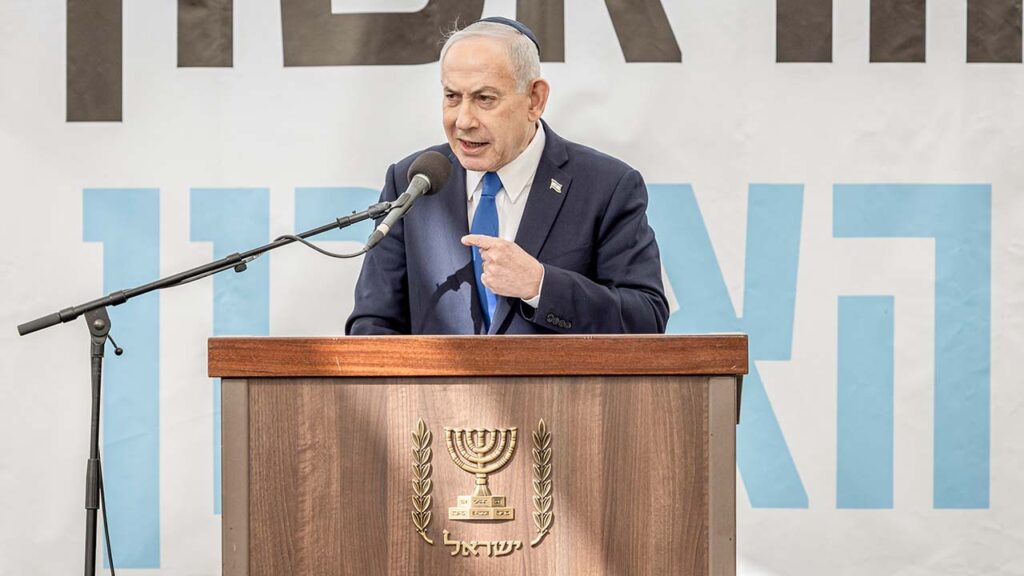
As Israelis prepare to vote next month, the question of who bears responsibility for failing to prevent the Hamas-led attack of Oct. 7, 2023 has become a dominant issue in one of Israel’s most consequential campaigns in history.
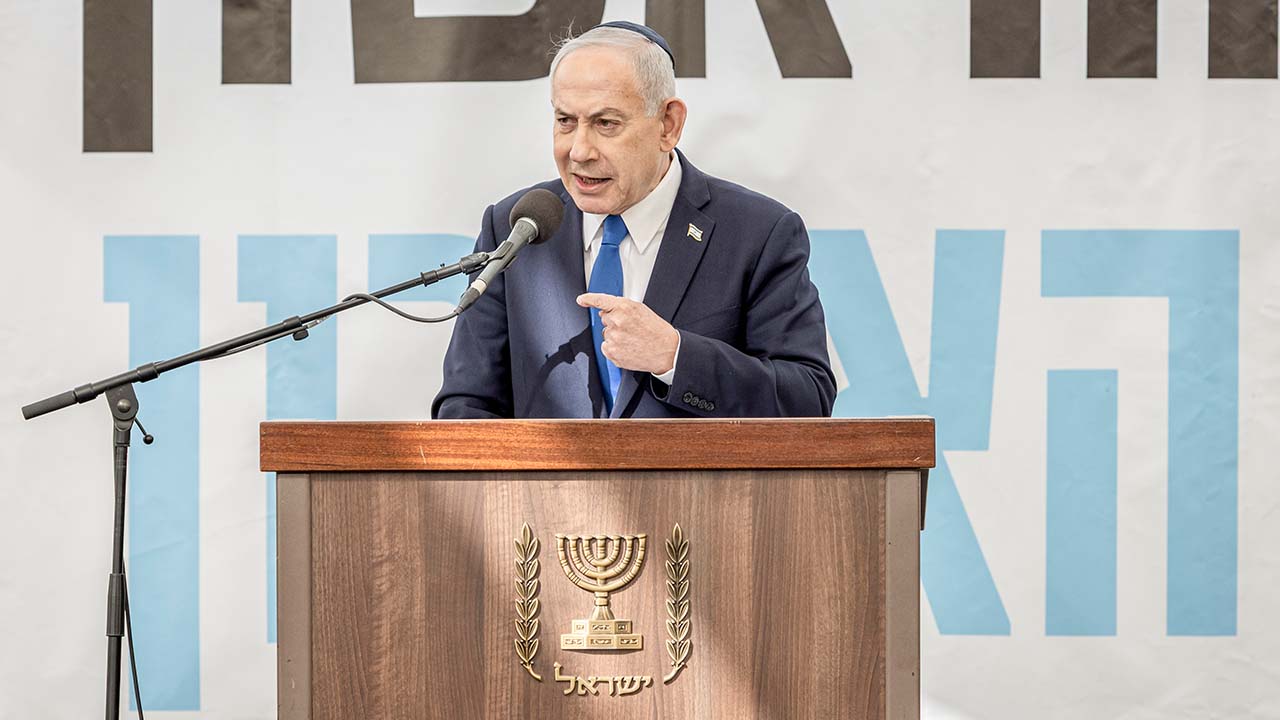
Prime Minister Benjamin Netanyahu, seeking an unprecedented seventh term, has placed the blame on national security officials, while his critics have said he must personally answer for the failures. When Haaretz, an Israeli newspaper, reported earlier this month that Sheikh Mohammed Bin Zayed, president of the United Arab Emirates, had given Netanyahu a secret warning that Hamas was planning a major attack, the question took on even greater urgency.
Netanyahu has denied the report.

But a person who said they had spoken with Sheikh Mohammed and another person who said they had been briefed by someone on the call between the two leaders told The New York Times that the Emirati leader had secretly reported to Netanyahu that Hamas was considering a major attack.
The warning from the Emirati leader, however, never reached the leaders of Israel’s security establishment, according to five former senior Israeli officials. Netanyahu gathered his security chiefs days later, on Oct. 1, 2023, for a meeting about the situation in the Gaza Strip, and never mentioned the warning, according to minutes of the meeting reviewed by the Times.
Instead, he told them that the goal should be to maintain calm in Gaza, and he pushed back when some security officials said that Israel should consider military strikes against senior Hamas leaders in Gaza who were overseeing attacks against Israelis in the West Bank, the minutes show.
At the meeting, details of which have not been previously reported, Netanyahu said that any Israeli action in Gaza might sabotage the prospect of Saudi Arabia establishing diplomatic relations with Israel — a deal the Israeli prime minister believed was imminent.
Sheikh Mohammed had called Netanyahu in late September to tell him that, based on information he had received, Hamas was planning to launch an attack, according to the two people who said they had spoken with someone on the call. One of those people said the information was not specific about whether Hamas was planning to launch rockets into Israel or preparing for a ground invasion over the border. The original sources of the intelligence that Sheikh Mohammed passed to Netanyahu are unclear, and it is also unclear whether other issues were discussed on their call.
The warning, though vague, proved to be correct. Days later, thousands of Hamas fighters and their allies launched an invasion over the Gaza border into southern Israel, killing about 1,200 people and taking some 250 more hostage in the deadliest attack on Israel in the country’s history.
After the Haaretz report, Netanyahu denied in a statement that he had ever received a phone call warning from Sheikh Mohammed and said that if any intelligence came from the Emiratis it was passed to Israel through intelligence channels.
The Emirati Foreign Ministry and Netanyahu’s office did not respond to requests for comment.
But Sheikh Mohammed mentioned his September 2023 phone call with Netanyahu months later in a discussion with William Burns, the CIA director at the time, according to a person familiar with that discussion. Sheikh Mohammed told Burns that, during the phone call, he had spoken to Netanyahu about a looming threat of violence in the West Bank or Gaza carried out by Hamas.
All of the people The New York Times spoke to insisted on anonymity to divulge details of sensitive discussions.
Netanyahu was not the only Israeli leader to overlook warning signs in the lead-up to the Hamas-led attack Oct. 7, 2023. Israeli security leaders repeatedly downplayed other signs that Hamas was gearing up for an assault, which were abundant at the time.
The Israeli military even obtained a Hamas battle plan in 2022, but military leaders dismissed it as unrealistic. The plan, which the military gave the code name “Jericho Wall,” turned out to be the blueprint for the Oct. 7 attacks.
In the years before the attacks, Israeli military and intelligence officials had concluded that Hamas was incapable of carrying out a major attack on Israel, and that Yahya Sinwar, the group’s leader in Gaza, was more interested in governing the enclave than fighting another war with Israel.
Netanyahu thought that Israel had deterred Hamas from waging war, according to an Israeli state ombudsperson report about government decision-making before the October attack. He instructed Israeli military and intelligence bodies to pursue a policy of “postponing conflicts” and “preserving Hamas as an effective, restrained, and restraining governing authority,” the report said.
The phone call and the warning from Sheikh Mohammed are not mentioned in any of the internal investigations conducted by the military, intelligence agencies or other entities into the causes of the severe Israeli security failures leading up to and including Oct. 7, according to the five former senior Israeli officials. The five officials were involved in the assessments, which have not been released in full.
Late next month, Israelis will vote in their first national election since the Oct. 7 attacks, and the race for parliamentary seats in the highly polarized country is shaping to be extremely tight. Not only is Netanyahu’s political future at stake, but many Israelis also see the election as fateful for the future of their shaken country.
The Haaretz report punched a hole in Netanyahu’s argument that Israel’s military and intelligence services were to blame for the intelligence failures leading to the Oct. 7 attacks. He and his allies have blocked efforts by Israeli lawmakers to set up a state commission of inquiry into the security breakdowns that preceded the attacks, saying it would not uncover the truth.
Earlier this month, Netanyahu’s opponents in the campaign issued a joint statement saying that the Haaretz report about the September 2023 warning “joins a series of revelations concerning Netanyahu’s failures” and “once again underscores why Netanyahu is fighting for his life — to thwart the establishment of a state commission of inquiry and to thwart revealing the truth to the Israeli public.”
—
This article originally appeared in The New York Times.
By Adam Rasgon, Mark Mazzetti and Ronen Bergman/Avishag Shaar-Yashuv
c. 2026 The New York Times Company