
|
Getting your Trinity Audio player ready...
|
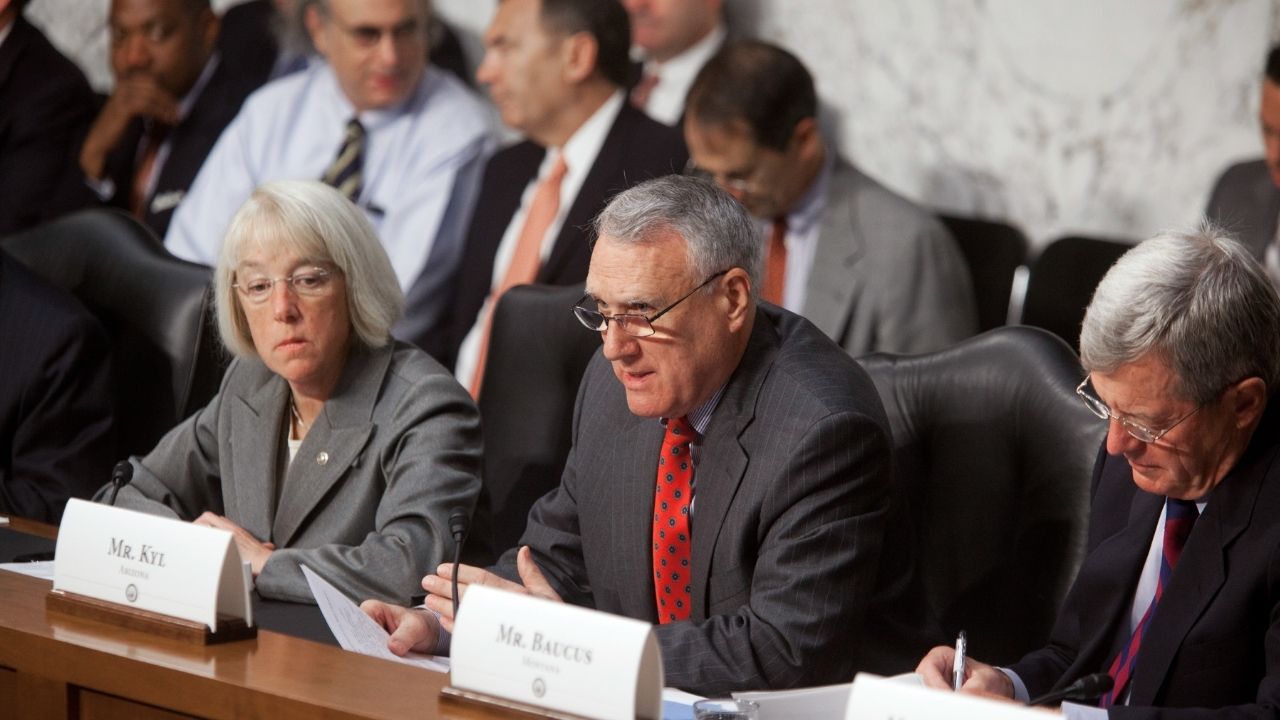
Jon Kyl, a former Republican Congress member and senator from Arizona who, during his 26 years on Capitol Hill, earned a reputation as a quiet but effective policy expert, political operator and party leader, died Thursday at his home in Phoenix. He was 84.
In a statement, his family attributed the death to complications from a neurological disease. Kyl announced in December 2025 that he had been diagnosed with dementia.
After four terms in the U.S. House of Representatives, Kyl won election to the Senate in 1994. During his three terms as senator, he climbed the party ranks, eventually becoming the party whip behind the minority leader, Mitch McConnell of Kentucky.

Kyl was known as a deeply informed policy expert and a political heavyweight, and he held a series of leadership roles that gave him control over the party’s legislative agenda. In 2000, Dick Cheney, then leading the search for George W. Bush’s running mate, interviewed him for the position, though ultimately, Cheney himself got the job.
In a 2006 profile, Time magazine called Kyl the Operator — and one of the 10 best current senators — noting that while he rarely made headline news, he was often the driving force behind the Republican Senate caucus. Legislation lived or died by his hand, even if that hand was usually invisible.
“You can accomplish a lot if you’re not necessarily out in front on everything,” he told Time.
His political agility was so smooth that outside observers — and even some in the Senate itself — rarely knew for certain where he exerted his influence. He was rumored to have been the one who derailed the nomination of Harriet Miers, the White House counsel, to the Supreme Court in 2005, though no one could say for sure.
Kyl was reliably well read on a broad range of policy issues, though he focused his attention on arms control — he was generally a critic — immigration and water rights, a subject of immense importance in Arizona. His staff admired his work ethic.
“He was one of the fastest walkers I’ve ever known,” Ron Bonjean, a Republican strategist who worked for Kyl as the chief of staff for the Senate Republican Caucus, said in an interview. “He was just intensely focused. He had a sense of urgency.”
Kyl was respected across both parties for his willingness to make deals and his ability to impress them on his sometimes unruly party. He played a critical role in getting Democrats to agree to a partial extension of the Bush-era tax cuts in 2013 and an equally vital, if less successful, effort to craft an omnibus immigration reform bill in 2007.
He was no moderate. He held a lifetime voting score of 96.6 from the American Conservative Union, a common measure of a politician’s political leaning. But Kyl was pragmatic in an old-school sense, insisting that it was his job to find the best outcome possible, not to hew to an ideology.
He caught significant flak from his own party in his work on the immigration bill, which included a path to citizenship for millions of migrants lacking legal status, a red line for many hard-core Republicans.
“I would have rather ended my political career with people saying, ‘Throughout his political career, he was recognized as one of the top reasonable spokesmen for conservatism in this country,’” he told The New York Times in 2007.
Kyl’s success was all the more impressive given that he served as the junior senator beside John McCain, a war hero and giant of Arizona Republican politics who cast a long shadow over his state’s Republican Party.
They were a study in contrasts: McCain the high-profile party maverick, Kyl the backroom establishment enforcer.
Yet they managed to reach a modus operandi, if not a warm friendship. McCain used his cross-party appeal to help Kyl overcome a strong Democratic challenger in 2006; two years later, Kyl vouched for McCain’s conservative bona fides during his unsuccessful race for president.
Kyl surprised many when, in 2011, he announced his decision not to run for a fourth term in the Senate.
“I think it’s better to leave when people have a very good attitude about you, rather than be hounded out of office like so many,” he told reporters. “There is more to life than being in the United States Senate. Some people stay too long and there are other things to do in life.”
Jon Llewellyn Kyl was born April 25, 1942, in Oakland, Nebraska, a farming community about 60 miles north of Omaha. His mother, Arlene (Griffith) Kyl, managed the home.
His father, John Henry Kyl, taught English at Nebraska State Teachers College (today Wayne State College), then in the 1950s moved the family to Bloomfield, Iowa, where he joined his family’s clothing business. He also worked as a TV journalist before serving in the U.S. House of Representatives from 1959 to 1965 and again from 1967 to 1973.
Having caught pneumonia in high school, Jon looked for a drier, warmer climate for college. At the University of Arizona in 1960, he studied political science and graduated in 1964. He received his law degree from Arizona in 1966.
Kyl spent two decades with Jennings, Strouss & Salmon, a leading Phoenix law firm, before winning his first race for the U.S. House of Representatives in 1986.
He consistently won his subsequent House and Senate races by wide margins; in his first reelection race for the Senate, in 2000, he did not even face a major-party opponent.
One exception was 2006, when public anger over the Iraq War propelled a blue wave across the country. In what became one of the most expensive races in Arizona history, his Democratic opponent ran uncomfortably close in the polls up until Election Day, though Kyl ended up winning with a comfortable 9-point margin.
Kyl married Caryll Collins in 1964. Besides his wife, he is survived by their two children, John Kyl and Kristine Kyl Gavin; and four grandchildren.
—
This article originally appeared in The New York Times.
By Clay Risen/Philip Scott Andrews
c. 2026 The New York Times Company