

|
Getting your Trinity Audio player ready...
|
WASHINGTON — The outlook was grim two years ago for Justice Democrats.
The left-wing political organization, best known for powering Rep. Alexandria Ocasio-Cortez’s rise to Congress, backs primary challenges to moderate establishment Democrats in Congress to expand the ranks of progressives on Capitol Hill.
But in 2024, its power appeared to be waning. Justice Democrats did not even try to field primary contenders, focusing instead on protecting two of its incumbents who faced serious reelection challenges from the right. Both of them, Reps. Cori Bush of Missouri and Jamaal Bowman of New York, ultimately lost to more centrist candidates backed by a flood of money from pro-Israel and cryptocurrency industry groups.

Now, amid an outpouring of anger about the war in the Gaza Strip and resentment toward a party establishment that many Democratic voters view as badly out of touch, Justice Democrats is back on the offensive with at least seven candidates it recruited or endorsed expected to arrive in Congress in January. They are almost uniformly young democratic socialists who say it is time for Democrats in Congress to better reflect the will of their voter base, including passing legislation to provide universal healthcare, to abolish Immigration and Customs Enforcement and to ban corporate money in politics.
Justice Caucus Could Double in 2027
And they are eager to team with other progressive lawmakers to wield influence next year should their party fulfill increasingly widespread predictions that it will win control of the House. With nine Justice Democrats-endorsed incumbents already serving, their cohort is set to nearly double come January.
It is not clear how much clout they would have to drive the agenda; if Democrats were to win a large enough majority, their ability to block or to push through major items could be limited given their relatively small numbers. But no matter what happens, they could pose a challenge for Rep. Hakeem Jeffries, D-N.Y., who is in line to be speaker should his party prevail, himself an establishment figure whom many of them have not committed to backing.
The group that appears poised to be elected next week in solidly Democratic districts includes Donavan McKinney in Michigan, a 34-year-old state representative and democratic socialist; Darializa Avila Chevalier, 32, an activist and democratic socialist in New York; Melat Kiros, 29, a lawyer who ousted a 15-term member of Congress in Denver; Claire Valdez, 37, a New York state Assembly member; and Dr. Adam Hamawy, 57, a surgeon in New Jersey.
“This has been a decade-long project,” Kiros said in an interview. “This is the entire ballgame, which is that we need to get more and more folks who are aligned on this vision and this agenda.”
Together with Ocasio-Cortez and other progressive Democrats including Reps. Rashida Tlaib of Michigan, Ilhan Omar of Minnesota, Summer Lee of Pennsylvania and Greg Casar of Texas, she added, “we get to add to this group of people that are demanding a kind of politics that reflects the voters and the people of our district.”
That was Justice Democrats’ pitch to Chevalier when they first approached her and encouraged her to run for Congress, she recalled in an interview. She said she had never thought about running for office until they reached out to her, and her first question was: “Why me?”
“They really were adamant that it was an opportunity to bring somebody who has always been very vocal about her values into Congress and into a position where we can really move our social movements forward,” she said.
“There’s going to be a real number of us in Congress now who came up through the same kind of organizing tradition, who are really grounded in what their communities need, so it’s not just a handful of outliers anymore,” Chevalier added.
No Guarantee of Having Influence
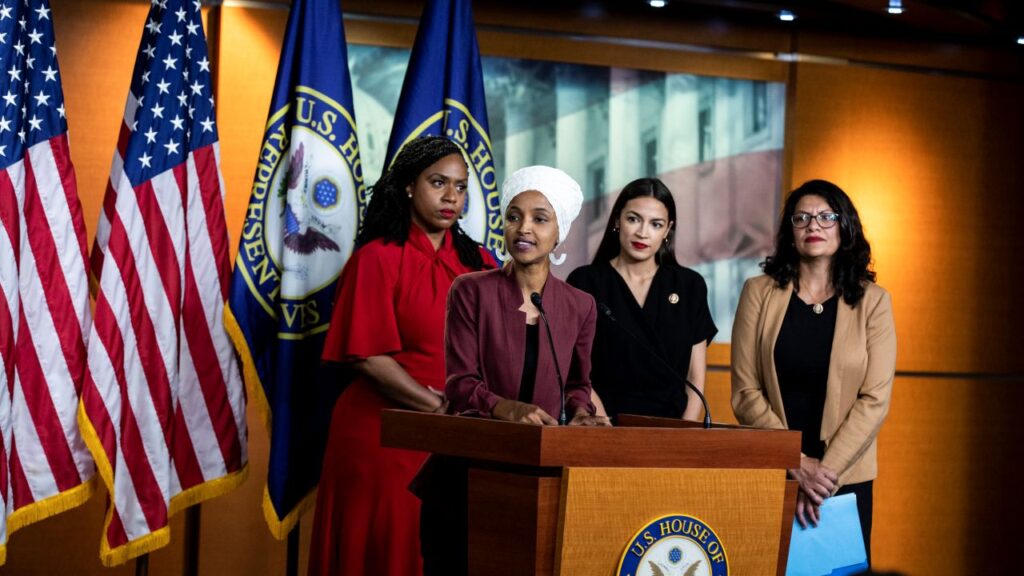
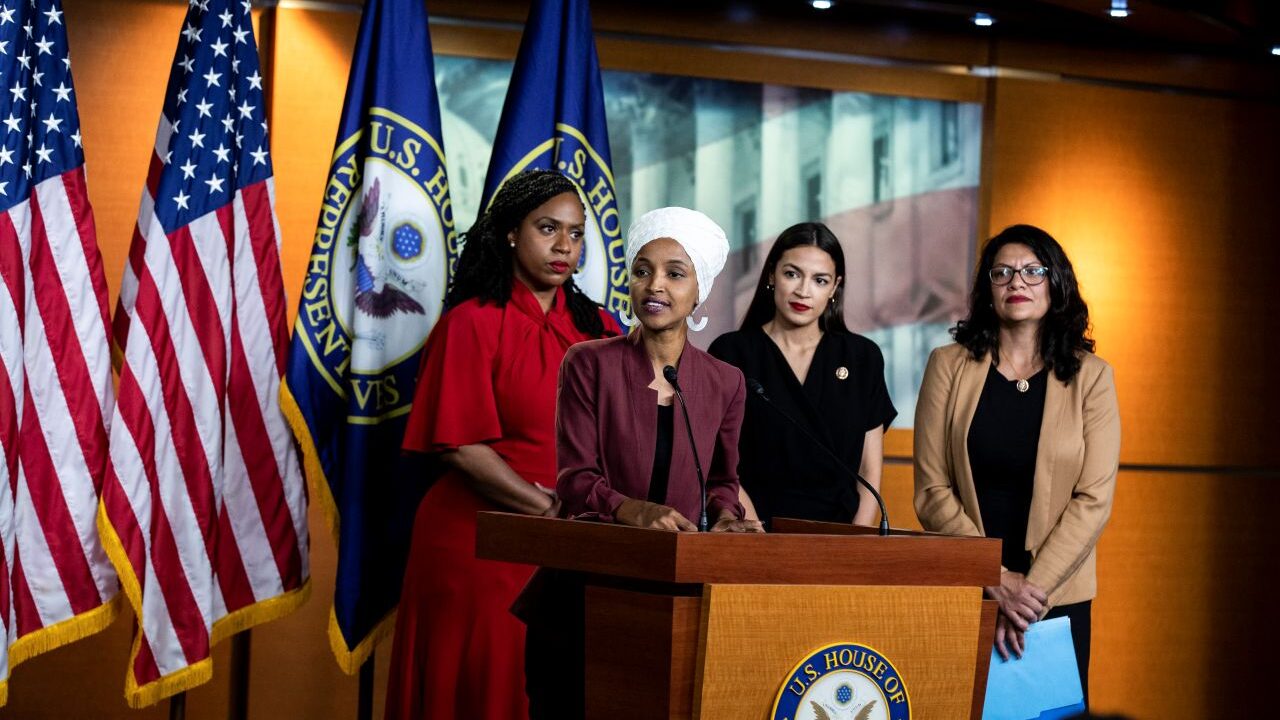
That doesn’t necessarily translate into influence. In 2018, when the four progressive women of color who came to be known as “the Squad” — Ocasio-Cortez, Omar, Tlaib and Rep. Ayanna Pressley of Massachusetts — entered Congress, they clashed with the speaker at the time, Nancy Pelosi, and received an icy reception from more centrist party veterans who dismissed them as social media rabble rousers uninterested in the intricacies of policymaking.
But with the Democratic Party now at a crossroads and searching for a unifying message before the 2028 presidential election to piece back together its eroded political coalition, Justice Democrats is making the case that its candidates should be setting the agenda.
Since winning her primary in July against Rep. Diana DeGette, a 69-year-old who has served for nearly 30 years, Kiros said she has already felt a reception “more gracious and kind and welcoming” than what some members of the Squad experienced in 2018.
“It was a completely different time, a completely different energy, and they came into an incredibly hostile environment,” she said, while she and her fellow progressives “have a much softer landing.”
In some ways, the forces that blunted Justice Democrats’ reach in previous election years are the same ones that helped the group notch victories across the country this year.
Wake-Up Call on AIPAC’s Immense Spending
In 2024, pro-Israel groups flooded Bowman’s and Bush’s primary races after both incumbents called for a ceasefire in Gaza and after Bush declined to label Hamas a terrorist organization. In New York, a super PAC affiliated with the American Israel Public Affairs Committee, the pro-Israel advocacy group, dumped almost $15 million into defeating Bowman; the group boosted Bush’s challenger by more than $8 million.
“We started seeing larger and larger support for an arms embargo, but I think all that just did not line up in time for Cori and Jamaal’s primaries enough for us to beat back, really, what was a just avalanche of spending in these races,” Andrabi recalled.
Their losses, he said, “were a wake-up call to a lot of people who were not paying attention to the way AIPAC was spending in our races.”
In the years since, polling has shown Democratic support for Israel plummeting amid the country’s destruction of Gaza in response to the Oct. 7, 2023, Hamas attacks. And Democratic voters grew increasingly angry at their party’s establishment.
Two more candidates backed by Justice Democrats are still duking it out in primaries in California, with progressives challenging Reps. Jimmy Gomez and Doris Matsui. A third, Justin Pearson, a state representative, is challenging a Republican in what is seen as an uphill bid for an open seat in Tennessee.
The handful who have already won primaries in solidly Democratic districts say they already have strength in numbers.
“We have been talking, and what’s really exciting is that it’s not just one or two people now,” Hamawy said. “My incoming freshman class continues to grow with more voices that are discussing the same issues and concerns that I have about pushing Medicare for All, about abolishing ICE, about trying to unrig this economy and put money in people’s pockets. We are aligned.”
—
This article originally appeared in The New York Times.
By Catie Edmondson/Anna Moneymaker
c.2026 The New York Times Company