
|
Getting your Trinity Audio player ready...
|
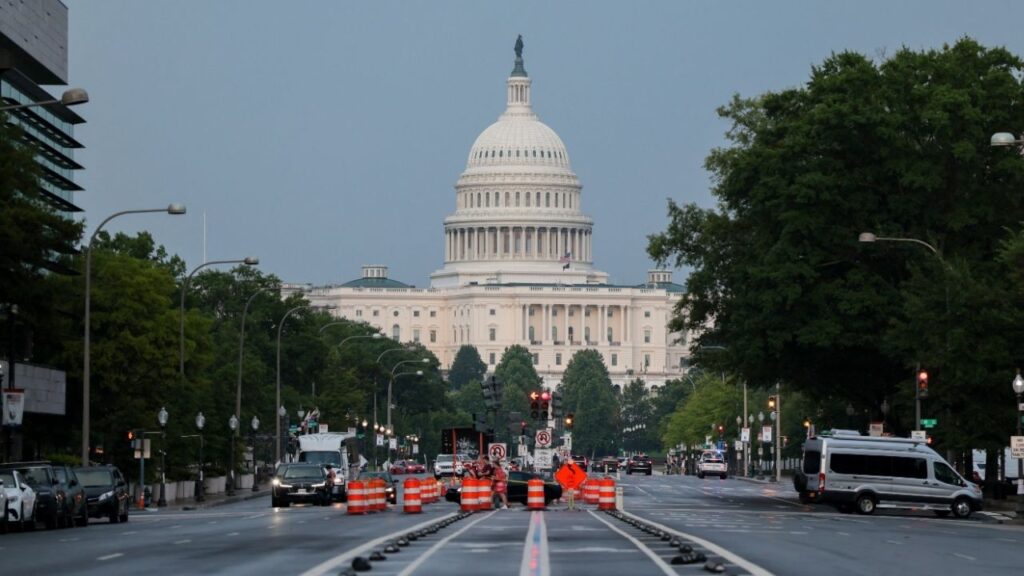
The U.S. House of Representatives is due to vote on Wednesday on a sweeping sanctions bill intended to increase economic pressure on Russia over its invasion of Ukraine, and the measure is expected to pass, nearly 1-1/2 years after the late Senator Lindsey Graham introduced it.
The bill, now called the “Lindsey O. Graham Sanctioning Russia and Iran Act of 2026” to honor the South Carolina Republican, passed the Senate last month. House passage would send it to the White House, where President Donald Trump plans to sign it into law.
The legislation targets Russia’s energy and defense industries, as well as its “shadow fleet” of tankers that evade existing sanctions.

It would also authorize Trump to impose stiff tariffs on China, India and other countries to reduce their dependence on Russian oil and gas, as well as to extend sanctions on Iran.
The House is expected to approve the legislation, even though it has faced considerable opposition since Graham and dozens of other senators introduced it in April 2025. It took Trump until July 2026 — days before Graham’s sudden death on July 11 — to allow Congress’ Republican leaders to schedule a vote on the bill.
But the House approved the rule setting terms for the vote on Tuesday, clearing the way for its approval by the full chamber later on Wednesday.
Since starting his second term in January 2025, Trump has generally favored keeping control over tariffs and sanctions, a central tool of his foreign policy, rather than working with Congress on legislation.
The Graham act passed the Senate last month by 86-11 with strong bipartisan support, after Ukrainian President Volodymyr Zelenskiy met with lawmakers to urge its passage and took the unusual step of watching an early procedural vote from a seat in the chamber.
Kyiv Government Urges Passage
Zelenskiy reiterated his support for the bill in an address this week, saying it is “important that it becomes law. I thank everyone around the world who supports this approach and who knows that strength works.”
But it has faced opposition from House Democrats, including some of the chamber’s senior leaders, who say the bill gives Trump too many new tariff powers that he could use against U.S. allies. They say Trump already has the authority he needs to impose sanctions on Russia, but has chosen not to do so.
They also say the bill makes it too easy for Trump to waive any sanctions.
“White House lawyers drafted the current text to maximize President Trump’s authority to impose new import taxes on the American people, and to minimize any obligation to actually impose new sanctions on Russia or its enablers,” Representative Gregory Meeks of New York, the top Democrat on the Foreign Affairs Committee, said.
Some Republicans also oppose the bill because they view sanctions as unwarranted intervention in the free market and see U.S. support for Ukraine as contrary to a non-interventionist “America First” view of foreign policy.
Some others are also concerned about political blowback against more tariffs and potentially higher consumer prices ahead of November’s midterm elections, in which polls show the party struggling to keep control of the House.
Backers of the bill say it sends an essential message to Russia — and the world — that Washington continues to support Ukraine.
“You don’t have many votes like this in the Congress that impact global, geopolitical conflicts,” said Republican Representative Michael McCaul of Texas, a lead sponsor of the bill, of the Russian president during debate on Wednesday. “This bill will have a direct impact on the conflict threatening Eastern Europe and NATO itself and can bring this to an end to get Putin to the negotiating table.”
(Reporting by Patricia Zengerle; editing by Andy Sullivan, Bill Berkrot, Rod Nickel)