
|
Getting your Trinity Audio player ready...
|
Of all the aphorisms uttered by Dolly Parton, the “glittery country goddess from Tennessee,” as Interview magazine called her, who died Tuesday in Nashville, Tennessee, perhaps the most telling was a line she uttered as part of a David Letterman Top 10 list of pet peeves in 1995.
One of the things that most irritated her, Parton cracked, standing on a balcony in her Dollywood amusement park in a black and gold top with a keyhole neckline framing her cleavage, her hair teased into a platinum nimbus and a big grin on her face, was “Accountants who don’t understand how much it costs to make me look this cheap.”
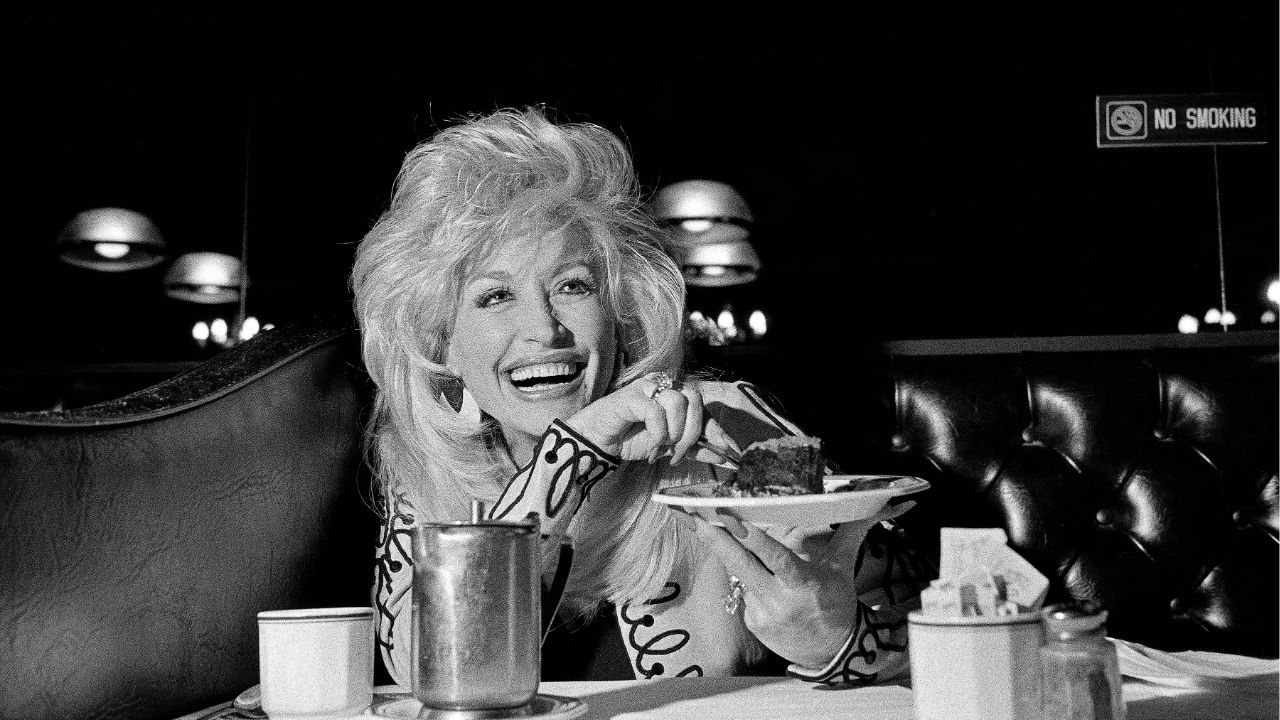
In fact, no one understood what it took to look like Dolly Parton better than Dolly Parton or thought more about what it meant and how clothes could give character to a voice.

She may have been only 5 feet tall, but she made herself larger than life. In doing so, she challenged stereotypes of all kinds about women, appearance and substance with a wink, a healthy dose of self-aware irony and a refusal to apologize for what she wanted.
From the time she signed her first recording contract with Monument Records in 1965, she was inventing not only her sound but her public self: a cartoon bimbo in a giant platinum wig, 6-inch heels, a push-up bra and rhinestones whom she later christened (in song) a “Backwoods Barbie.”
That signature style never wavered. At the time of her death, Parton reportedly had more than 350 wigs (one for almost every day of the year), more than 2,000 pairs of shoes and a 50,000-square-foot archive of bedazzled stage outfits. In fact, she had so many outfits she wrote an entire book about them. That book, “Behind the Seams: My Life in Rhinestones,” was a sort of autobiography in clothes to go with “Dolly Parton, Songteller: My Life in Lyrics,” her autobiography in song. For her, they were two sides of the same story.
And she had inspired not only her fans, who attended Dolly look-alike conventions — Rhinestone Fest and Dolly Day — in full Dolly gear, but also artists including Miley Cyrus, Kacey Musgraves and Carrie Underwood, all of whom went through their own rhinestone cowgirl phases. Not to mention Emma Grede and Khloé Kardashian of Good American, who collaborated with Parton on a Joleans denim and apparel collection (a quintessentially Dolly pun).
As the lyrics went on her debut album, “This dumb blonde ain’t nobody’s fool.”
Now that kind of singular image-making seems like a standard approach for artists of any gender, but Parton did it before the age of stylists and brand deals. And she often did it in the face of active criticism: from her shocked preacher grandfather, when she was a child; from the parents of her school friends, who thought she was “a bad influence,” as she wrote in her book; and from the executives of her record label, who thought she wouldn’t be taken seriously because, she later paraphrased, they said “you look more like a hooker than you do a singer.”
What they didn’t know is that she understood exactly what she was doing: tapping into clichés rooted deep in the cultural hive mind while confronting them at the same time. She wasn’t just going to outwork and out-sing everyone, she was going to out-sparkle them, too, subverting the very expectations she was creating.
“Never leave a rhinestone unturned,” she often quipped. Every gleam was a reminder of the dangers that came with underestimating or stereotyping based on looks. Or, as she sang, “Don’t judge me by the cover, ’cause I’m a real good book.”
Sure, her style inspiration may have been the town tramp, with “her tight skirts and her high-heeled shoes and her red nails and her red lipstick and her peroxided hair” (or so she wrote in her fashion book). But she stayed married to one man her entire life. Sure, her clothes were kind of gaudy, but as “Coat of Many Colors,” her song about a coat made of scraps that her mother sewed for her as a child, proved, there is resonance in vibrant plumage.
(So much so that the coat of many colors ended up being named one of the three most famous pieces of clothing in song by American Songwriter, along with Prince’s raspberry beret and Elvis’ blue suede shoes.)
Sure, her hair was, as she said on Letterman, so fake it was “a fire hazard,” but it was also practical. The wigs meant, Parton said, that she could avoid the bleach and teasing that styling her actual hair would require (and that might destroy it) while also ensuring she would “never have a bad hair day.”
And sure, she could “get away with less,” as she told Barbara Walters in a 1982 interview. But why should she? “I like more,” she said.
“I never cared what other people did, and I never cared what other people said about what I wore,” Parton told Vogue when her fashion memoir was released. “It was more important that I be comfortable in my own clothes and in my own self.”
The rest of the world may have been chasing grunge, minimalism, shock or brand deals, but she never strayed from the aesthetic that glimmered so brightly for her when she was a girl. Though she once joked, “I’m not a fashion icon; I’m an eyesore,” what she was was unforgettable.
–
This article originally appeared in The New York Times.
By Vanessa Friedman/Edward Keating
c.2026 The New York Times Company