
|
Getting your Trinity Audio player ready...
|
Within days of Dolly Parton’s death Tuesday, a new tropical storm in the Atlantic Ocean could share her name.
Dolly is the next name on this year’s list of hurricanes, a decades-old rotation that repeats every six years.
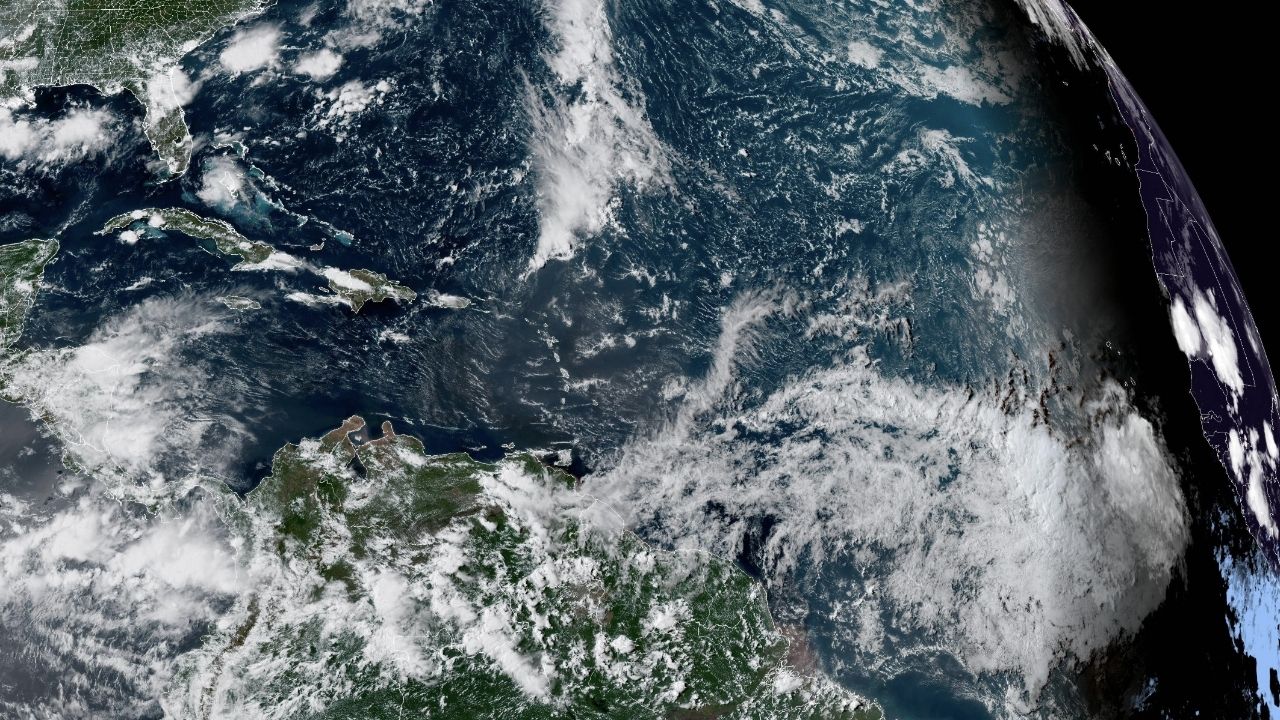
On Tuesday afternoon, there were two stormy areas in the Atlantic that meteorologists at the National Hurricane Center thought stood a chance of becoming the fourth and fifth named storms of this year’s hurricane season. The first to become organized enough for a name — when winds reach 39 mph — will be Dolly, followed by Edouard.

Meteorologists started giving storms human names in the years following World War II, and since then, nine storms in the Atlantic Ocean have been called Dolly. It has also been used in other oceans around the world.
The first Dolly was in 1946 — the same year Parton was born in Sevier County, Tennessee. That storm was a typhoon that skirted the Philippines and Taiwan and eventually made landfall in eastern China. Giving storms a human name was a relatively recent invention then, and that Dolly came from a list drawn up by the U.S. military.
In 1953, when the U.S. Weather Bureau, a precursor to today’s National Weather Service, began to name Atlantic storms, Dolly was one of the first names used. That year, Dolly formed near Puerto Rico and slowly spun north to become a hurricane before weakening to a tropical storm, as it made landfall in Bermuda.
Dolly was used again the next year and again in 1968. As meteorologists shifted through various approaches on how storms would be named officially, Dolly was never far from the lists. In 1996, it joined the six-year cycle of names used today. Because D stands near the start of the alphabet, Dolly has been used like clockwork every six years: in 2002, 2008, 2014, 2020 and, very likely, 2026. Names get retired when a storm causes history-making destruction.
Hurricane Dolly in 2008 is probably the most memorable and one of the strongest Dolly storms. That one became a Category 2 before moving into southern Texas.
Dolly usually appears far earlier in the summer. But this year’s Atlantic hurricane season has been sluggish because the El Nino weather pattern has kept storms in that ocean from growing strong enough to merit names.
Of the two potential storms that meteorologists were watching Tuesday, one was given a 40% chance of formation — but that could happen as soon as Wednesday night.
The other, off the west coast of Africa in an area where some of the strongest storms of peak hurricane season often begin, has a 70% chance of becoming a named storm in the next few days, forecasters said Tuesday. But it was too soon to know where the potential storm would go next.
—
This article originally appeared in The New York Times.
By Judson Jones/National Oceanic and Atmospheric Administration
c. 2026 The New York Times Company