


|
Getting your Trinity Audio player ready...
|
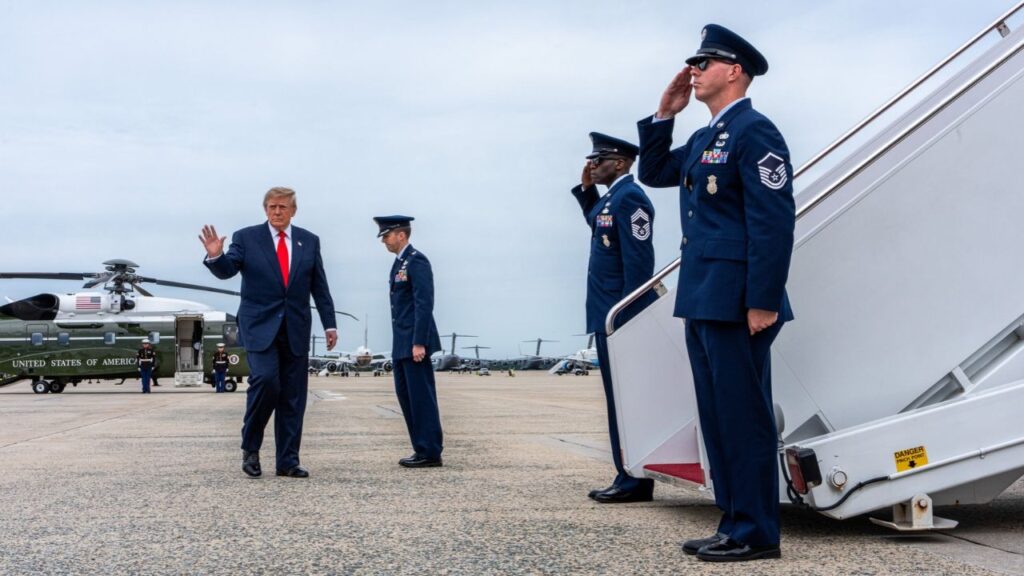
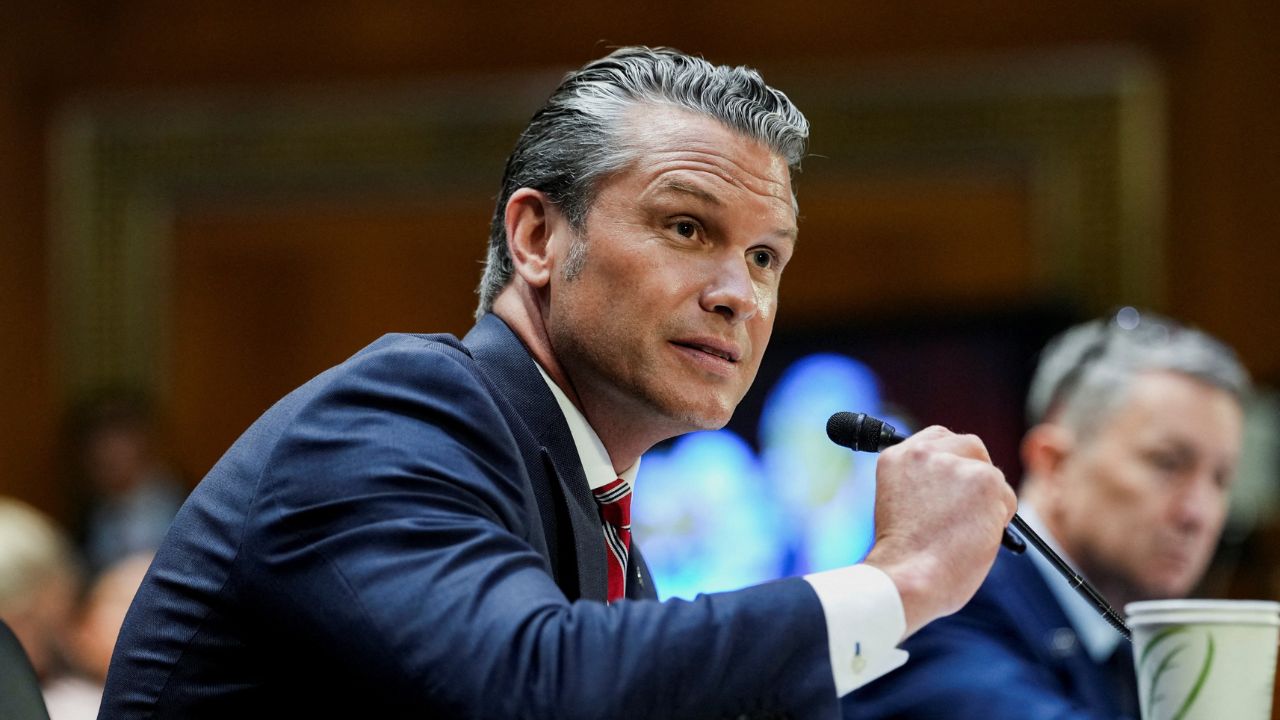
WASHINGTON — A series of firings and feuds initiated by Defense Secretary Pete Hegseth has left the U.S. Army essentially rudderless as it struggles to deal with the threat posed by cheap, deadly drones and missiles that have pounded U.S. bases in the Middle East.
The Army has not had a chief of staff, the service’s top officer, since Hegseth fired Gen. Randy George without explanation in April, and there are no signs that he is close to filling the position, said current and former officials speaking on the condition of anonymity to discuss sensitive personnel matters.
Hegseth has forced out at least three senior officers who had been viewed as potential successors to George.

Army Secretary Daniel Driscoll, the service’s top civilian leader, is also expected to leave the administration in the next few months and has already moved out of the large family house that he was renting in Fort Myer, outside Washington, D.C., officials said.
The turmoil comes as the Army, the military’s largest service, faces its busiest period since the Iraq and Afghanistan wars. Army air defense soldiers are playing the leading role in defending U.S. troops in the Middle East from increasingly sophisticated Iranian missile attacks. The Army’s command in Europe is providing critical intelligence and other support to Ukraine as it fights to hold off a larger Russian force.
Until recently, Driscoll was widely seen as a potential candidate to replace Hegseth if he decided to step down or fell out of favor with President Donald Trump.
Driscoll and George had worked together to prepare the Army for a battlefield teeming with drones. Late last year, the White House asked Driscoll to play a lead role in its push to secure a peace deal that would end the war in Ukraine.
Those peace efforts have largely stalled, the rapid modernization push is being scaled back and Driscoll is barely on speaking terms with Hegseth, officials said. His impending departure was reported earlier by The Wall Street Journal.
Beyond George, Hegseth has fired or forced out a half-dozen senior officers — a generation of the Army’s most combat-hardened leaders — thinning the service’s top ranks for the next several years, officials said.
“Hollowing out the most battle-tested and most lethal, proven leaders in a time of war means troops are less safe and we’re less likely to win,” said Rep. Pat Ryan, D-N.Y., a former Army intelligence officer.
A long-term worry is that the firings send a message that officers who provide frank military advice or fail ideological litmus tests have no place in a force that is supposed to be nonpartisan, military and congressional officials said. “We’re doing generational damage to the sense that the military is an apolitical trusted organization that swears an oath to the Constitution, not to a president,” Ryan added.
Hegseth’s office referred questions about the firings and lack of senior leadership to the Army. The Army declined to comment on Driscoll’s status, saying it does not speculate on “leadership changes.”
In a statement, the service downplayed the impact of the firings.
“Army leaders exemplify the highest standards of duty, selflessness, and professional excellence,” said Cynthia O. Smith, an Army spokesperson. “They are actively driving the Army’s mission forward, ensuring that our strategic objectives are met, our modernization efforts remain on track and our global readiness is never compromised.”
One measure of the vacuum at the top of the Army is the number of four-star generals serving in its ranks. As recently January 2025, when Hegseth took office, there were 10 four-star generals on active duty. The service currently has five, the fewest in decades.
Some of those positions are commands focused on regions of the world, like the Middle East or Asia, and are being filled by senior officers from other services. Some have been eliminated.
Others, like the job overseeing the Army’s Transformation and Training Command, have been empty for months. Last summer, Hegseth selected Gen. David M. Hodne to lead the command and then fired him eight months later without explanation.
The command is responsible for training and equipping the Army’s ground units, including its Patriot antimissile crews. The Patriots are the main defense against Iranian ballistic missiles fired at U.S. bases in the Middle East.
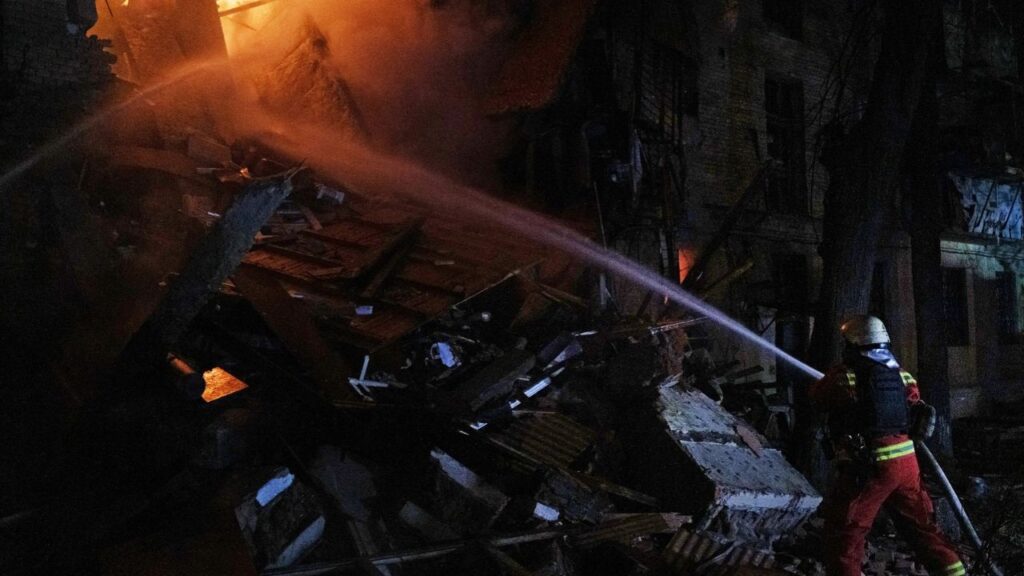
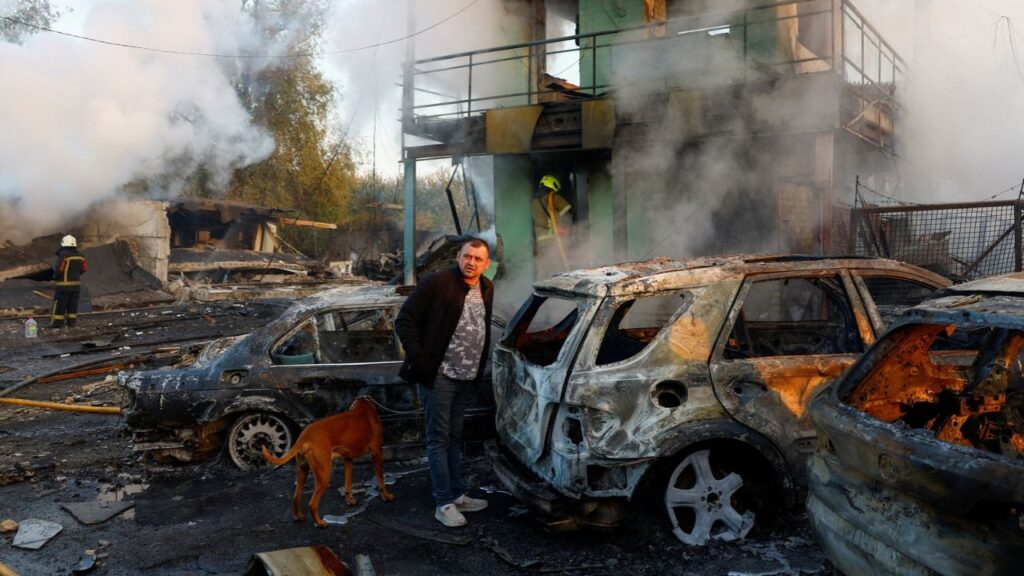
As the war has progressed, Iran has become a more skilled adversary, learning to evade U.S. systems with advanced missiles that can suddenly change course. One Iranian missile struck prefabricated housing units at one of the U.S. bases in Jordan on July 17, killing three U.S. soldiers and wounding more than 100.
The Army has responded by burning through its scarce supplies of Patriot interceptors, defense officials said.
Another critical vacancy came in July when Hegseth reduced Gen. Christopher T. Donahue’s command overseeing U.S. ground troops in Europe to a three-star position, forcing the senior Army officer, if he did not get another four-star position, to retire.
On the opening day of the war, Iran launched volleys of Shahed drones, similar to those used by the Russians. One attack struck a U.S. Army base in Kuwait, killing six soldiers. Donahue’s command, building off the lessons of the war in Ukraine, had trained and equipped teams of drone defenders, who were quickly dispatched to the Middle East.
The most glaring Army vacancy, though, has been the absence at the very top following George’s dismissal four months ago. As Army chief, George was responsible for training and equipping Army units around the world. His responsibilities included accelerating the purchase of critical munitions such as Patriot intercepts, ATACMS artillery systems and other ground-based weaponry, which are in short supply.
George struggled to forge a relationship with Hegseth, who arrived at the Pentagon with deep suspicions of the Army’s senior leadership rooted in his own experience, Army officials said. After deploying to Iraq and Afghanistan, Hegseth was forced to leave the National Guard for tattoos that were deemed extremist.
“The military I loved, I fought for, I revered,” he wrote in a 2024 book, “spit me out.”
Hegseth’s mistrust of George and other senior Army leaders seemed to grow with each passing month in the Pentagon.
Last October, Hegseth pushed out Gen. James Mingus, the Army’s vice chief of staff, a year before he was scheduled to leave his post.
In his place, Hegseth and the White House nominated Gen. Christopher LaNeve, Hegseth’s senior military aide, to fill the job as the Army’s second in command, overseeing the service’s daily operations.
His decision to sideline Mingus without offering a clear reason caused some in the Senate to balk and contributed to a further erosion in Hegseth’s strained relationship with the Army and Congress.
Currently, LaNeve, Hegseth’s choice to lead the Army, does not have enough Republican support in the Senate to be confirmed. Generals and admirals nominated to lead the military services typically receive unanimous or near-unanimous support in the Senate.
Among those blocking LaNeve’s rise is Sen. Joni Ernst, R-Iowa, who served 22 years in the Iowa National Guard.
In exchange for supporting LaNeve as the Army’s vice chief of staff last fall, she believed that Hegseth had assured her that he would let George, a fellow Iowan, finish his term as chief, which was slated to end in mid-2027. Ernst’s objections to LaNeve were reported earlier by The Wall Street Journal.
After George was fired, she called Trump to complain, telling him that George was one of the Army’s best officers, according to a congressional official familiar with the call. The general’s parents, she told Trump, had voted for him.
Trump explained that the firing was Hegseth’s decision.
“Tell the general I’m sorry,” Trump said.
—
This article originally appeared in The New York Times.
By Greg Jaffe, Eric Schmitt, Helene Cooper and Adam Entous
c. 2026 The New York Times Company