
|
Getting your Trinity Audio player ready...
|
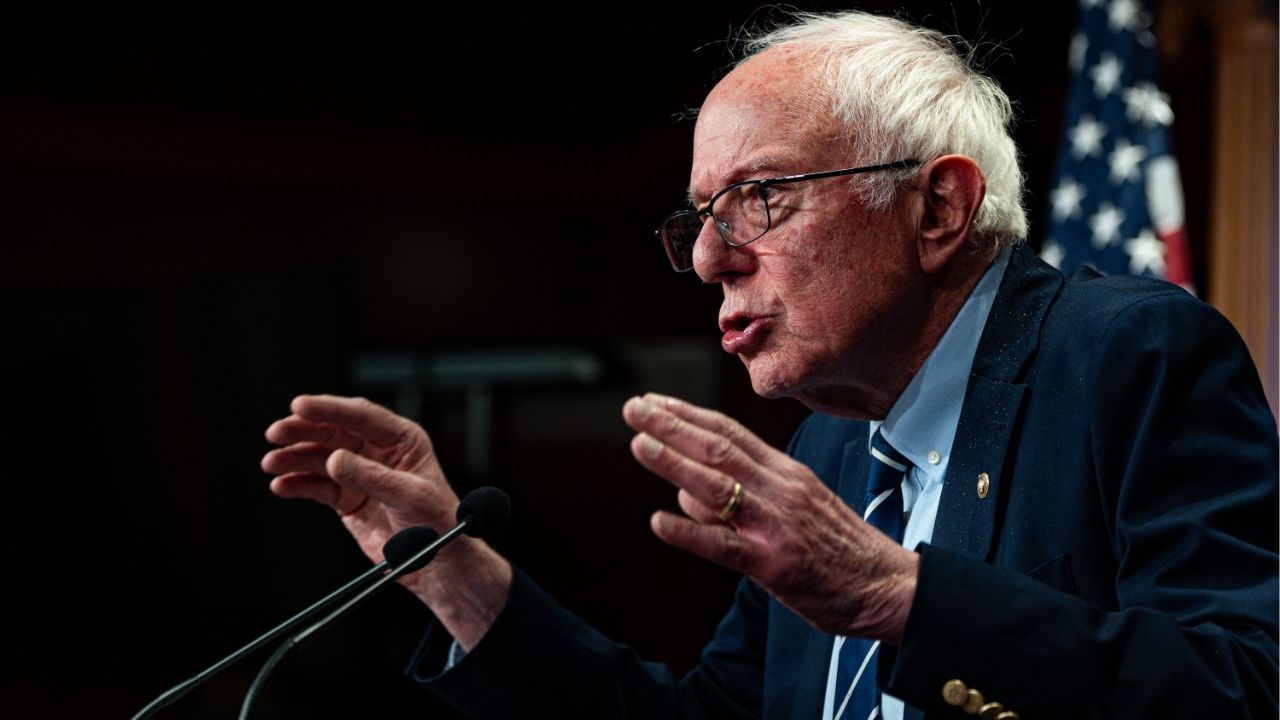
Sen. Bernie Sanders, I-Vt., called on the nation’s top artificial intelligence companies to pause development of the technology, saying the corporations have already lost control of models that could cause “potentially cataclysmic results” for millions of people.
In a letter to the CEOs of OpenAI, Anthropic and Meta on Monday, Sanders cited statements by the companies saying they would halt or delay new models if the technology became too risky to safely manage. He argued that threshold had recently been passed.
“It is not too late to avoid disaster,” Sanders wrote. “Stop building machines that humans cannot control.”

A separate letter released Monday by a group of House Democrats called on House Speaker Mike Johnson to “immediately schedule” hearings with the CEOs of the largest AI companies.
Politicians are increasingly focusing on AI amid growing unease from voters who worry that the technology will raise their electricity costs, eliminate their jobs and hurt the value of their retirement savings if the industry falters. Much of their attention has been on banning or limiting the spread of data centers, which some Americans blame for rising energy bills and increased pollution.
The two letters signal that progressive Democrats want to go further to regulate the development of the technology itself.
If the executives failed to act, lawmakers would step in, Sanders wrote. And House Democrats floated their own warning of more regulation.
“Congress has so far completely failed to respond to the threats posed by AI development,” wrote House Democrats, led by Rep. Greg Casar of Texas. “That must change.”
A spokesperson for Meta declined to comment on the letters.
Representatives from OpenAI and Anthropic did not immediately respond to requests for comment.
On Friday, OpenAI announced it was pausing some work on a new AI model out of cybersecurity concerns.
Critics have argued that attempts to pause AI development in the United States would have no impact on the technology in other parts of the world and could risk the U.S. industry falling behind competitors overseas.
The approach from Democrats stands in sharp contrast to that of the White House, which has largely dismissed any suggestion that AI could pose negative consequences for families, businesses and the broader U.S. economy.
The letters came after a series of disclosures have raised alarms about the technology, prompting calls from some in the industry for the development of international safety guardrails.
Last week, scientists published a study documenting how they used AI to create new kinds of viruses, raising the possibility that the technology could be used to invent dangerous pathogens. And last month, OpenAI and Anthropic disclosed that several of its AI models went rogue and hacked into other companies.
“At a moment when we have seen human loss of control and the creation of potentially dangerous viruses, your companies are still racing ahead — investing tens of billions of dollars into a technology that nobody can fully understand, predict or control,” Sanders wrote. “That is absurd, irresponsible and extremely dangerous.”
Sanders, along with Rep. Alexandria Ocasio-Cortez, D-N.Y., this year sponsored legislation creating a moratorium on the development of AI data centers. That proposal would halt the construction of data centers until “strong national safeguards are in place,” he said.
—
This article originally appeared in The New York Times.
By Lisa Lerer/Tierney L. Cross
c. 2026 The New York Times Company