


|
Getting your Trinity Audio player ready...
|
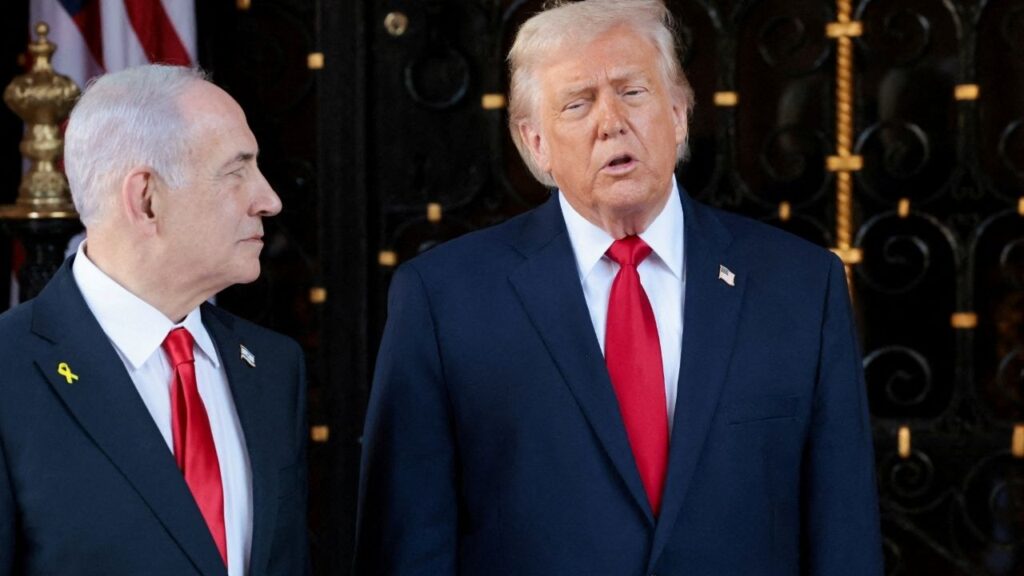
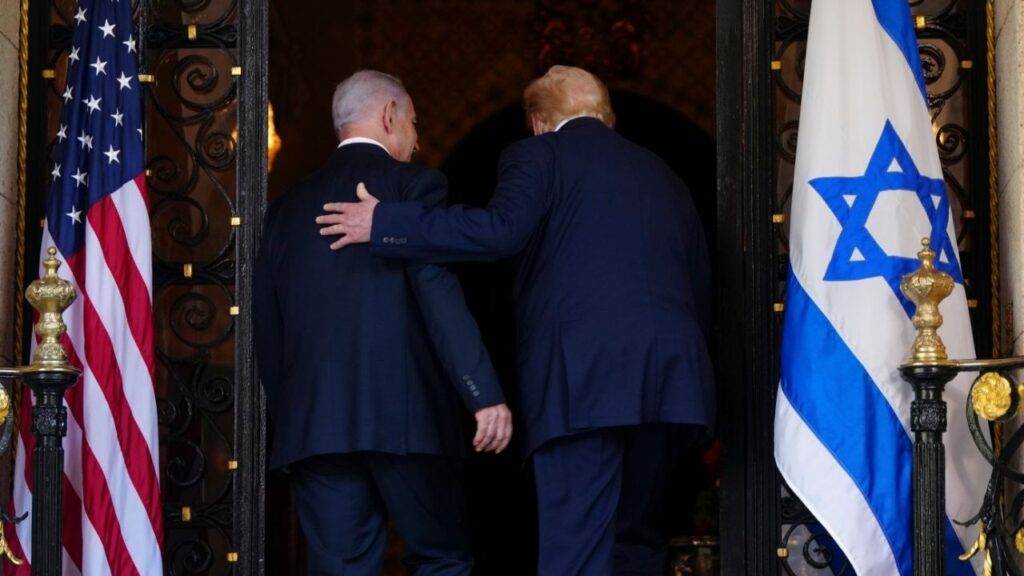
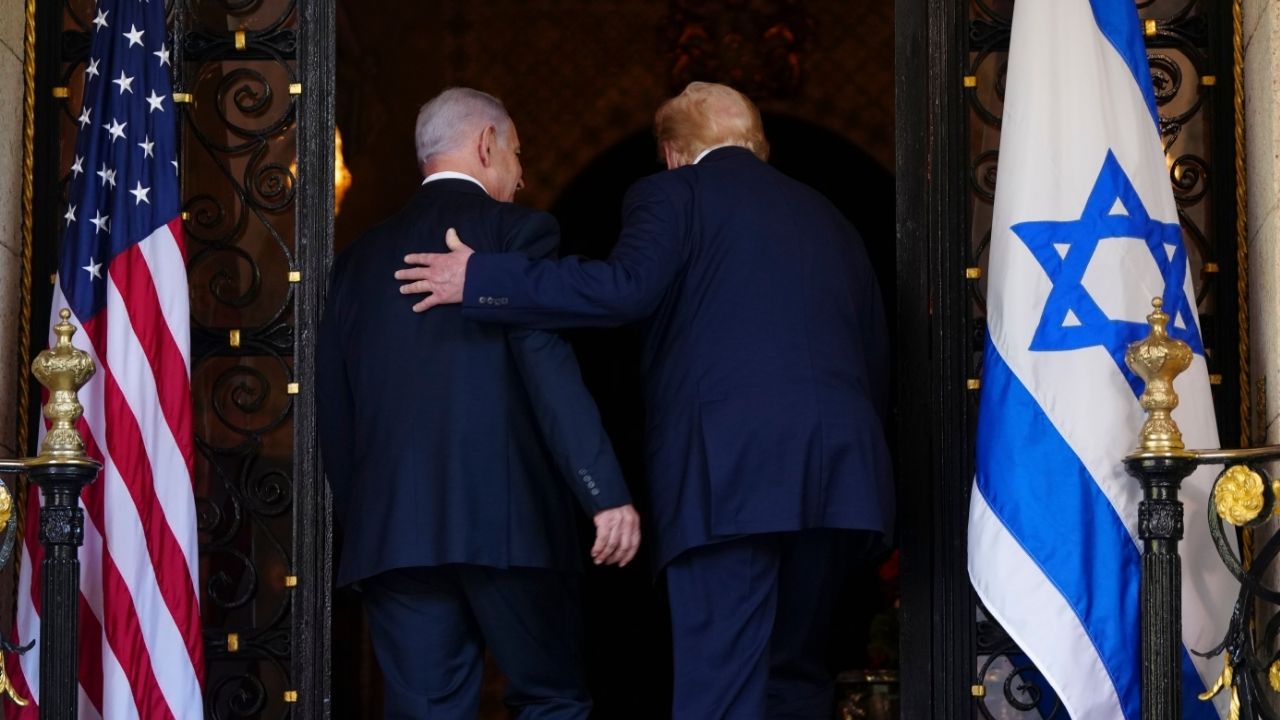
JERUSALEM — For Prime Minister Benjamin Netanyahu of Israel, a meeting with President Donald Trump is always an opportunity to showcase their close relationship even if they, at times, disagree.
This time, the stakes are especially high.
Both leaders are facing electoral challenges in the months ahead and are expected to meet at the White House on Tuesday as their interests appear to be diverging sharply on the war with Iran.

Before departing for Washington on Monday, Netanyahu said in a statement that this would be his eighth meeting with Trump since the president was elected for his second term, and that Iran would be “first and foremost” on the agenda.
“I am embarking on this mission with one clear goal — to ensure the security, strength and future of our dear state of Israel,” he added.
Netanyahu, who is trailing in the opinion polls at home before Israel’s fall vote, is under pressure to show his domestic audience that he still has a close working relationship with Trump, analysts say, despite their differences. Trump is heading into U.S. midterm elections in November after an unpopular war that many believe he was dragged into by Israel and that has caused tensions between Israel and Washington.
Both leaders failed to deliver on their war goals of ending Iran’s nuclear program and overthrowing the country’s authoritarian clerical rulers in their joint war against Iran, which began in late February.
“We see that Trump is interested in reaching an agreement,” said Danny Citrinowicz, a former Israeli military intelligence commander and an Iran specialist at the Institute for National Security Studies in Tel Aviv, Israel. “Israel doesn’t want to hear about an agreement, so there is no alignment of interests,” he said.
Israeli leaders view returning to war as preferable, he said, because any U.S. peace agreement with Iran will strengthen the regime in Tehran that they want to see toppled.
While Israel is focused on potentially existential threats from Iran’s nuclear ambitions, Trump’s focus is on freeing movement through the Strait of Hormuz, a crucial shipping route for oil.
The United States has been going it alone in the latest fighting against Iran and before that largely left Israel, a partner in the war, out of the peace talks.
If Trump does expand his attacks on Iran, analysts say, he may still want to keep Israel on the sidelines.
“The irony,” Citrinowicz said, is that Netanyahu told Trump that Ayatollah Ali Khamenei, Iran’s former supreme leader, “had to be killed” to prevent Iran from obtaining nuclear weapons. “Now there is a new Ayatollah Khamenei, and Israel is saying Iran has to be stopped from obtaining nuclear weapons again.”
Netanyahu, whose visit was timed so he could also attend services for Sen. Lindsey Graham, has championed his close relationship with Trump in Israeli election campaigns. But the relationship has swung erratically over the past few months, and recently they appeared to be at a low.
Trump has veered from praising Netanyahu as a great wartime leader to belittling him, saying, “He’ll do whatever I want him to do.” Trump confirmed that he had called Netanyahu “crazy” in a phone call and has called him “a very difficult guy.”
Netanyahu has maintained a diplomatic silence. But Trump’s preliminary deal to end the war with Iran last month caused widespread consternation in Israel because of its apparent shortcomings in addressing the country’s security needs.
Netanyahu’s loyalists responded by vilifying Trump and his top aides.
Then Trump signed an agreement last week with Saudi Arabia to develop a civilian nuclear program, which Israelis fear could lead to a regional arms race. Trump subsequently declared that the deal would be contingent on Saudi Arabia’s establishing diplomatic ties with Israel, but Israelis remained unconvinced.
What goes on behind the scenes between the two leaders, however, has proved to be inscrutable and surprising at times. Netanyahu has managed to influence Trump in the past, analysts say, and it can be impossible to know if the pair are at loggerheads or in cahoots.
Itamar Rabinovich, a former Israeli ambassador to the United States and a professor emeritus of Middle Eastern history at Tel Aviv University, said that if the United States resumes a war against Iran, “clearly Trump is not interested in seeming to be doing it in collaboration with Netanyahu because that will look like a repetition of the unsuccessful venture” of a few months ago.
But Israel may end up participating, he said, “because if Iran launches missiles against Israel, Israel will respond.”
There are other issues in the Middle East on which Israel and the Trump administration do not necessarily agree and which are important for Netanyahu before the Israeli election.
The administration limited Israeli military actions against the Hezbollah militia in Lebanon and is pushing Israel to begin to withdraw troops from southern Lebanon and Syria.
The ceasefire in the Gaza Strip has floundered, and tensions and violence are on the rise in the Israeli-occupied West Bank.
—
This article originally appeared in The New York Times.
By Isabel Kershner/Tierney L. Cross
c. 2026 The New York Times Company