




|
Getting your Trinity Audio player ready...
|
WASHINGTON — An appeals court on Saturday upheld a lower-court ruling blocking key parts of an executive order from President Donald Trump to restrict voting by mail, the latest setback to his efforts to wrest control over elections as Republicans try to protect slim congressional majorities in an unfriendly political environment.
In a 20-page ruling, the 1st U.S. Circuit Court of Appeals wrote that Trump’s order “directs unprecedented levels of involvement by federal officials in how states administer elections.” If the order took effect in the midterm elections this November, “it would sow confusion and threaten disenfranchisement of many eligible voters,” the court ruled.
Constitution Grants Authority to States, Congress
The Constitution grants authority over elections to states and Congress, not to the executive branch. But Trump has waged a yearslong campaign against voting by mail, signing executive orders, supporting court challenges and promoting legislation to curtail the option, which the president himself uses. Courts have blocked many of these attempts.

Trump has also repeatedly made unfounded claims that mail voting is rife with fraud, even as he has made clear that restricting the practice would be a boon for his party.
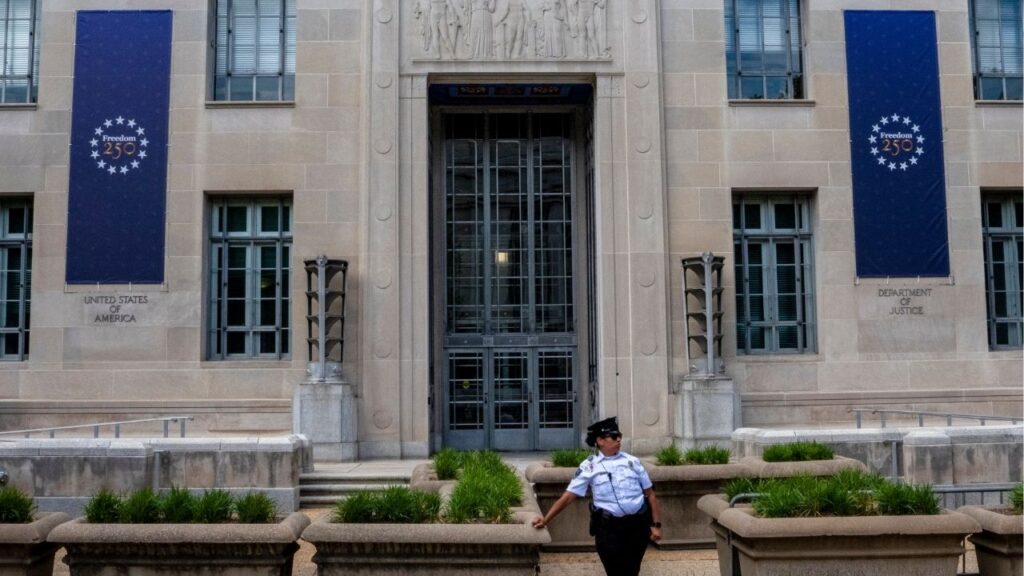
The ruling comes after more than 20 Democratic attorneys general challenged an executive order Trump signed in March targeting mail voting. The order called on the Department of Homeland Security to compile state-by-state lists of citizens to help determine voter eligibility, and called on the Postal Service to verify voters based on the lists provided by the states.
In June, the Postal Service complied with the order, releasing a proposed rule consistent with many of Trump’s demands.
Biden Appointees Make Ruling
The ruling by Judge Gustavo A. Gelpí and Judge Julie Rikelman, both Biden appointees, upheld a federal judge’s order in June striking down key components of Trump’s directive and calling them “unlawful, null and void.”
Judge Joshua D. Dunlap, a Trump appointee, concurred in part with his colleagues on the three-judge panel. In a separate opinion, Dunlap noted that the rules had not been finalized, often a condition for a lawsuit to be brought. But the judge, who called the case “unusual,” said the executive order threatened “concrete injury” to legal voting.
While the appeals court reaffirmed that the Constitution did not grant the executive branch authority over elections, the judges focused their ruling on whether the states could sue before the order goes into effect. The states argued that they had already had to divert resources in reaction to the order. The government countered that their response was premature.
A federal judge in Washington initially declined to halt the executive order in May because it had not been carried out, but a federal judge in Massachusetts later blocked the order as the administration moved to put it into effect.
The appeals court similarly wrote that the government’s acknowledgment that it had moved ahead with Trump’s directives undermined its arguments that the states claimed legal harm prematurely.
Lawyers representing the government said in recent court filings that they may challenge the appeals court’s ruling at the Supreme Court.
This article originally appeared in The New York Times.
By Adam Sella/Philip Cheung
c.2026 The New York Times Company