
|
Getting your Trinity Audio player ready...
|
Around Washington, Salvadoran-born crews have helped renovate, rebuild and maintain the Capitol, the Pentagon and Arlington National Cemetery. In senior living facilities in Florida, Massachusetts and New York, Haitian caregivers assist aging Americans with daily activities.
These workers are among more than 1 million people who have been allowed to live and work in the United States under a decades-old humanitarian program, and who now face the prospect of deportation.
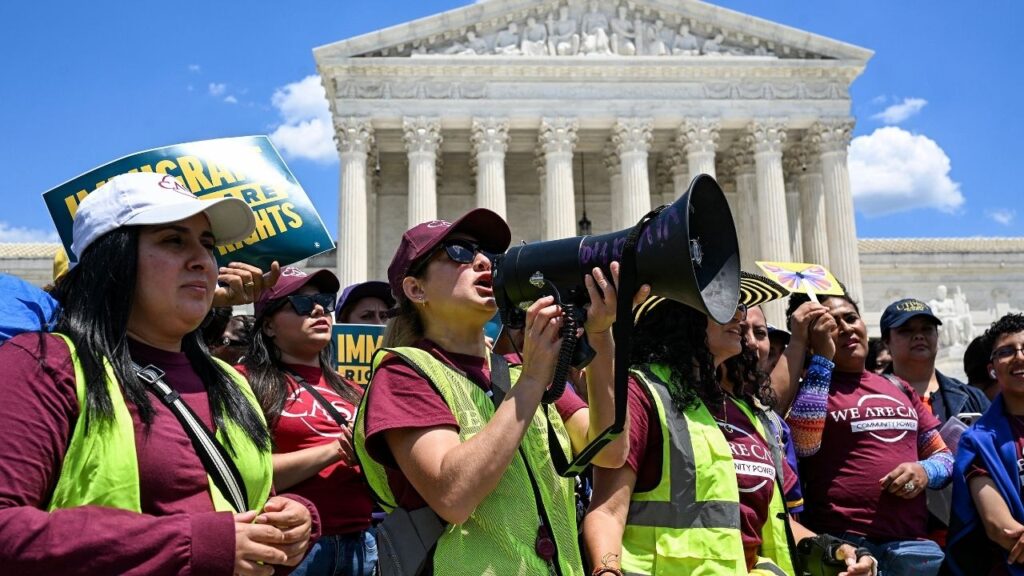
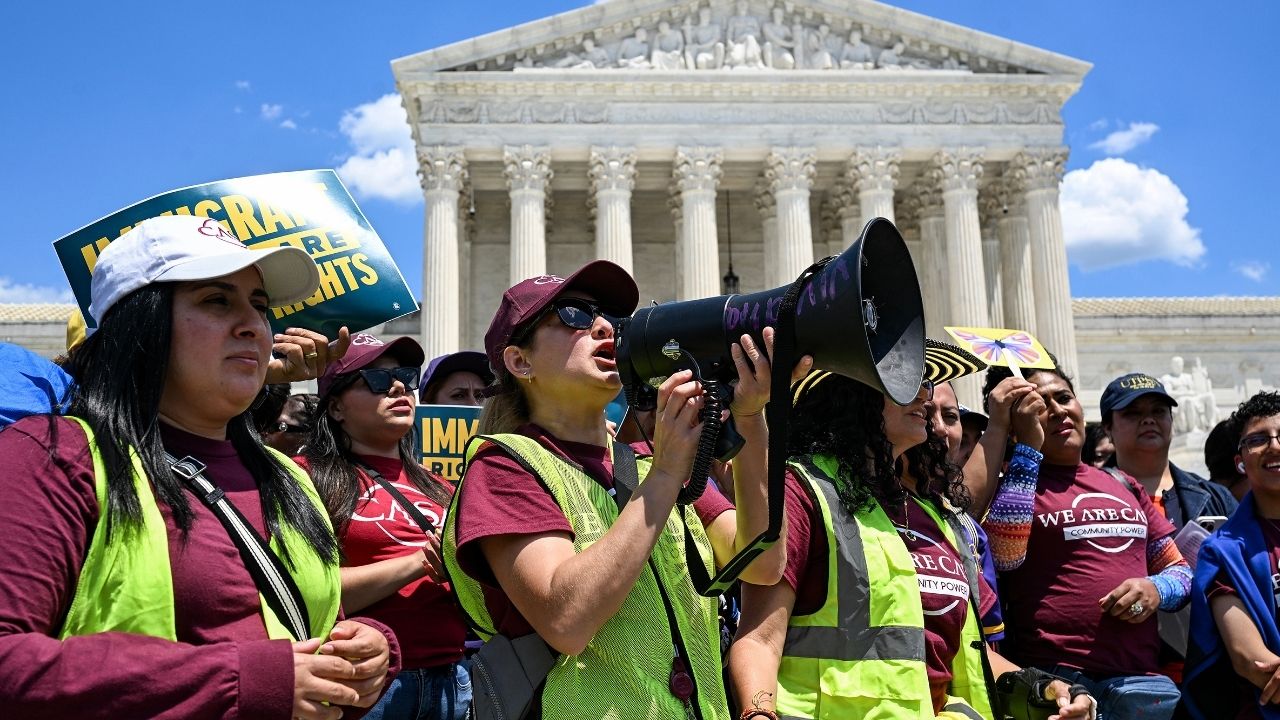
Last month, the Supreme Court cleared the way for the Trump administration to end Temporary Protected Status, as the humanitarian program is known, and now industries are bracing for the loss of vital workers.

About 70% of TPS holders were participating in the U.S. labor force, many in construction and healthcare, according to an analysis by researchers at the University of Pennsylvania.
But on Monday, about 350,000 TPS recipients from Haiti and several other countries will lose their work permits in the first wave of fallout from the Supreme Court ruling. About 190,000 Salvadoran beneficiaries could be next to lose their status when it expires in September.
“For particular places and particular industries, tens of thousands of workers no longer able to legally work is going to be a very big hit,” said Alexander Arnon, director of policy analysis at the Penn Wharton Budget Model, a nonpartisan research organization that has analyzed the economic impacts of TPS workers.
Economists say the loss of those workers could be gradual, as some pursue other potential protections, such as asylum, and others continue working but off the books.
Still, as the clock ticks toward the end of Temporary Protected Status, business organizations, led by the U.S. Chamber of Commerce, have mounted a campaign for action on Capitol Hill, joined by a growing number of state and local leaders from both parties.
“Congress can, and should, exercise its plenary authority over immigration policy to prevent significant disruption to America’s workforce and avoid an unnecessary humanitarian crisis,” the chamber wrote in a July 10 letter to Senate leadership.
State and local leaders are echoing those concerns. Gov. Mike DeWine of Ohio, a Republican, has called ending TPS for Haitians a “mistake” and predicted a steep economic toll for his state. In South Florida, home to the largest Haitian population, Mayor Daniella Levine Cava and Commissioner Marleine Bastien of Miami-Dade County, along with business leaders, gathered on Wednesday to address the potential fallout.
“Ending TPS doesn’t save American money,” Bastien said during a news conference. “Ending TPS costs America money.”
But on Wednesday afternoon, Sen. Eric Schmitt, R-Mo., blocked a fast-track attempt by congressional Democrats to extend TPS for Haitians and criticized the program for becoming all but permanent. “TPS was created for emergencies,” Schmitt said on the Senate floor. “Democrats turned it into a one-way racket towards permanent mass migration.”
Created by Congress and signed into law by President George H.W. Bush in 1990, TPS was intended to offer short-term relief to foreign nationals already in the United States who could not safely return home because of armed conflict or natural disasters. But with some countries mired in humanitarian crises for years, TPS has become almost indefinite for some foreign nationals. And with Congress unable for decades to find a consensus on modernizing the country’s antiquated immigration laws, humanitarian protections such as TPS and asylum have become de facto paths to long-term, if not permanent, residence.
That has turned TPS into a target for some critics of the immigration system, including President Donald Trump, who has made ending it a priority since his first term. After returning to the White House last year, he resumed his push to end the program, and after more than a year of court fights across the country, he won a Supreme Court decision allowing the executive branch to revoke TPS.
For years, companies and industries that employed large numbers of TPS recipients championed them and the program as a source of motivated workers, often for jobs that were otherwise hard to fill.
But as the Trump administration intensified its effort to revoke the protection, many companies became reluctant to speak out, leaving it to trade groups to make the case for the program.
Associated Builders and Contractors, a construction trade group, was part of a coalition that recently sent a letter to the Department of Homeland Security and highlighted the challenges brought on by the ending of TPS program.
In a statement, the Trump administration defended its effort to end the protection. “DHS is upholding the rule of law and getting back to common sense,” Zach Kahler, a spokesperson for U.S. Citizenship and Immigration Services, said.
Employers who hire people working unlawfully in the United States can face steep fines and criminal charges of harboring undocumented people.
For their part, TPS beneficiaries will have to decide whether to stay or leave the country. The government has their addresses, making it easy for federal agents to find them.
It is not clear how much time the government is likely to give people to organize their affairs and depart. Many have homes, vehicles and bank accounts, said Abel Nuñez, executive director of CARECEN, a Washington, D.C., advocacy organization for people from Central America.
“You can’t just carry your house in your pocket, your car in your pocket,” Nuñez said.
Daniel West, director of government relations for Heritage Action, the lobbying arm of the conservative Heritage Foundation, has faulted the program and criticized Republicans who have sought to maintain TPS.
“The Trump administration is right to let these overused TPS programs expire as originally intended,” he said.
The administration has not announced plans to end TPS for El Salvador, which expires in September. But it tried to do so during Trump’s first term.
And the administration has already announced that it will terminate the status for most countries currently covered, including Ethiopia, Myanmar, Somalia, South Sudan, Syria and Yemen. Employers have already been notified that the work permits of TPS recipients from those countries will no longer be valid. People from El Salvador, Lebanon, Sudan and Ukraine who received TPS still have employment authorization.
The United States has been sending one deportation flight to Haiti per month since December 2023. The last removal flight to Haiti landed in Cap Haitien, a northern city, on July 16 with more than 100 deportees. The number of flights is expected to increase significantly.
Stephen Miller, an architect of Trump’s immigration agenda, was asked after the TPS ruling if Haiti is safe.
“For Haitians? Absolutely,” Miller said. “Haitians live in Haiti. It’s not our position that Haitians should leave Haiti. It’d be crazy for us to say that Haitians couldn’t live in Haiti. It’s their country.”
—
This article originally appeared in The New York Times.
By Miriam Jordan and Madeleine Ngo/Kenny Holston
c. 2026 The New York Times Company