
|
Getting your Trinity Audio player ready...
|
Before the Trump administration sent thousands of immigration agents to Minnesota last year, it sued over rules that strictly limit cooperation with federal authorities seeking to deport people.
The prohibitions included limits on police asking about immigration status and bans on coordinating with Immigration and Customs Enforcement.
On Monday, a judge nominated by President Donald Trump sided with the state, throwing the case out of court. The judge, Eric C. Tostrud of the U.S. District Court in Minnesota, said the state and local laws challenged by the administration did not impinge on federal authority, as the Justice Department had argued.

“They do not command the federal government or its contractors to act,” wrote Tostrud. “They do not forbid the federal government or its contractors from acting. They do not control how the federal government or its contractors undertake their work. Rather, they regulate how state and local officials perform their duties.”
Justice Department officials did not immediately respond to a request for comment. The Trump administration has filed similar lawsuits against other Democratic-led jurisdictions across the country. A case against Illinois officials was dismissed last year.
The administration announced the Minnesota lawsuit in September, and its arguments signaled the rationale it later used for flooding the Minneapolis area with immigration agents.
“The challenged laws are not a mere passive effort to avoid providing state resources to federal officials but rather are an active and deliberate effort to obstruct federal immigration enforcement,” the Justice Department wrote in the lawsuit, which asked a judge to declare several state and local policies unconstitutional.
In addition to the state government, the Trump administration sued Minneapolis, St. Paul and Hennepin County over policies that limit or bar officials from assisting with civil immigration enforcement.
Minnesota officials said the policies aligned with residents’ values and made people who lack permanent legal status feel safe to cooperate with police. The rules, they argued, did not obstruct federal law, but instead left immigration enforcement in the federal domain.
“To fight crime effectively, the police must have open lines of communication with all St. Paul communities, including undocumented residents,” lawyers for the city said in their response to the lawsuit.
Federal officials opposed several state and local laws, including measures in Minneapolis and St. Paul that restrict police officers from asking about a person’s immigration status, as well as the Hennepin County sheriff’s policy of not coordinating with Immigration and Customs Enforcement. The Trump administration also sought to invalidate a legal opinion from Minnesota’s attorney general that said county jails cannot hold people wanted by immigration officials longer than they would otherwise be in custody.
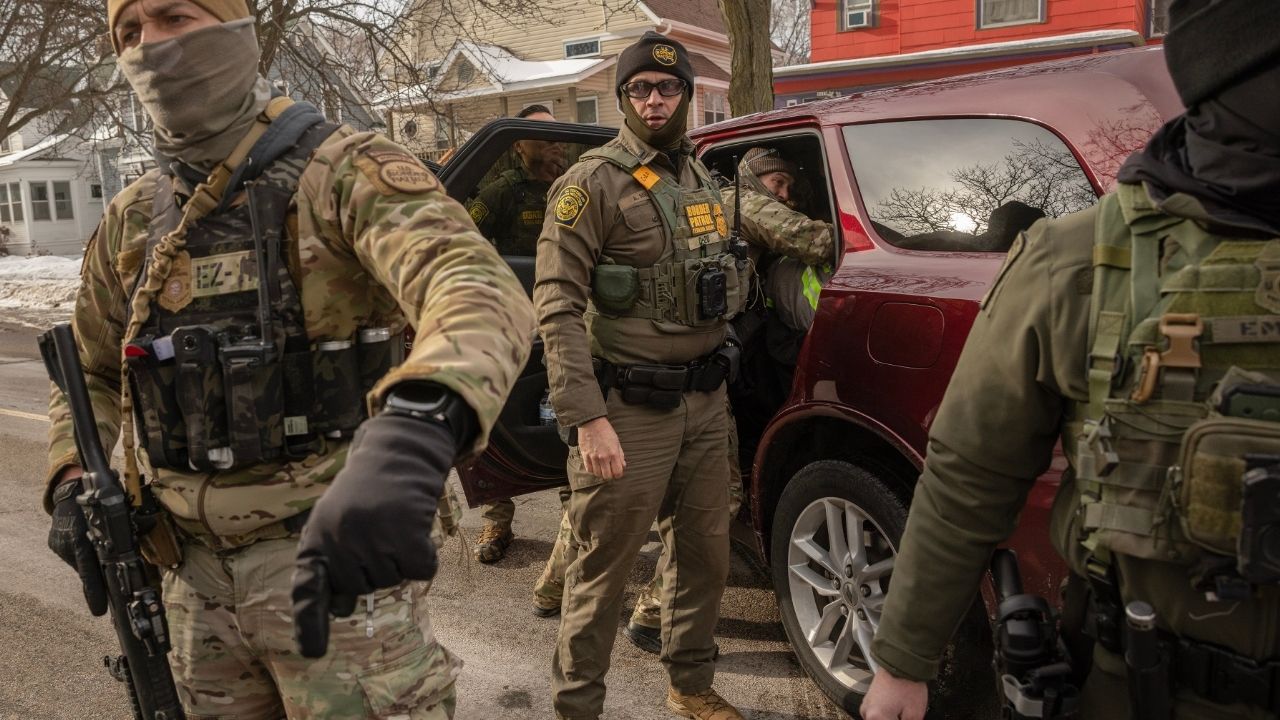
In late 2025 and early 2026, federal agents descended on Minnesota, where they made thousands of arrests and clashed repeatedly with residents. They shot three people.
During that deportation campaign in the state, the president and his allies repeatedly accused Minnesota Democrats of subverting federal authority by not cooperating more with immigration agents. Minnesota officials described the crackdown as a form of political punishment, and filed a lawsuit claiming that the campaign had violated state sovereignty.
—
This article originally appeared in The New York Times.
By Mitch Smith/David Guttenfelder
c. 2026 The New York Times Company