
|
Getting your Trinity Audio player ready...
|
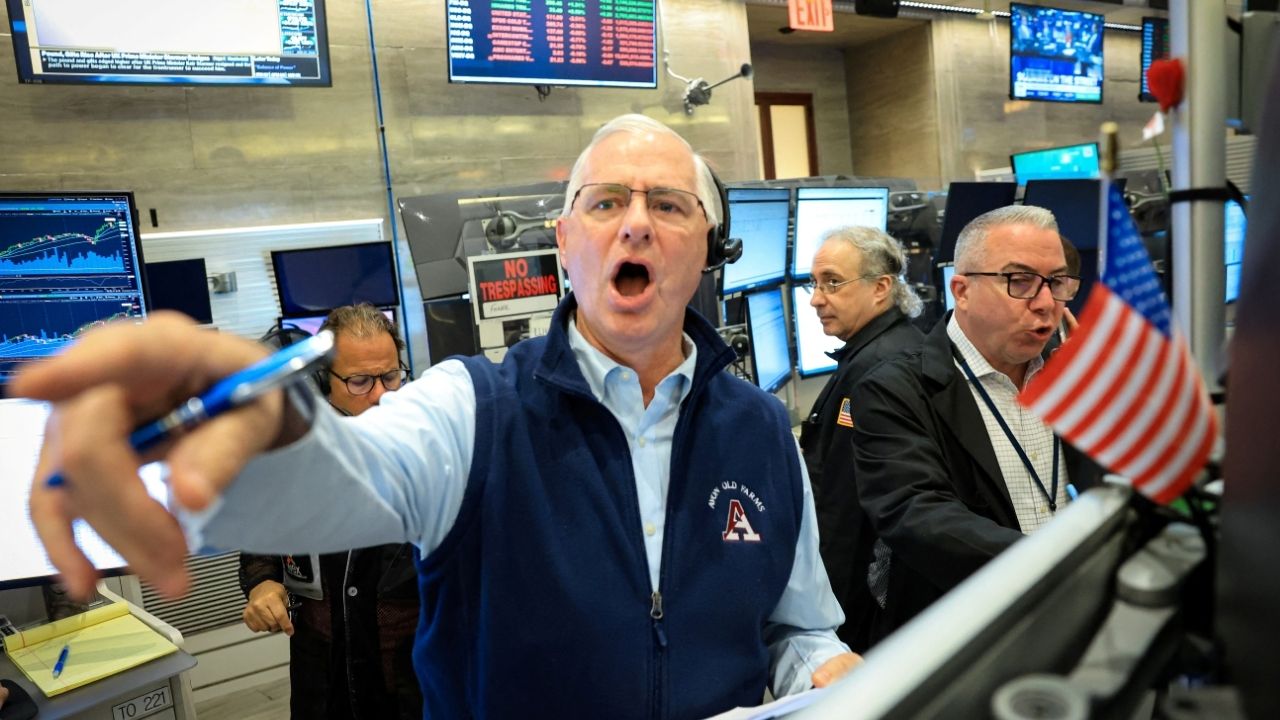
Major stock indexes fell on Monday with investors cautious about developments in the U.S.-Iran war and ahead of earnings from some high-profile U.S. companies this week. Oil prices gained.
Yemen’s Iran-aligned Houthis said they would impose a naval blockade on Saudi Arabia. The announcement was made despite signs that Tehran and Washington want to resume diplomacy to halt a worsening cycle of attacks.
Brent crude futures rose around 1.3% to settle at $89.22 a barrel, while U.S. West Texas Intermediate crude gained 0.9% to settle at $83.23 after touching its highest level since June 12 at $85.39.

Higher oil prices tend to be a negative for stocks because they increase costs for consumers and businesses.
More U.S. companies are set to report earnings results this week, including several major firms such as Intel and Alphabet.
“Earnings are starting to flow … and that’s a cushion for the market,” said Peter Cardillo, chief market economist at Spartan Capital Securities in New York.
In addition, he said chipmaker shares recovered some of their recent sharp losses. An index of semiconductors <.SOX> rose 0.6% on Monday after ending Friday down more than 20% from its late June closing record high, a move that confirms it has been in a bear market.
The Dow Jones Industrial Average fell 307.16 points, or 0.59%, to 51,839.26, the S&P 500 fell 14.41 points, or 0.19%, to 7,443.28 and the Nasdaq Composite fell 12.17 points, or 0.05%, to 25,508.07.
The earnings season will reinforce or challenge this year’s gains, which have been driven by a surge in AI capital spending lifting semiconductor stocks and other companies that are seen as the beneficiaries of the buildout.
The season will provide some insight into the AI-related trade, including for chipmakers, and also provide more color on secondary effects of the war.
MSCI’s gauge of stocks across the globe fell 3.23 points, or 0.29%, to 1,105.50. The pan-European STOXX 600 index fell 0.3%.
U.S. Treasury yields rose as traders weighed escalating oil prices, driven by the widening war with Iran, and the impact on prices.
The U.S. economic calendar for the week is light, and Federal Reserve officials are in a “blackout period” of public comments ahead of the central bank’s meeting next week. The yield on benchmark U.S. 10-year notes rose 5.68 basis points to 4.598%.
The European Central Bank will hold a policy meeting later this week, with markets pricing in only a 13.1% chance of a hike, according to LSEG data.
Sterling weakened 0.12% to $1.3437 after climbing to $1.3481 as Andy Burnham took over from Keir Starmer to become Britain’s seventh prime minister in a decade. He pledged to reshape the country’s politics and deliver a new economic model.
The dollar index, which measures the greenback against a basket of currencies, climbed 0.18% to 100.92, with the euro down 0.19% at $1.1417.
Spot gold fell 0.24% to $4,007.00 an ounce.
(Reporting by Caroline Valetkevitch in New York and Alun John in London; additional reporting by Wayne Cole in Sydney; Editing by Nick Zieminski and Stephen Coates)