
|
Getting your Trinity Audio player ready...
|
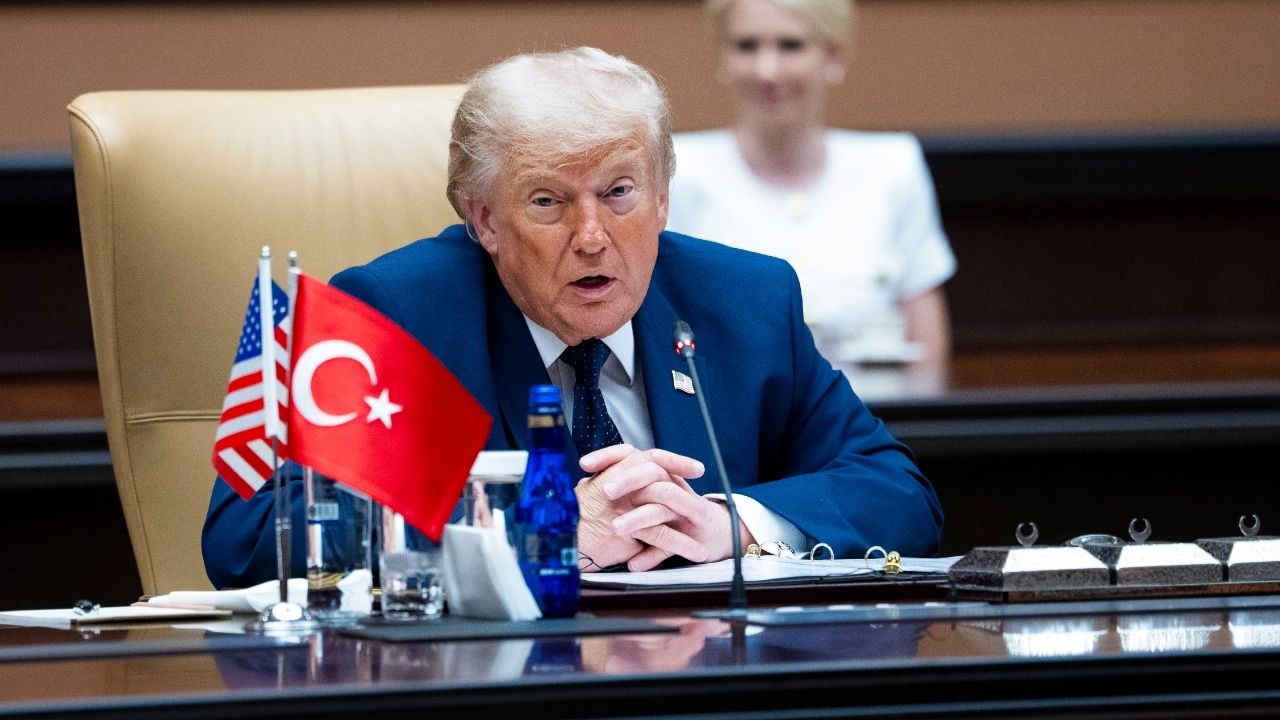
ANKARA, Turkey — President Donald Trump kicked off the second day of the NATO summit in Turkey on Wednesday by restating his “need” to control Greenland, blasting European allies as “hopeless” and threatening countries that did not support the U.S.-Israeli war on Iran.
The president called Spaniards “hopeless, bad people” and said he was cutting off trade with the country — even though the European Union’s 27 nations negotiate trade jointly. He mentioned France, Germany, Italy and Britain by name for not joining the war in Iran. He cast doubt on a temporary ceasefire aimed at ending the conflict and referred to Iran’s leaders as “evil, sick people” and “cancer.’’
“You know what you do?” he said. “You got to cut out cancer early.”

Trump’s remarks, in an extraordinary outburst to reporters as he sat next to Mark Rutte, secretary-general of NATO, cast a pall over a summit critical for the future of the military alliance.
In the run-up to the two-day leaders’ meeting in the Turkish capital, Ankara, NATO officials had sought to prevent blowups and keep the discussions focused on defense budgets and expanding the alliance’s military-industrial base. But Trump made clear Wednesday that he was still angry that, as he sees it, the United States is doing and spending too much to protect allies who are doing and spending too little.
Before Trump spoke, NATO country officials told The New York Times that the alliance planned to issue a communiqué Wednesday restating its commitment to collective defense and its support for Ukraine, promising $80 billion a year this year and next from Europe and Canada.
The communiqué was also expected to call for freedom of navigation, a nod to Iran’s effective blockade of the Strait of Hormuz during the war, according to the officials, who spoke anonymously to detail sensitive diplomacy.
After a gathering of NATO heads of state to discuss alliance business, Trump has further meetings scheduled Wednesday with President Volodymyr Zelenskyy of Ukraine and President Ahmad al-Sharaa of Syria. He is expected to address the media again before departing for Washington.
On Tuesday night, hours after arriving in Turkey, the president ordered U.S. forces to bombard targets in Iran, in retaliation for what the Pentagon said were new Iranian strikes on commercial ships in the Strait of Hormuz. Iran struck back Wednesday, targeting U.S. military sites in Bahrain and Kuwait.
Here’s What Else We’re Covering:
— NATO in transition: The summit comes as the United States pulls back from the alliance and as Europe and Canada are faced with doing more to defend against an aggressive, militarized Russia.
— Rutte’s comments: Rutte said Wednesday that the latest U.S. strikes against Iran were “absolutely necessary,” given what he said were Iran’s strikes on ships transiting the strait. Iran has not claimed responsibility for the strikes.
— What Zelenskyy wants: Zelenskyy is expected to ask NATO allies for Patriot missiles and related defense systems to counter Russian ballistic missiles.
—
This article originally appeared in The New York Times.
By Ben Hubbard, Steven Erlanger, Tyler Pager and Shawn McCreesh/Doug Mills
c. 2026 The New York Times Company