
|
Getting your Trinity Audio player ready...
|
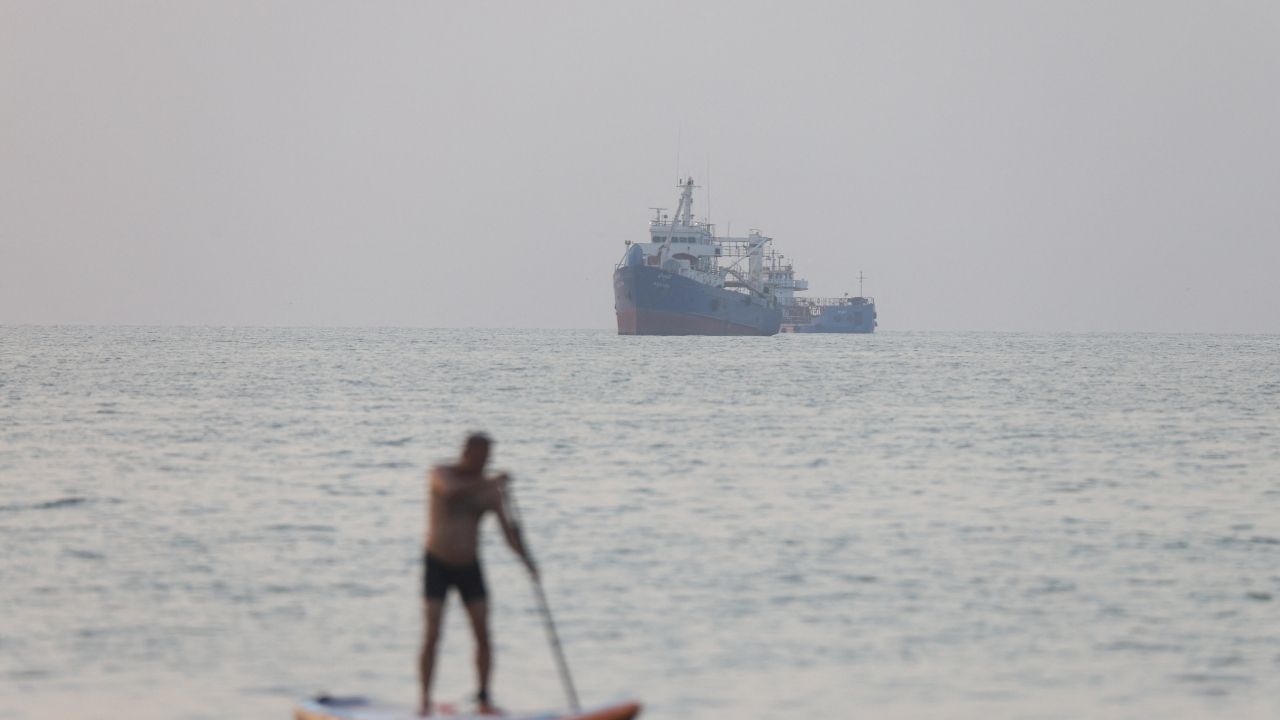
Shipping traffic in the Strait of Hormuz continued to recover over the weekend, although passages through the maritime choke point remained significantly lower than before the war in Iran.
More vessels began plying the waterway after the United States and Iran agreed last month on a temporary ceasefire and began talks for a more lasting end to the conflict, which has throttled energy exports. In recent days, more ships were entering the Persian Gulf than exiting it, a shift from recent weeks, when traffic was dominated by ships leaving the gulf, according to Kpler, a maritime data company.
The recovery in the Persian Gulf, whose producers predominantly use the strait to serve global markets, has helped ease oil prices. The OPEC+ oil cartel added to the downward pressure on prices when it announced on Sunday that it planned to pump more crude.

The durability of a U.S.-Iran peace agreement “will determine whether the global economy gets an energy-driven disinflation tail wind or absorbs a second oil shock,” said Ryan Sweet, the chief global economist at Oxford Economics.
More Than 100 Ships in the Past Three Days
From Friday through Sunday, 108 ships passed through the Strait of Hormuz in both directions, according to Kpler, or 21 fewer ships than the three prior days.
Traffic had picked up markedly starting on June 20, around when the preliminary agreement between the United States and Iran went into effect. Ship operators pulled back soon after when Iranian forces attacked ships passing through the strait without its permission. Before the war, more than 100 ships a day routinely passed through the strait.
Iran has said it expects ships to pass through the strait along its coast, not on the opposite side near Oman. The latest shipping data appears to show that more ships in the past week took the Iranian route than the Omani route, where ships have often received help from the U.S. military. Recent passages had been roughly split between the two routes. The traditional route through the middle of the strait is considered dangerous because of the risk of mines laid by Iran’s military.
Many ships switch off their transponders before navigating the strait, making it hard to identify their precise routes and giving an incomplete view of traffic volumes.
Oil Prices Hover Around Prewar Levels
Brent crude, the global benchmark, fell less than 0.5% on Monday, trading around $72 a barrel. Oil has hovered around that level for more than a week, near prewar prices. The price of Brent had spiked to as high as $118 a barrel from $72.48 a barrel the day before the war.
Gasoline prices don’t move in lock step with crude, usually following increases or drops with a lag. U.S. gasoline prices were steady on Monday at a national average of $3.80 a gallon, according to the AAA motor club. The cost for drivers at the pump is up 27.5% since the fighting began.
Stock markets have largely disregarded the fighting, with strong corporate earnings and enthusiasm for artificial intelligence propelling indexes higher. The S&P 500 rose about 0.3% in early trading Monday, signaling further gains for the index that recently notched its best quarterly performance in six years.
Control of the Strait Remains Contentious
U.S. officials have insisted that conditions for shipping in the strait must return to what they were before the war, when ships mostly traveled freely and without fees.
In the deal Iran reached with President Donald Trump last month, Iran promised to open the strait in exchange for a lifting of sanctions and other pressures on Iran by the United States. Iran said that it would not charge fees for 60 days and that it would work with Oman and other states in the region “to define the future administration and maritime services” of the strait. Oman has said it has proposed that it and Iran collect payment from ships moving through the strait.
—
This article originally appeared in The New York Times.
By Jenny Gross, Jason Karaian and Rich Barbieri
c. 2026 The New York Times Company