
|
Getting your Trinity Audio player ready...
|
Sen. Mitch McConnell, R-Ky., the former majority leader, was hospitalized on June 14. Since then, his office has provided few updates about his condition.
The scant official statements have led to speculation around Washington and efforts to piece together information about what happened. Here’s what we know about the situation.
What Has McConnell’s Office Said?
The most recent statement from McConnell’s office, on Thursday, said that the senator “appreciates the outpouring of support he’s receiving while he continues his recovery in the hospital” and that he “continues to improve, and is working closely with his staff on Kentucky and Senate matters while the Senate is out of session.”

Aides to McConnell, 84, have not disclosed what prompted his hospitalization or what treatment he is receiving. Asked for updates on Monday, a spokesperson referred to Thursday’s statement.
Shortly after McConnell was hospitalized, his spokesperson released the short statement: “Senator McConnell was admitted to the hospital this morning. He is receiving excellent care.”
What Else Do We Know?
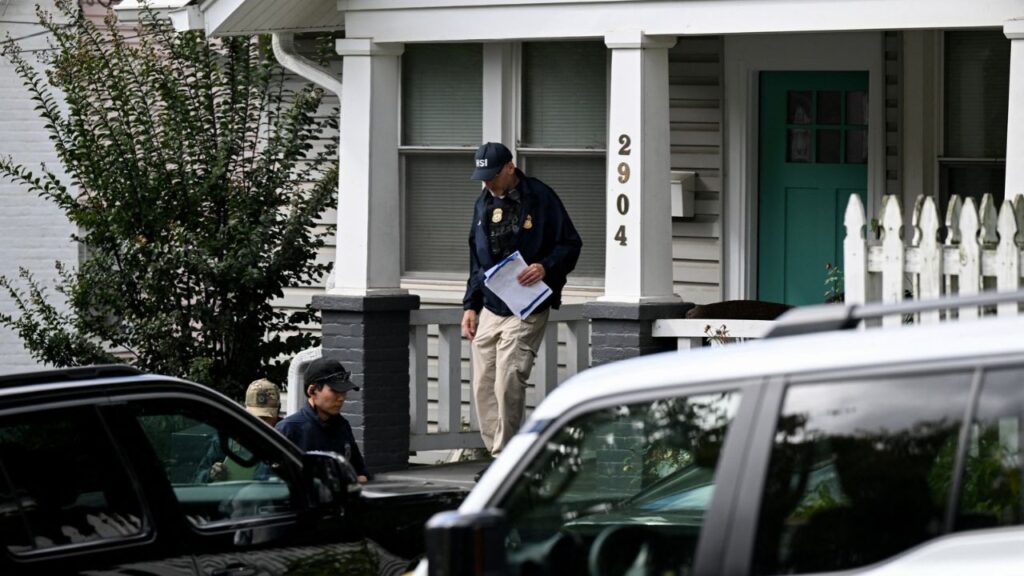
Emergency responders the morning McConnell was hospitalized reported performing CPR on an unconscious individual undergoing cardiac arrest at the senator’s Washington address, according to recordings of dispatcher calls that were widely reported by news outlets last week and obtained by The New York Times. The recordings do not name McConnell as the individual.
Recordings of emergency dispatcher radio communications logged between 8:36 a.m. and 8:43 a.m. that Sunday indicate that dispatchers initially called for medics to respond to a report of an “unconscious” individual at McConnell’s Washington address. Six minutes later, a worker with the city’s Fire and Emergency Medical Services Department responded, asking that his supervisor be informed of “CPR in progress.”
McConnell’s office has declined to comment on the recordings, even after they were reported on by multiple news outlets.
The day after McConnell was hospitalized, the Senate’s two top Republicans, Sens. John Thune of South Dakota, the majority leader, and John Barrasso of Wyoming, the whip, both told reporters that they had spoken to the senator.
McConnell is “clearly dialed into what’s going on,” Thune said at the Capitol. “He’s following the stuff we’re doing this week up here. Very much so.”
What About McConnell’s Health More Generally?
The hospitalization is the latest in a series of health issues for McConnell in recent years. He was hospitalized in February for a week after experiencing flu-like symptoms. He suffered a concussion in a serious fall in 2023 and was hospitalized and then transferred to an inpatient physical rehabilitation center.
Even before those hospitalizations, McConnell, who had polio as a child, had long walked with an uneven gait. He had in recent months used a wheelchair to travel from his office building to the Capitol, although days before his hospitalization he was able to walk on his own.
Senators are away from Washington on a scheduled holiday recess until July 13. McConnell’s absence prompted the Senate Appropriations Committee to postpone a planned hearing late last month meant to advance four spending bills. Republicans need his vote to overcome unanimous Democratic opposition on legislation.
McConnell is not seeking reelection and is set to retire from the Senate at the end of his term in early January. Rep. Andy Barr of Kentucky won the Republican primary in May to succeed him.
How Common Are These Incidents on Capitol Hill?
McConnell’s situation is one of the latest incidents to underscore how little members of Congress often disclose about their health issues. Rep. Thomas Kean, a Republican who represents a key swing district in New Jersey, disappeared for 117 days and missed more than 100 votes in the House, before offering his constituents an explanation: that he was hospitalized to treat depression.
Kay Granger, a Texas Republican who once led the powerful Appropriations Committee, had missed months of House votes and was found to be living in an independent living facility months before she was set to retire. After that discovery, unearthed by a conservative news outlet in Texas, her son told The Dallas Morning News that she had been experiencing “dementia issues.”
Dianne Feinstein, then a Democratic senator representing California, did not disclose several complications related to her hospitalization for shingles in 2023, including a case of encephalitis. Her office at the time confirmed the condition only after the Times reported it, and released a statement from Feinstein that she continued to “work and get results for California.”
—
This article originally appeared in The New York Times.
By Catie Edmondson/Salwan Georges
c. 2026 The New York Times Company