
|
Getting your Trinity Audio player ready...
|
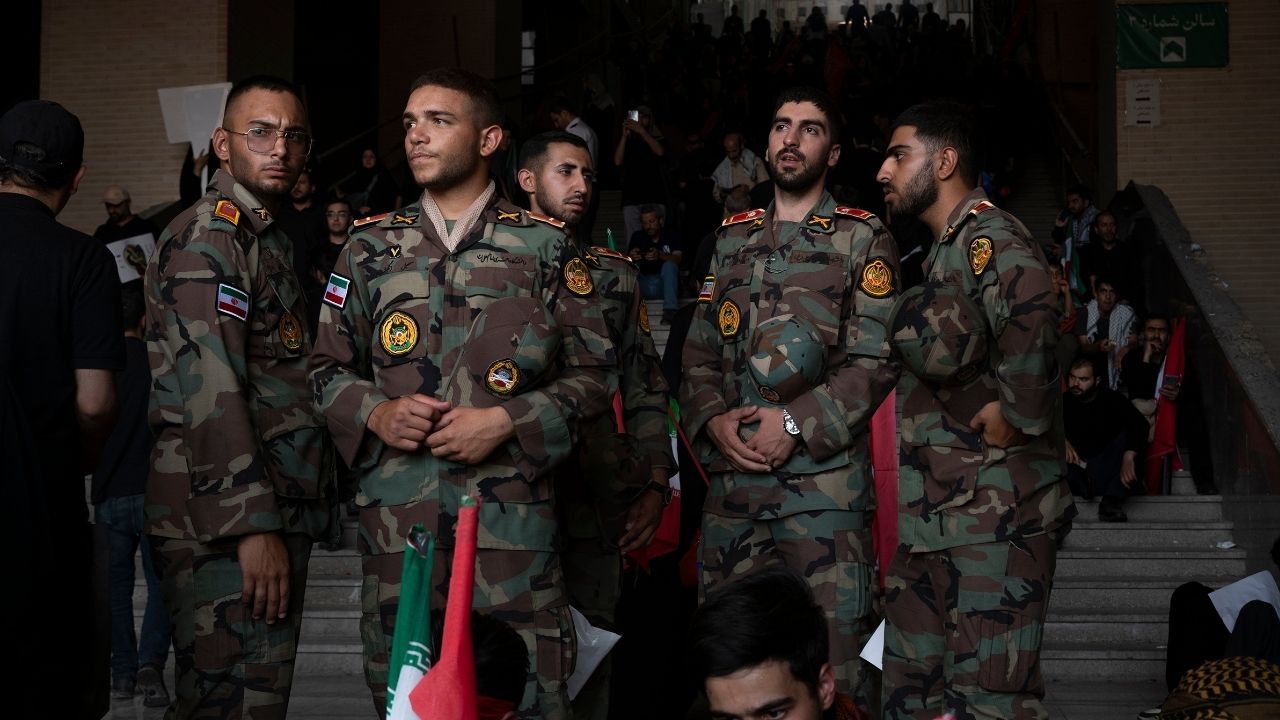
Hundreds of thousands of mourners amassed in the Iranian capital, Tehran, on Monday to commemorate Ayatollah Ali Khamenei, the Iranian supreme leader, who ruled his country for decades with an iron fist before he was killed in the war with the United States and Israel.
The ayatollah’s body was carried through the city in a public procession, part of a period of ceremonies and mourning strictly choreographed by the Iranian government. Later this week, it will be taken to several cities in Iran and neighboring Iraq that are significant to Shiite Muslims, before the late ayatollah is buried in his hometown, Mashhad, in northeastern Iran.
Some of the top ranks of Iran’s current and former leadership were among the sea of mourners. In a video shared by Iranian state television, President Masoud Pezeshkian was seen walking down the street, shaking hands with members of the crowd.

Though he was exalted by many Iranians, Khamenei was also despised by others for presiding over an authoritarian state that crushed dissent. In January, Iranian security forces violently suppressed mass anti-government protests, killing thousands, according to Iranian officials and human rights groups.
For Iran’s leaders, the mass funeral has served in part as a show of national unity. But the late supreme leader’s son and successor, Mojtaba Khamenei, has been conspicuously absent from the ceremonies.
Mojtaba Khamenei has not been seen in public since succeeding his father, who was killed when Israeli forces bombarded Ali Khamenei’s compound on the first day of the war in late February. His absence from the funeral ceremonies has become a point of scrutiny for Iran’s leadership as they seek to project stability and continuity.
Here’s What Else to Know:
— Attendees: Mahmoud Ahmadinejad, a former Iranian president, was among the senior officials who attended the funeral ceremonies Monday. According to U.S. officials, Ahmadinejad was injured in an Israeli strike in February intended to free him from house arrest. The New York Times later reported on a failed Israeli plan to install Ahmadinejad at the helm of a postwar Iran.
— Peace negotiations: The talks between Iran and the United States have been paused until after the funeral ceremonies. They have failed to prevent new bouts of fighting or to fully reopen shipping in the crucial Strait of Hormuz, let alone bring the two sides closer to resolving myriad thornier issues that were not covered by the countries’ ceasefire.
— Our coverage: The New York Times was granted access to the funeral ceremonies by Iran’s government, which determined the ceremonies our reporters could attend, accompanied by a government-provided translator and a guide. The views expressed by people interviewed at these events may not be representative of many Iranians, while others may have felt unable to speak freely.
—
This article originally appeared in The New York Times.
By Aaron Boxerman and Abdi Latif Dahir/Emile Ducke
c. 2026 The New York Times Company